เมื่อคนในสหรัฐฯ มีสิทธิ์ได้รับการฉีดวัคซีนมากขึ้น ผู้บริโภคและบริษัทต่างๆ ก็เริ่มมองเห็นแสงสว่างที่ปลายอุโมงค์ “การพูดคุยเล็กๆ น้อยๆ เกี่ยวกับวัคซีน” กำลังแพร่หลายในการประชุมทางวิดีโอ และบริษัทต่างๆ และผู้บริโภคก็เริ่มพูดคุยและวางแผนสำหรับอนาคตหลังการระบาดใหญ่ และเมื่อเราพิจารณาว่าใครกระตือรือร้นที่จะก้าวไปข้างหน้ามากที่สุด กลุ่มคนส่วนน้อยก็กำลังเป็นผู้นำการเปลี่ยนแปลง
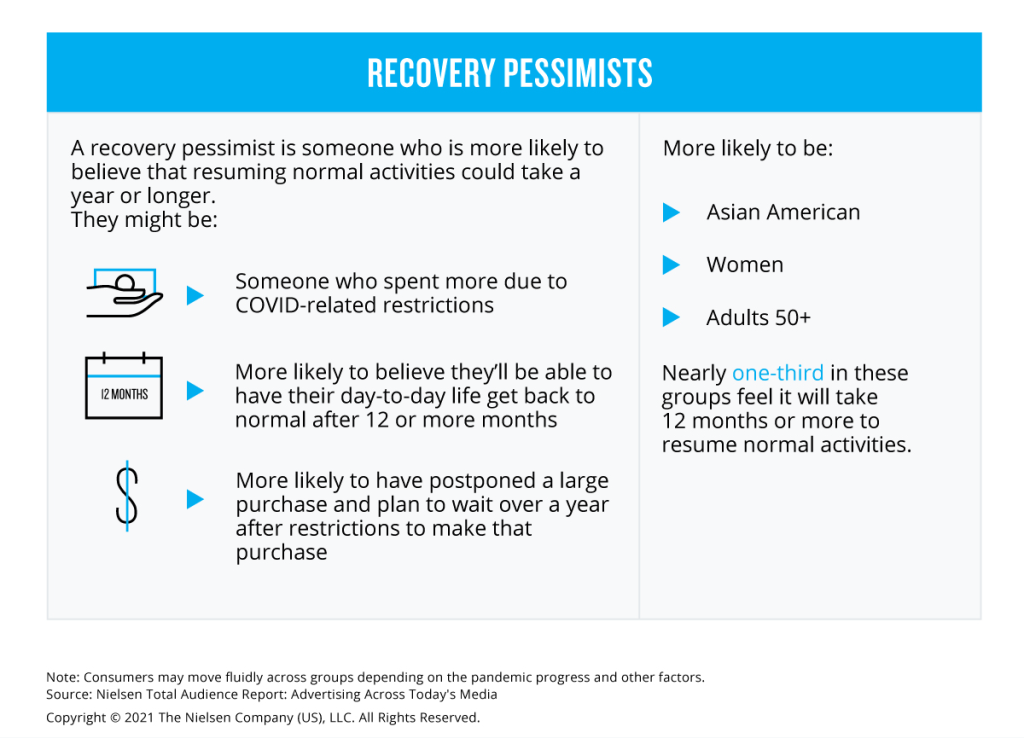
Early on in the pandemic, we saw how COVID-19 impacted different communities and industries unequally. As more states reopen and people resume “normal” activities, it’s clear that these communities and industries will bounce back at different tempos. Using data from the latest Nielsen Total Audience Report: Advertising Across Today’s Media, we’ve identified three primary consumer recovery groups: Recovery Optimists, Cautious Optimists และ Recovery Pessimists. While consumers who identify with these categories may change as the vaccine rollout progresses, age, gender and ethnicity are a few of the factors advertisers can consider when looking at who’s most optimistic and eager to spend.
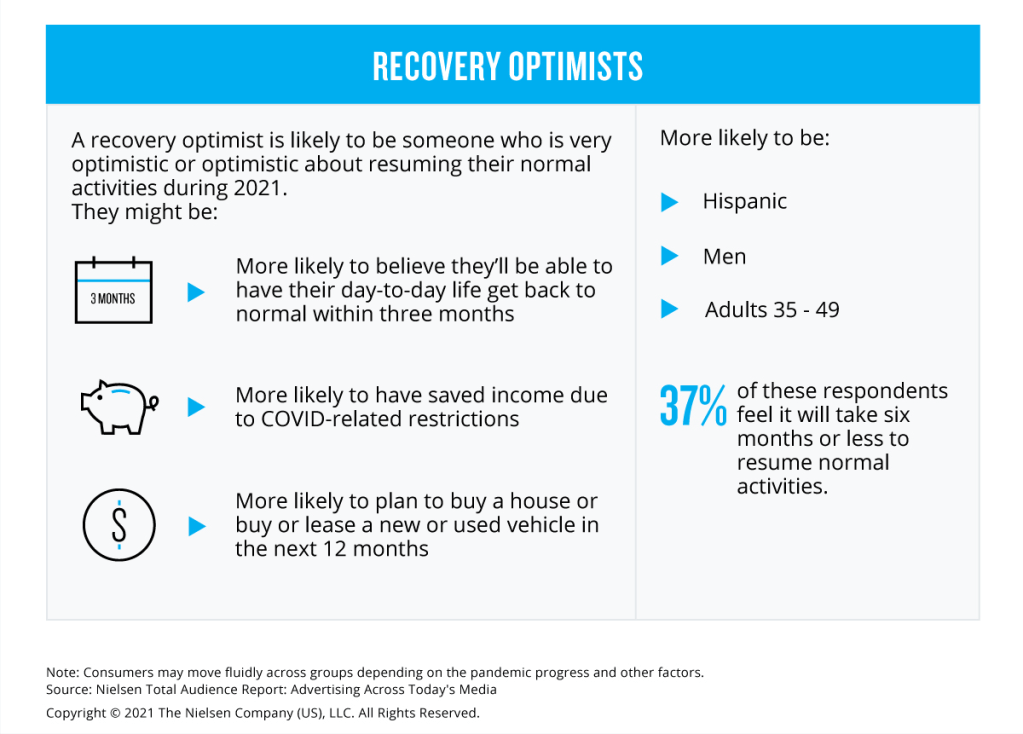
Despite research from the CDC showing that Black, African Americans and Hispanic or Latino persons are two to three times more at risk of COVID-related hospitalizations and death than their White, non-Hispanic counterparts, these consumers are among the most optimistic and eager to spend.
Based on the results from a recent Nielsen survey, Hispanic consumers are more likely to be ผู้มองโลกในแง่ดีในการฟื้นตัว. During COVID-19, these respondents reported that they were moderately impacted by COVID-related restrictions, with 44% saying they were able to save more compared with 39% of all adults 18+. Over half (53%) said they were able to make “major” purchases ($500+) during the pandemic compared with 43% of adults 18+.
ในช่วง 12 เดือนข้างหน้า ผู้ตอบแบบสอบถามชาวฮิสแปนิกระบุว่าพวกเขามีแนวโน้มที่จะซื้อบ้านหลังใหม่มากกว่าผู้ใหญ่ทั่วไปถึง 2 เท่า และมีแนวโน้มที่จะซื้อหรือเช่ารถใหม่หรือรถมือสองมากกว่า ผู้บริโภคกลุ่มนี้กระตือรือร้นที่จะวางแผนหรือจองวันหยุดพักร้อนมากที่สุด (71%) รับประทานอาหารนอกบ้านที่ร้านอาหาร (70%) และไปร้านกาแฟ/คาเฟ่ (69%) นักโฆษณาสามารถเข้าถึงกลุ่มผู้บริโภคกลุ่มนี้ได้ในขณะที่ใช้สมาร์ทโฟน โดยพวกเขาใช้เวลามากกว่า 18 ชั่วโมงต่อสัปดาห์ในการดูวิดีโอ สตรีมเสียง และโซเชียลเน็ตเวิร์กในไตรมาสที่ 2 ปี 2020
Black consumers are more likely to be Cautious Optimists, because a larger percentage reported believing it’ll take longer to recover and have been more hesitant to make larger purchases during the past year. Black respondents indicated they were moderately impacted by COVID-related restrictions, with 52% saying they were able to save more income. Yet nearly six-in-10 indicated that they did not make a “major” ($500+) purchase in 2020, which is more than any other multicultural consumer group.
เมื่อข้อจำกัดต่างๆ หมดไป ผู้บริโภคชาวแอฟริกันอเมริกันได้ระบุว่าพวกเขาพร้อมที่จะใช้จ่าย โดยมีแนวโน้มสูงกว่า 1.3 เท่าและ 1.7 เท่าที่จะบอกว่าพวกเขาวางแผนที่จะซื้อหรือเช่ารถหรือซื้อบ้านในปีหน้าตามลำดับ ในระดับการใช้จ่ายที่น้อยกว่า ผู้บริโภคชาวแอฟริกันอเมริกันกระตือรือร้นที่จะไปร้านทำผม/ตัดผมหรือร้านทำเล็บ (72%) รับประทานอาหารนอกบ้าน (66%) และไปร้านกาแฟและคาเฟ่ (65%) ข่าวดีสำหรับอุตสาหกรรมการท่องเที่ยวก็คือ ผู้บริโภคชาวแอฟริกันอเมริกันสองในสาม (64%) สนใจที่จะเดินทางโดยเครื่องบิน ทำให้พวกเขาเป็นผู้บริโภคที่มีความหลากหลายทางวัฒนธรรมที่เต็มใจมากที่สุด
Advertisers looking to engage with Black consumers should keep in mind the social activism and diversity pledges made over the last year, as well as how that translates into the omnichannel experience, which is especially relevant to this consumer group that over-indexes on time spent across TV, the computer and smartphones. For ผู้มองโลกในแง่ดีแต่ระมัดระวัง, the messaging can be positive, but should not abandon health-safety considerations.
Many factors play into who falls into the Recovery Pessimists category, including confidence in vaccine information, protocol and ease of access. These individuals are more likely to have been significantly or severely impacted by the pandemic financially and could belong to more at-risk communities, are caretakers, or are managing additional burdens due to the pandemic. This includes women, who are more likely to be caretakers and take on household responsibilities as well as people who are 50+.
ผู้โฆษณาไม่ควรละเลยกลุ่มนี้ แต่ควรเข้าใจว่าผู้บริโภคกลุ่มนี้อาจต้องการความมั่นใจและการส่งเสริมมาตรการด้านความปลอดภัยด้านสุขภาพอย่างต่อเนื่อง ข่าวดีก็คือ แม้ว่าบุคคลเหล่านี้อาจไม่พร้อมที่จะใช้จ่ายทันที แต่พวกเขาน่าจะใช้เวลาไปกับกิจกรรมที่ต้องเว้นระยะห่างทางสังคม เช่น ดูโทรทัศน์และสตรีมมิงมากขึ้น
It’s important to note that these consumer groups are not static. The enhanced rollout of the vaccine program, successful re-opening of schools and sustained falling COVID-19 cases could improve the overall optimism of Recovery Pessimists and allow them to step into the ผู้มองโลกในแง่ดีแต่ระมัดระวัง category. While set-backs and re-closures may downgrade consumer optimism.
For additional insights download the latest Nielsen Total Audience Report: Advertising Across Today’s Media or see past reports and trends on our Nielsen Total Audience Report Hub.