อเมริกาเป็นผู้รับผิดชอบค่าใช้จ่ายด้านการโฆษณาเกือบครึ่งหนึ่ง (48%) ของโลก รองลงมาคือประเทศในยุโรปซึ่งคิดเป็น 30% ของค่าใช้จ่ายด้านการโฆษณาทั้งหมด ทั้งสองภูมิภาคนี้ใช้งบประมาณด้านการโฆษณาทั่วโลกที่ประมาณการโดย Nielsen เกือบ 80% และเป็นแรงผลักดันให้การลงทุนเหล่านี้เติบโตต่อปีสูงสุด เราคาดว่าการเข้าถึงที่กว้างขวางนี้จะส่งผลให้ผู้บริโภคติดใจผลิตภัณฑ์ใหม่ๆ ที่มีอยู่รอบตัว แต่ที่น่าสนใจคือ เมื่อเปรียบเทียบกับส่วนอื่นๆ ของโลก ผู้บริโภคในสองภูมิภาคนี้เปิดรับการลองสิ่งใหม่ๆ น้อยที่สุด
“It’s not a coincidence that the markets that spend the most on advertising are least susceptible to brand disloyalty,” says Matthew O’Grady, Global Managing Director at Nielsen Media. Advertising actively reminds consumers why they should continue to purchase a certain brand or product. “Consumers lack that constant reminder in markets where advertising spend is low,” he adds. “As a result, they consider more options and are ultimately more likely to stray.”
Surveyed consumers in both the U.S. and Europe confirm that both regions rank below the global norm when it comes to consumer affinity to newism in consumer packaged goods (CPG). With this in mind, it’s critical to understand what actually does entice these consumers to try new products and to ultimately switch brands. Loyalty has always been a treasured commodity for companies, but now that consumers have endless choice and omnichannel access, it’s disloyalty, or brand switching, that manufacturers and retailers should pay attention to.
ผลสำรวจของ Nielsen แสดงให้เห็นว่าการปรากฏตัวที่ได้รับนั้นมีแนวโน้มที่จะโน้มน้าวผู้บริโภคให้เปลี่ยนแบรนด์มากกว่าการลงทุนด้านการตลาดแบบจ่ายเงินแบบดั้งเดิม โดยเฉพาะอย่างยิ่งคำแนะนำและบทวิจารณ์เป็นรูปแบบของสื่อที่ได้รับซึ่งผู้บริโภคที่ทำการสำรวจเห็นว่ามีประสิทธิภาพในการตัดสินใจเปลี่ยนแบรนด์มากกว่าการกระตุ้นในร้านค้าและการลงทุนด้านการตลาดแบบดั้งเดิมในสื่อโทรทัศน์ วิทยุ สิ่งพิมพ์ สื่อนอกบ้าน ออนไลน์ หรืออุปกรณ์พกพา
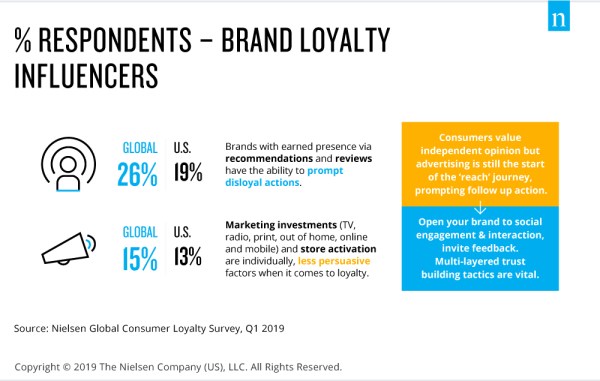
ซึ่งหมายความว่าสำหรับ CPG ความเชื่อมโยงระหว่างสิ่งที่ผู้บริโภคดูและซื้อไม่เคยมีความซับซ้อนหรือสำคัญต่อการทำความเข้าใจมากเท่านี้มาก่อน
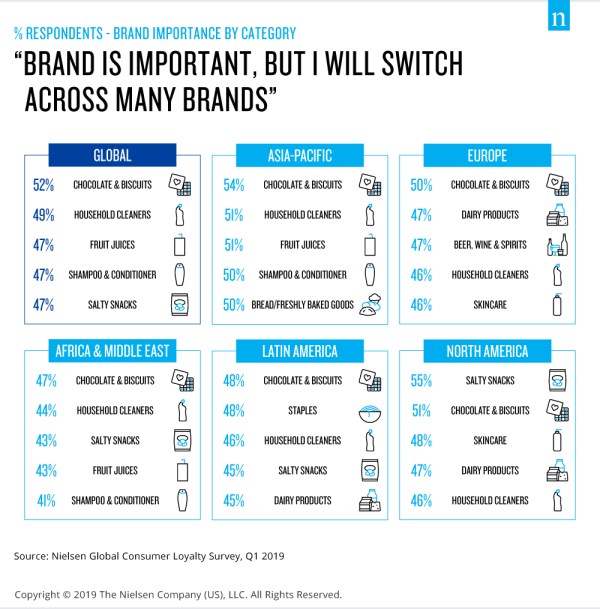
จากมุมมองการซื้อและการบริโภค ความไม่ภักดีต่อแบรนด์มักพบมากที่สุดในกลุ่มอาหารบรรจุหีบห่อ ตัวอย่างเช่น ในภูมิภาคเอเชียแปซิฟิกและละตินอเมริกา อาหารบรรจุหีบห่อถือเป็น 4 ใน 5 กลุ่มที่มีความไม่ภักดีต่อแบรนด์มากที่สุด เมื่อเทียบกับการใช้จ่ายโฆษณาแล้ว ประเทศต่างๆ ใน 2 ภูมิภาคนี้ใช้จ่ายกับโฆษณาที่เกี่ยวข้องกับอาหารน้อยที่สุด ซึ่งเป็นโอกาสที่ดีที่จะมั่นใจได้ว่าโฆษณาจะอยู่ในตำแหน่งที่ดีที่สุดเพื่อดึงดูดผู้บริโภคที่ไม่ภักดี ซึ่งในกรณีนี้ จะเป็นผลิตภัณฑ์อาหารและเครื่องดื่มมากกว่าสินค้าที่ไม่ใช่อาหาร
Advertising is most definitely a key driver of a brand’s reach, and for disloyal consumers, it’s likely to prompt follow-up action among consumers. But social engagement and invitations for feedback and dialogue are essential to building trust and inspiring more than awareness by winning actual purchases. Brands should treat every message as a chance to entice disloyalty. Only 8% of consumers across the globe consider themselves firm loyalists to the products they use. Expect this to get worse, and embrace it. While just a fraction of consumers today remain strict loyalists, nearly half (46%) of the world are more likely to try new brands today than they were five years ago.
ความไม่ภักดีสามารถกลายเป็นแหล่งที่มาของการเติบโตของคุณได้เมื่อนำมาใช้
Read more in our latest Total Consumer Report.
หมายเหตุ: นีลเส็น Ad Intel รวบรวมข้อมูลเสียง/ภาพที่รวบรวมโดยเทคโนโลยีของ Nielsen และ/หรือจัดทำโดยพันธมิตรด้านข้อมูลของ Nielsen Nielsen จัดประเภทตำแหน่งโฆษณาแต่ละตำแหน่งภายในหมวดหมู่ตลาดของ Nielsen และอนุกรมวิธานของผู้โฆษณาและผลิตภัณฑ์ จากนั้นจึงปรับให้สอดคล้องกันระหว่างตลาดต่างๆ เพื่อให้สามารถวิเคราะห์ข้ามตลาดได้ ประเทศที่ครอบคลุมในการวิเคราะห์นี้ ได้แก่ แอฟริกาใต้ ออสเตรเลีย อินโดนีเซีย มาเลเซีย นิวซีแลนด์ ฟิลิปปินส์ สิงคโปร์ ไทย เบลเยียม บัลแกเรีย สาธารณรัฐเช็ก เยอรมนี ไอร์แลนด์ อิตาลี ลักเซมเบิร์ก เนเธอร์แลนด์ นอร์เวย์ สเปน สหราชอาณาจักร เปอร์โตริโก และสหรัฐอเมริกา


