À medida que mais pessoas nos EUA se tornam elegíveis para vacinação, os consumidores e as empresas estão vendo a luz no fim do túnel. A "conversa fiada sobre vacinas" está se infiltrando nas videoconferências, e as empresas e os consumidores estão começando a conversar e a planejar um futuro pós-pandemia. E quando olhamos para quem está mais ansioso para seguir em frente, os grupos minoritários estão liderando o movimento.
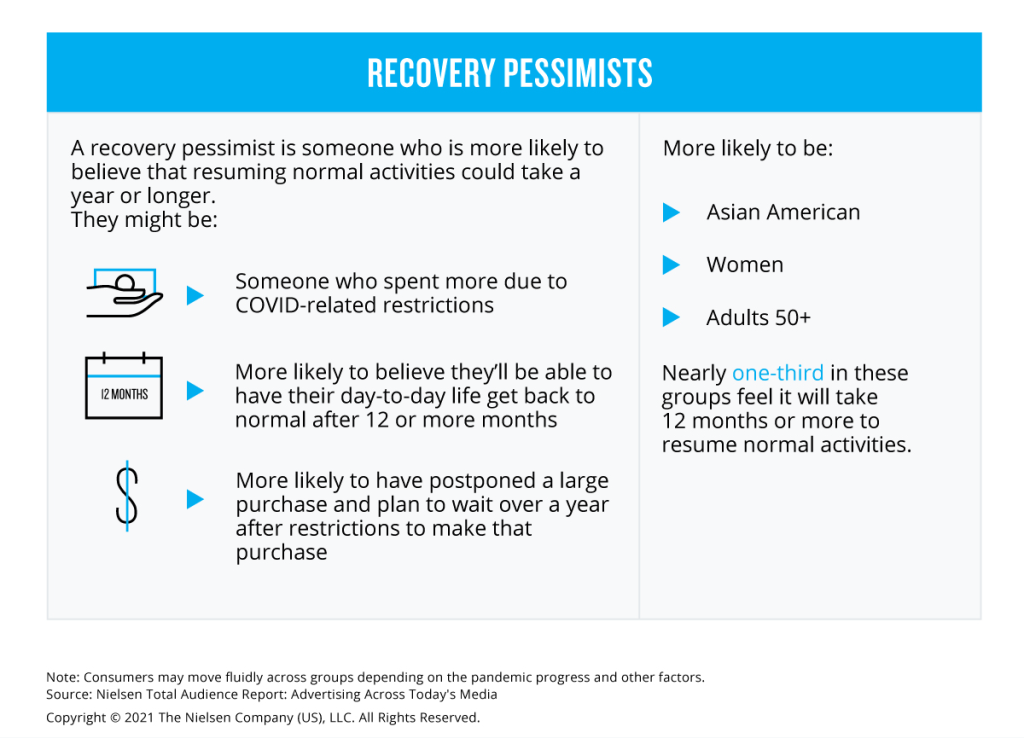
Early on in the pandemic, we saw how COVID-19 impacted different communities and industries unequally. As more states reopen and people resume “normal” activities, it’s clear that these communities and industries will bounce back at different tempos. Using data from the latest Nielsen Total Audience Report: Advertising Across Today’s Media, we’ve identified three primary consumer recovery groups: Recovery Optimists, Cautious Optimists e Recovery Pessimists. While consumers who identify with these categories may change as the vaccine rollout progresses, age, gender and ethnicity are a few of the factors advertisers can consider when looking at who’s most optimistic and eager to spend.
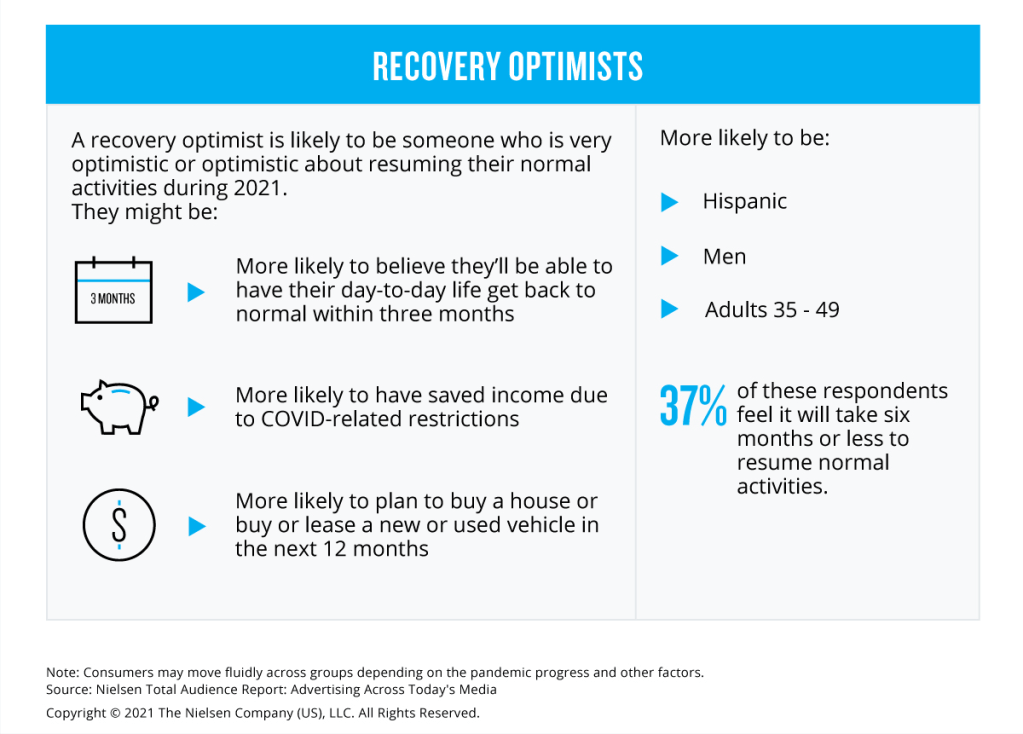
Despite research from the CDC showing that Black, African Americans and Hispanic or Latino persons are two to three times more at risk of COVID-related hospitalizations and death than their White, non-Hispanic counterparts, these consumers are among the most optimistic and eager to spend.
Based on the results from a recent Nielsen survey, Hispanic consumers are more likely to be Otimistas na recuperação. During COVID-19, these respondents reported that they were moderately impacted by COVID-related restrictions, with 44% saying they were able to save more compared with 39% of all adults 18+. Over half (53%) said they were able to make “major” purchases ($500+) during the pandemic compared with 43% of adults 18+.
Nos próximos 12 meses, os hispânicos entrevistados dizem que têm duas vezes mais probabilidade de comprar uma casa nova do que a média dos adultos e mais probabilidade de comprar ou alugar um veículo novo ou usado. Esses consumidores estão mais ansiosos para planejar ou reservar férias (71%), jantar fora em restaurantes (70%) e visitar cafeterias/cafés (69%). Os anunciantes podem alcançar esse grupo de consumidores em seus smartphones, onde eles passaram mais de 18 horas por semana assistindo a vídeos, fazendo streaming de áudio e acessando redes sociais no segundo trimestre de 2020.
Black consumers are more likely to be Cautious Optimists, because a larger percentage reported believing it’ll take longer to recover and have been more hesitant to make larger purchases during the past year. Black respondents indicated they were moderately impacted by COVID-related restrictions, with 52% saying they were able to save more income. Yet nearly six-in-10 indicated that they did not make a “major” ($500+) purchase in 2020, which is more than any other multicultural consumer group.
Quando as restrições forem suspensas, os consumidores afro-americanos indicaram que estão prontos para gastar. Eles têm 1,3x e 1,7x mais chances de dizer que planejam comprar ou alugar um carro ou comprar uma casa no próximo ano, respectivamente. Em uma escala de gastos menor, os consumidores afro-americanos estão ansiosos para ir a um salão de cabeleireiro/barbeiro ou salão de beleza (72%), jantar fora em restaurantes (66%) e visitar cafeterias e cafés (65%). Uma boa notícia para o setor de viagens é que dois terços (64%) dos afro-americanos estão interessados em viajar de avião, o que os torna os mais dispostos de todos os consumidores multiculturais.
Advertisers looking to engage with Black consumers should keep in mind the social activism and diversity pledges made over the last year, as well as how that translates into the omnichannel experience, which is especially relevant to this consumer group that over-indexes on time spent across TV, the computer and smartphones. For Otimistas cautelosos, the messaging can be positive, but should not abandon health-safety considerations.
Many factors play into who falls into the Recovery Pessimists category, including confidence in vaccine information, protocol and ease of access. These individuals are more likely to have been significantly or severely impacted by the pandemic financially and could belong to more at-risk communities, are caretakers, or are managing additional burdens due to the pandemic. This includes women, who are more likely to be caretakers and take on household responsibilities as well as people who are 50+.
Os anunciantes não devem descartar esse grupo. Em vez disso, eles devem entender que esses consumidores talvez precisem de mais garantias e de uma promoção contínua dos protocolos de segurança da saúde. A boa notícia é que, embora esses indivíduos talvez não estejam prontos para gastar imediatamente, eles provavelmente estão passando mais tempo em atividades socialmente distantes, como assistir à televisão e fazer streaming.
It’s important to note that these consumer groups are not static. The enhanced rollout of the vaccine program, successful re-opening of schools and sustained falling COVID-19 cases could improve the overall optimism of Recovery Pessimists and allow them to step into the Otimistas cautelosos category. While set-backs and re-closures may downgrade consumer optimism.
For additional insights download the latest Nielsen Total Audience Report: Advertising Across Today’s Media or see past reports and trends on our Nielsen Total Audience Report Hub.