Jeśli jest coś, co branża medialna uwielbia, to jest to akronim.
Litery szaleją w media planach, prezentacjach i komunikatach prasowych. Jednak w miarę pojawiania się nowych rodzajów mediów - wraz z ich późniejszymi skrótami - rozróżnienia gubią się w miksie. Mówiąc o mediach internetowych, mylone są w szczególności trzy terminy.
Wyjaśniamy różnice między OTT, CTV i streamingiem, jak działa reklama w każdym z nich i dlaczego są one ważniejsze niż kiedykolwiek dla marketerów.
Jak definiuje się OTT, CTV i streaming?
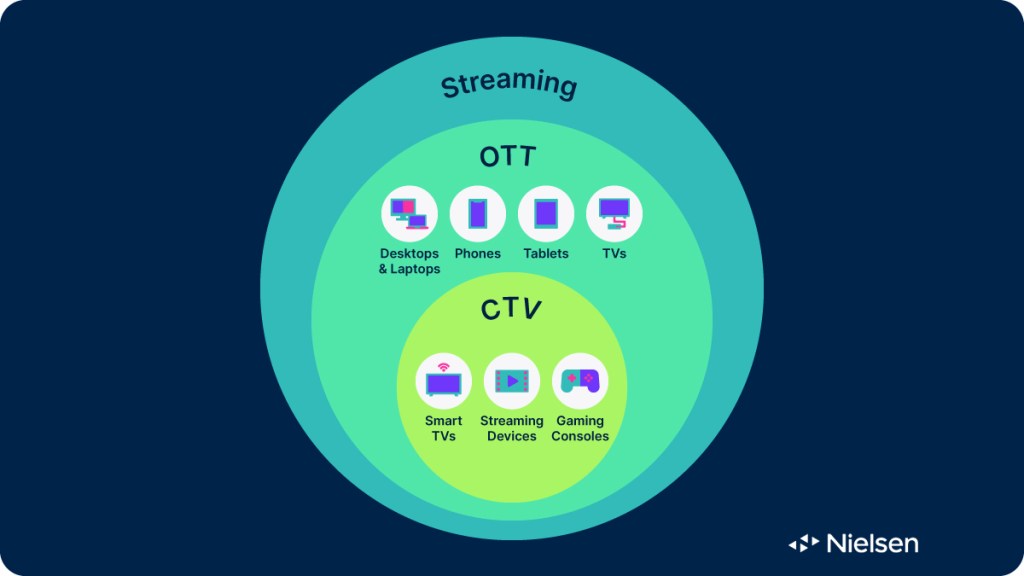
• Streaming — An umbrella term that describes audio and video content delivery to a user’s device through the internet. You can “stream” content across any device.
• Over-the-top (OTT) — The method of streaming content “over the top” of the internet across any device. OTT streaming requires a strong internet connection and a device that supports apps or browsers. OTT used to refer to only video content but now it’s expanded to include all the internet offers.
So, when you watch a rerun of Przyjaciele on your TV via cable, you are not watching OTT. However, if you switch over to your Apple TV system, open the HBO Max app, and begin streaming Friends, then you are watching OTT. The difference has to do with how you’re accessing the content, rather than what the content is.
• Connected TV (CTV) — The method of streaming content from the internet on a television screen. A standard television can become a connected TV via a streaming device, like a Roku or Amazon Fire TV stick, or through a gaming console, like a PlayStation or Xbox. It can also come with internet connectivity built in, in which case it would be called a smart TV.
Różnica między OTT i CTV jest szczególnie myląca, więc warto powtórzyć, że CTV odnosi się do samego urządzenia telewizyjnego.
Czy istnieją inne rodzaje telewizji strumieniowej?
OTT i CTV znajdują się na szczycie własnej akronimowej góry lodowej. Dzieje się tak, ponieważ istnieje kilka podkategorii, które marketerzy powinni zrozumieć.
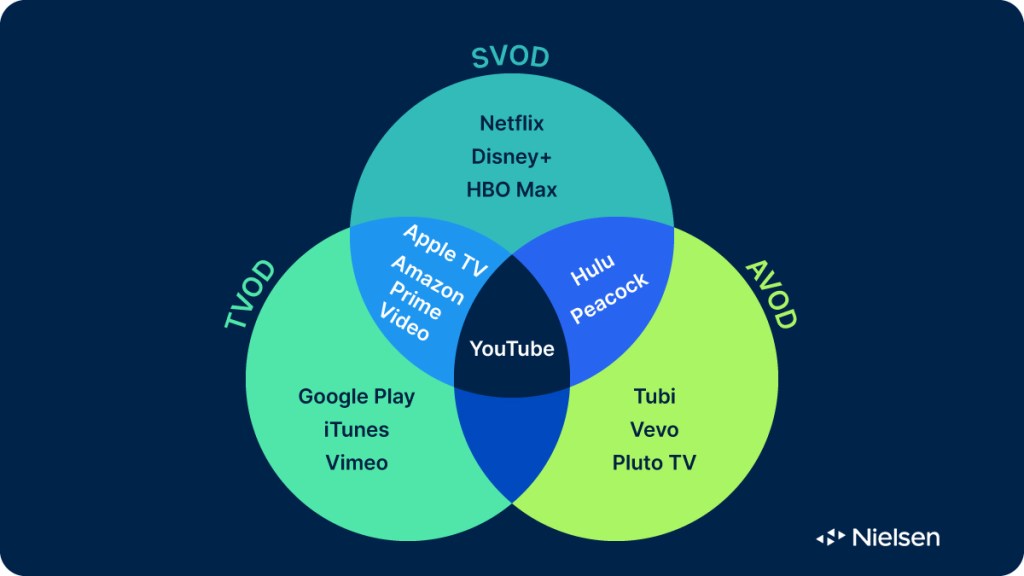
- Subscription Video On Demand (SVOD) — Audiences pay a monthly or yearly rate to access content, typically without ads. SVOD services include Netflix, Disney+ and HBO Max.
- Advertising-based Video On Demand (AVOD) — Audiences access AVOD content for free (or at a reduced rate) in exchange for watching ads. Many SVOD services now offer an AVOD tier. AVOD services include Tubi, VEVO, and PlutoTV.
- Transactional Video On Demand (TVOD) — Audiences access TVOD content on a pay-per-view basis. AVOD services include Google Play, iTunes and Vimeo.
Wait, there’s more! Streaming services are now making room for linear TV, too. Linear TV refers to scheduled programming that is accessed through a satellite or cable network. These services, in particular, are rising in popularity as viewers have to sift through more content and platform choices than ever.
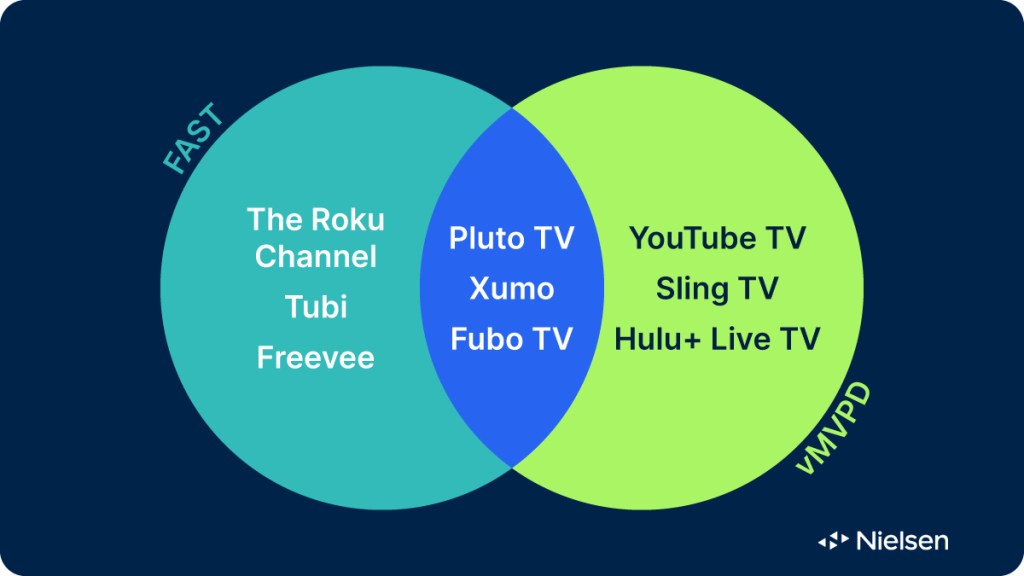
- Free Ad-supported Streaming Television (FAST) — An app, service or channel that streams scheduled programming—similar to a linear TV experience—through a connected device. FAST services include The Roku Channel, Tubi and Amazon Freevee.
- Virtual Multichannel Video Programming Distributors (vMVPD) — Services providers that bundle and deliver multiple channels to subscribers over the internet. vMVPD services include YouTube TV, Sling TV and Hulu + Live TV.
Czym różnią się doświadczenia reklamowe na urządzeniach OTT i CTV?
Remember, when we talk about CTV, we’re always talking about the TV screen. OTT refers to CTV plus desktop, mobile and tablet streaming. So, naturally, that means CTV devices and all other OTT devices have both distinct and overlapping ad experiences.
Zalety reklam strumieniowych
- Precyzja: Reklamy strumieniowe mogą wykorzystywać szczegółowe dane użytkowników dostępne na urządzeniach mobilnych, tabletach i komputerach stacjonarnych, co pozwala na bardziej zaawansowane kierowanie, mniejsze straty i lepsze zrozumienie wydajności.
- Koszty: Mniejsze ekrany i niższe zaangażowanie oznaczają, że spoty reklamowe OTT są zazwyczaj tańsze niż inne reklamy telewizyjne, w tym CTV.
- Interaktywność: Dzięki działaniom użytkownika, od których dzieli go tylko kliknięcie lub przesunięcie palcem, widzowie mogą być przekierowywani bezpośrednio do witryny lub aplikacji marki, tworząc jednoetapowe ścieżki użytkownika na platformach obsługujących tę funkcjonalność
Zalety reklamy CTV
- Zaangażowanie: W przeciwieństwie do innych urządzeń OTT, większości reklam CTV nie można pominąć, a segmenty reklamowe są generalnie krótsze niż w telewizji linearnej i mniej prawdopodobne jest, że ktoś wyjdzie z pokoju.
- Odporność: Indywidualne śledzenie użytkowników jest rzadkością, co wymusiło poleganie na zagregowanych danych gospodarstwa domowego i wskazówkach kontekstowych. Chociaż ma to ograniczone możliwości kierowania, to również pozwala CTV rozwijać się w świecie bez plików cookie.
- Wspólne oglądanie: Ekrany telewizyjne są zazwyczaj znacznie większe niż w przypadku innych urządzeń OTT. Większe ekrany, szczególnie w przestrzeniach wspólnych wokół domu, tworzą środowiska reklamowe znacznie bardziej sprzyjające oglądaniu ich przez grupy, a nie tylko pojedyncze osoby.
Przeszkody reklamowe dla obu
- Przejrzystość: Niezależnie od tego, czy kupują bezpośrednio od dostawców transmisji strumieniowych, programatycznie, czy za pośrednictwem odsprzedawców, reklamodawcy często nie mogą wybrać lub nie wiedzą, które treści będą otaczać ich reklamy.
- Fragmentacja: Podczas gdy zakup na poziomie platformy lub programu zapewnia większą kontrolę, mnoży zbiory danych i metodologie pomiaru. Bez zestawu wspólnych wskaźników marketerzy mają trudności z ekstrapolacją całościowej wydajności
- Oszustwo: Ekosystem streamingu nie ma jeszcze spójnych standardów pomiarowych, identyfikatorów użytkowników lub urządzeń, co czyni go podatnym na nieuczciwe działania.
Zarówno CTV, jak i szersze kanały OTT mają wyraźne mocne strony, ale rzadko kiedy marketerzy muszą wybierać stronę. Działają one najlepiej, gdy współpracują ze sobą, tworząc wielokanałową strategię, która uwzględnia pełne doświadczenie streamingowe widza.
Co napędza wzrost popularności streamingu?
To, co zaczęło się jako niszowy zakątek w krajobrazie medialnym na początku XXI wieku, stało się dominującą formą oglądania telewizji w USA.1 And streaming’s trend line isn’t likely to dip down anytime soon for a few reasons:
- Younger viewers (18-34) spend considerably more time with streaming2 than any other TV source
- Główni gracze streamingowi, tacy jak Amazon Prime Video, Netflix i Peacock, inwestują w programy sportowe i wydarzenia na żywo, ostatnie bastiony telewizji wizytowej
- FAST streaming channels offer a familiar linear viewing experience without having to choose when or what to watch after picking a channel.
To, co zaczęło się jako niszowy zakątek w krajobrazie medialnym na początku XXI wieku, stało się dominującą formą oglądania telewizji w USA.
Growing CTV reach and usage is also supercharging the streaming boom. The reach of CTV devices in the U.S. has jumped to 75%, up from 58% at the start of 2020. Smart TVs, which often come pre-installed streaming apps, are nearing ubiquity3 in the U.S. And it’s not a U.S. only phenomenon. In Australia, 90%4 of the population 14 and older steam OTT content.
Co może blokować rozwój streamingu?
Podczas gdy liczby dowodzą, że streaming wciąż ma się dobrze, na horyzoncie mogą pojawić się chmury. Konsumenci korzystali z subskrypcji około trzech usług streamingowych. Jednak wraz z pojawieniem się nowych graczy i wzrostem miesięcznych kosztów, streaming zaczął przypominać bardziej skomplikowaną i kosztowną wersję telewizji kablowej.
Tańsze, wspierane reklamami poziomy dostępne obecnie na większości głównych platform oferują większy wybór dla widzów i możliwości dla reklamodawców, ale targetowanie, atrybucja i ujednolicony pomiar stoją na drodze do maksymalnego potencjału CTV i OTT. W Nielsen wierzymy, że rozwiązaniem jest pomiar na poziomie osoby, aby zidentyfikować, kto ogląda, co ogląda i jak zachowuje się w świecie rzeczywistym.
Kolejną ważną rzeczą, z którą marketerzy streamingowi będą się zmagać przez kilka następnych lat, są zmieniające się przepisy dotyczące prywatności. Każdy nowy kanał lubi eksperymentować na dzikim zachodzie, ale w miarę jak CTV zdobywa coraz większy udział w wydatkach na reklamę, pojawi się kontrola wykorzystania danych.
We have thoughts on how to solve for that, too. Big data, validated by representative person-level panels, provides the most accurate view of an audience. It has the dual benefit of ensuring a privacy-safe solution for marketers across OTT and CTV channels.
Jaka jest przyszłość telewizji?
Obecnie telewizja jest postrzegana binarnie: linearnie i strumieniowo. Jednak w miarę zbliżania się do niemal całkowitej cyfryzacji telewizji, te niegdyś ostre linie szybko się zacierają. Sposób, w jaki definiujemy terminy takie jak OTT, CTV, a nawet telewizja, może ulec zmianie. Pojawią się nowe kanały, zmienią się zachowania.
To, co nie ulegnie zmianie, to pragnienie marketerów, aby wiedzieć i podążać tam, gdzie są odbiorcy. Aby to osiągnąć, branża będzie potrzebować wiarygodnych pomiarów i wskaźników, które będą działać wszędzie tam, gdzie znajdują się odbiorcy - dziś i jutro.
Nielsen’s Need to Know reviews the fundamentals of audience measurement and demystifies the media industry’s hottest topics. Read every article here.
Uwagi
1As of November 2023, streaming (whether from digital-first or legacy TV companies) accounted for nearly 40% of total TV minutes according to Nielsen’s Wskaźnik.
260% of time spent with TV is on streaming for audiences 18-34 according to Nielsen’s 2024 Upfronts/NewFronts Planning Guide.
3As of 2023, Smart TV penetration is 70.6% among U.S. TV homes according to Nielsen’s National TV Panel
42023 S08 National Survey, September-October