TV has changed dramatically in recent years. New devices, distributors, streaming platforms, subscription models, and formats are transforming the industry and empowering viewers. But there’s one thing that hasn’t changed: People love to watch TV together.
It depends on the occasion, of course—what the program is, the time of day, the size of the screen, what room it’s in, the size of the family and whether anyone simply happens to be around. But people get together today to watch the Super Bowl or The Bachelorette for the same reason they got together to watch M*A*S*H or the Apollo 11 moon landing half a century ago: to have someone to share the experience with.
In the lingo of the media industry, that’s known as co-viewing. Let’s examine why it’s so important for measurement companies to get it right.
Jak często ludzie oglądają razem telewizję?
W Nielsen od dawna zajmujemy się badaniem współoglądalności. Nasze historyczne rozwiązania pomiarowe zawsze opierały się na ludziach, nawet wtedy, gdy istniała tylko garstka głównych sieci nadawczych. Dzięki temu zawsze dysponowaliśmy wiarygodnym źródłem danych na temat współoglądalności. Obecnie w domach w całej Ameryce 47%1 linearnej i połączonej telewizji (CTV) jest oglądane przez więcej niż jedną osobę jednocześnie.
Today, there’s virtually no difference in co-viewing rates between linear TV and CTV, but it wasn’t always the case. Back in 2017, we ran a study with Roku and found a significant gap in co-viewing between linear TV (48%) and OTT (34%). Since then, smart TVs have become more widespread and large screens more affordable. And, increasingly, consumers don’t make the distinctions between linear and streaming or TV and digital. It’s all TV.
But that doesn’t mean that there aren’t any variations and that the same co-viewing factor can be applied across the board. There’s more co-viewing during primetime and on weekends, for sports and children programming, among men, young adults and in houses with more children. It also matters where the TV is located inside the house. Every case is different, and the only way to properly account for co-viewing is to measure it directly or model it separately for every ad impression.
Po co dbać o to, czy ludzie oglądają razem telewizję?
Most brands want to reach people, not households—and certainly not faceless devices. Wholesale ad impressions are nice, but they’re not enough. When they buy media, advertisers and their agencies spend top dollars to reach specific demographic targets (like 18-34 year-old women in Philadelphia, or 55+ in Arizona) or advanced audiences (like EV drivers who buy organic). They need guarantees that their ads are reaching the right people, and measuring co-viewing gets to the heart of that question.
Firmy medialne ze swojej strony muszą wiedzieć, kto ogląda ich treści, aby zrozumieć swoich odbiorców, zoptymalizować swoje programy i odpowiednio wycenić zasoby reklamowe. Na przykład, jeśli nowy program osiąga szczególnie dobre wyniki wśród młodych dorosłych, mogą zamówić nowe sezony, odświeżyć podobne programy i rozwinąć niszę, na której mogą zarabiać, aby zwiększyć liczbę subskrybentów lub przyciągnąć reklamodawców, którzy chcą dotrzeć do tych widzów.
W dzisiejszym bardzo rozdrobnionym i niezwykle konkurencyjnym krajobrazie telewizyjnym, firmy medialne nie sprzedają już "tonażu", a reklamodawcy nie kupują bezkrytycznie "gałek ocznych". Wszyscy oni potrzebują rozwiązań pomiarowych, które pomogą im w deduplikacji widzów (w obrębie i na różnych urządzeniach), obliczaniu docelowego dostarczania reklam, optymalizacji zasięgu i częstotliwości oraz poprawie kluczowych wskaźników wydajności kampanii (takich jak docelowe wskaźniki skuteczności demo). Nie można osiągnąć żadnego z tych celów bez pomiaru na poziomie osoby.
Jak mierzymy współoglądalność w Nielsen?
The most direct way to measure co-viewing is to monitor TV viewership at the individual level. That’s the case with our National TV Panel and top Local TV Markets. In these markets, our panelists “check-in” to the audience. But to add more depth and stability to our audience solutions—and provide more visibility into smaller audiences in smaller TV markets—we’re increasingly relying on big data based on ACR (for smart TVs) return-path data (for cable and satellite providers), or device and context identifiers (for ad impressions). And those technologies only capture viewing information at the household level.
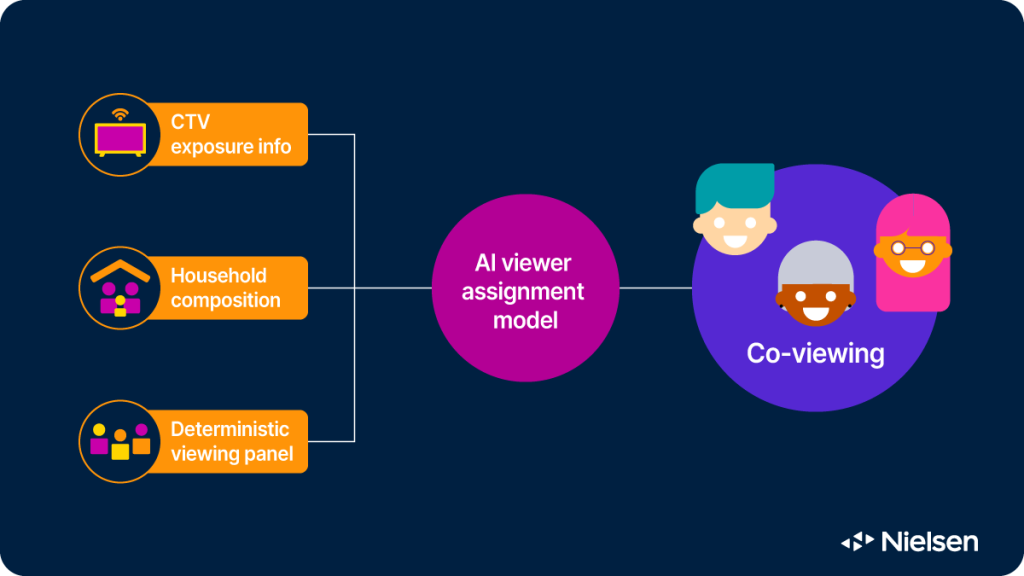
Nielsen is able to determine who is watching thanks to a process called Viewer Assignment that was developed a decade ago and has since been continuously refined. It uses advanced statistical techniques to match faceless viewing data from big data sources (like Roku, Vizio, Hulu, Netflix, YouTube and others) to our persons-level panel data for every possible viewing event and ad impression. The match is based on similarities in viewing behavior (down to the program level) as well as geography, household composition, device type and location inside the house, time of day, day of week, and other key predictors. The model never stops learning, and we’re constantly validating its performance to make sure it’s as close to reality as possible.
Posiadanie pod ręką danych panelowych przynosi ogromne korzyści, aby w pełni wykorzystać te nowe źródła danych, ale ważne jest, aby zdawać sobie sprawę, że proces taki jak Viewer Assignment nie rekompensuje wszystkich przypadków brakujących danych widzów. Czasami nie ma wiarygodnego dopasowania do tego, co widzimy w danych oglądalności lub skład gospodarstwa domowego nie jest łatwo dostępny. W przypadku około 9% wszystkich danych CTV nadal trudno jest przypisać nawet proste dane demograficzne widzów, takie jak wiek i płeć. W takich przypadkach Nielsen polega na solidnych modelach predykcyjnych, aby informować i dostarczać przypisania widzów.
What’s next?
Niedawne przełomy metodologiczne pomogły nam przypisać charakterystykę widza do znacznie większej liczby miejsc wyświetlania reklam - znacznie zwiększając naszą zdolność do pomiaru zasięgu w tym procesie. Nasze modele stale uczą się na podstawie ogromnych ilości danych i sygnałów Nielsena, dzięki czemu nasze przewidywania dotyczące widzów są coraz bardziej kompleksowe.
Współoglądanie zawsze było integralną częścią doświadczenia telewizyjnego i nie zmieni się to w najbliższym czasie. Upewnij się, że jest to również integralna część Twojej strategii pomiarowej.
Nielsen’s Need to Know reviews the fundamentals of audience measurement and demystifies the media industry’s hottest topics. Read every article here.
Uwagi
1Nielsen Panel Data