Also known as the “Big Game” in the U.S., the Super Bowl is typically one of the most viewed TV moments. In fact, in 2024 Super Bowl LVIII, featuring the Kansas City Chiefs and the San Francisco 49ers, had the largest TV audience for a single-network telecast. It’s also a sports event that audiences will frequently watch together. But it’s not the only programming audiences gather for. Our research shows that Americans watch TV with other people (friends, family, even strangers at the bar) 47% of the time, on average, and alone the rest of the time.
최소 한 명 이상의 다른 사람과 함께 TV를 시청하는 공동 시청은 TV 시청 경험의 필수적인 부분이며 이해하기 쉬운 개념이지만 측정하기는 쉽지 않습니다. 따라서 일부 미디어 플래너는 여전히 평면적인 공동 시청 인자를 기기 지표를 개별 오디언스로 변환하는 지름길로 사용하고 있습니다. 공동 시청 인자란 무엇인가요? 예를 들어 보겠습니다: 오후 2시에는 TV 화면당 1.2명의 시청자가, 오후 8시에는 1.5명의 시청자가 시청할 것으로 예상해야 합니다. 빠르게 변화하고 고도로 세분화된 오늘날의 TV 시장에서는 더 이상 이 정도로는 충분하지 않습니다.
평평한 공동 시청 요소가 얼마나 부적절한지 설명하기 위해 지난 몇 년간 스포츠 프로그램 중 공동 시청 활동을 살펴봅시다.
스포츠 프로그램의 공동 시청은 시간에 따라 크게 달라집니다.
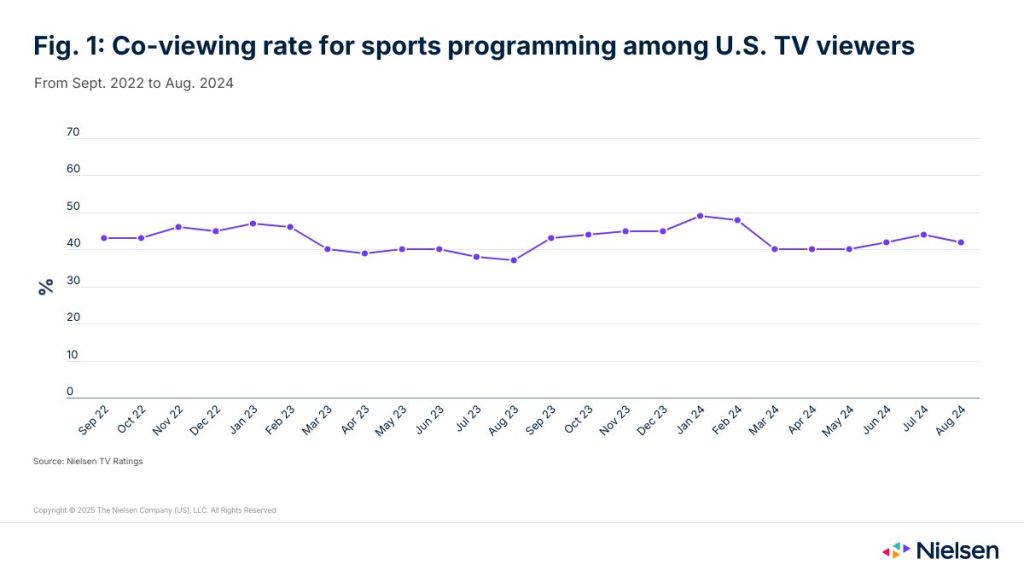
Figure 1 shows the co-viewing rate (the percentage of total viewing time spent co-viewing rather than viewing alone) for all TV viewers in the U.S. from September 2022 to August 2024, across all sports programming and regardless of platform (broadcast, cable and streaming). The month-to-month variations are substantial, dipping as low as 37% in August 2023 and reaching close to 50% in January and February of 2024.
The peaks correspond to tentpole sporting events, like the Super Bowl or Copa América, but marquee events taking place outside of the U.S. led to comparatively poor co-viewing rates. That doesn’t mean that the 2022 FIFA World Cup in Qatar and the 2023 Women’s World Cup in Australia and New Zealand had poor ratings in the U.S.—quite the opposite, in fact—but it’s more difficult to gather family and friends to watch the matches when they’re broadcast in the middle of the night or in the early morning. As for March Madness, it seemed to attract more alone viewing than average, even though we can see a small bump in co-viewing associated with the record-breaking 2024 tournaments.
인구 통계에 따른 주요 공동 시청 격차
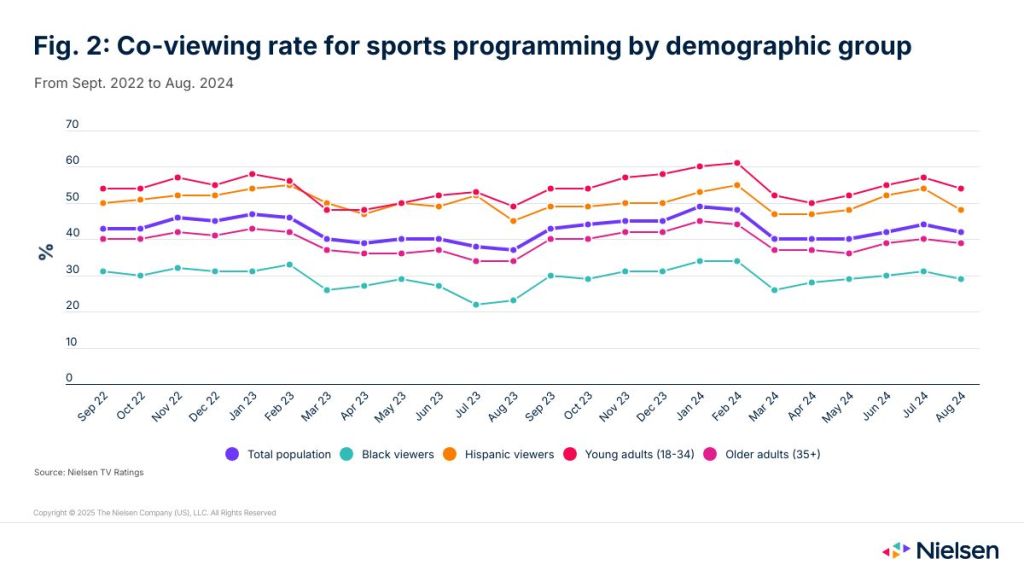
인구 통계 그룹에 따라 공동 시청 비율도 크게 달라집니다. 그림 2는 같은 2년 동안 히스패닉계와 흑인 시청자 간의 스포츠 프로그램 공동 시청률 격차가 20%포인트, 젊은 시청자와 고령 시청자 간의 격차가 10~15%포인트임을 보여줍니다.
Household size is a factor (Hispanic viewers live in larger households), but there are cultural factors at play as well. For instance, young adults might be more willing to go out and watch sports broadcasts with groups of friends. They’re watching considerably less TV than their older counterparts, especially linear TV, but the little they’re watching, they’re doing as a group.
스포츠는 다른 프로그램 장르와 어떻게 비교되나요?
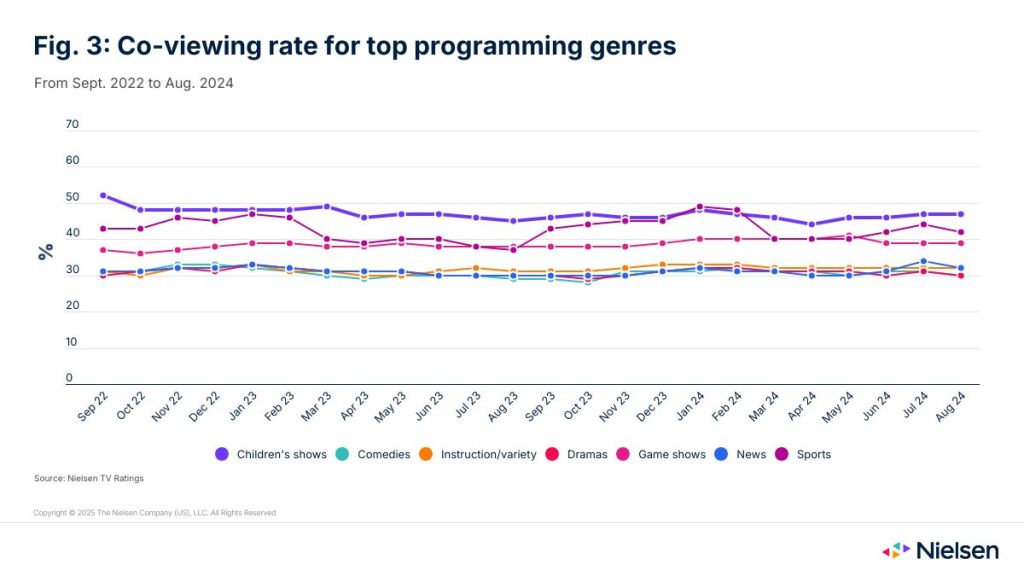
그림 3에서는 시야를 조금 넓혀 스포츠 프로그램 중 공동 시청을 드라마, 뉴스, 버라이어티 쇼 등 다른 인기 프로그램 장르의 공동 시청과 비교해 보았습니다.
We can see that over that same two-year time period, children’s shows consistently produced more co-viewing than sports—not surprising considering that kids, especially young kids, often have a parent around when they’re watching TV—and showed more stability over time as well. Game shows performed really well too, a good reminder of the effect that streaming has had in recent years in broadening the genre’s appeal beyond its traditional (read: older) linear TV audience. And the rest of the top programming genres stayed within a narrow co-viewing band just above the 30% mark.
광고주 및 미디어 소유자를 위한 주요 시사점
위의 인사이트에서 어떤 결론을 도출해야 할까요?
- First and foremost, there’s no such thing as a flat co-viewing factor. That’s clearly evident when we look at sports, but there are subtle variations for other genres as well (and more so if we start to drill down at the program level).
- If you’re an advertiser planning to target a specific demographic group or a more advanced audience, you should throw your co-viewing assumptions out the window and get your hands on co-viewing insights based on actual real-life behavior for that target group.
- If you’re a media owner, understanding whether people are watching alone or with other people can help you finetune your own shows and improve how you monetize your audiences.
여러분의 세계에서 실제로 공동 시청이 어떤 모습인지 살펴볼 준비가 되셨나요?
In a recent blog post, we reviewed how Nielsen’s co-viewing calculations rely on robust people-based measurement solutions inside and outside the house, as well as advanced algorithms to assign viewership to individuals when the only available data comes from devices, as is typically the case with big data from set-top boxes and smart TVs.
Learn more about how and when audiences watch television, or contact us to discover how to use co-viewing to your advantage.