A lasting effect of digitization and the pandemic has been the proliferation of consumer choice. From being able to purchase cars and furniture online, to the pandemic’s effect of pushing more shopping into infinite virtual shelves, consumers are facing more options. That vast choice and supply chain strain have affected brand loyalty to some degree, but not to the degree that you might think. And for marketers seeking to grow their brand through new customer acquisition, all that choice means a lot more competition for new buyers.
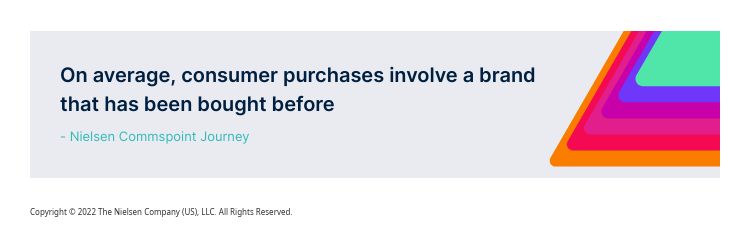
Though wooing new customers is a major focus for marketers, consumers are not inclined to start a relationship with a new brand. Research from Nielsen Commspoint Journey, which helps clients understand the attitudes, motivations and behaviors that lead to purchases, shows that 85% of consumer purchases in over 80 categories involved a brand the consumer had tried in the past. High levels of repeat purchasing might be expected in categories where buying behavior is highly routinized, and consumers are shopping on auto-pilot. But even in high-consideration categories, defined by purchase journeys that are typically longer than a week, hesitation with trying a new brand is still high. Nielsen data shows that in these high-consideration categories, 75% of consumers still buy from a brand they’ve bought in the past.
リピート購入が多い理由として考えられるのは、消費者にとって新しいブランドに挑戦することはリスクの高い提案であり、消費者はそのリスクを避けようとしているということである。Commspoint Journeyのデータによると、米国の消費者のほぼ4分の1(22%)が、新しいブランドを購入するまでの間に不安や緊張を感じたと回答している。これは、消費者が以前購入したブランドを再度購入する際に感じる不安(11%)の2倍のレベルである。また、当然のことながら、消費者は、ハイテク、自動車、金融サービスなど、コストがより重要な要素となるカテゴリーでより不安を感じている。
ブランドは、消費者の信頼を築くことで、消費者のためらいを軽減することができる。信頼はあらゆるブランドと消費者の関係の核心であり、新しい関係においてはさらに重要である。ニールセンのCommspoint Journeyのデータによると、新しいブランドを検討している人々は、平均的な消費者よりも25%高い確率で、理想的なブランド関係を信頼関係を含むものとして説明している。
Consumers evaluate multiple sources of information along their purchase journeys to assess a brand’s trustworthiness. A brand’s reputation, reflected in reviews and word of mouth, certainly carries significant weight. Nielsen’s U.S. Trust in Advertising survey found these sources to be among the most trustworthy among more than 20 sources considered. But it might surprise marketers to know that ads are cited more often than reviews or recommendations as useful or influential resources along the journey. According to Commspoint Journey, just 18% of new brand triers recall using reviews in their journey. By comparison, 30% used recommendations and 45% say they found advertising useful or influential.
Given the critical role of advertising, marketers should give careful thought to where they place their ads. When building trust is at stake, our U.S. Trust in Advertising survey found that marketing investments like sponsorships, newspaper ads and ads before movies were the among most trustworthy. In contrast, ads that appeared in mobile text, online banners or social media were viewed as less trustworthy. And Influencers, which blend elements of sponsorship and social, were seen as about average relative to other marketing investments.
エンゲージしたい特定のオーディエンスを持つブランドは、そのオーディエンスがどのチャンネルを最も信頼するかを理解することにメディアの価値を見出すだろう。例えば、X世代の消費者はラジオの広告を最も信頼するが、シニア世代は購読申し込み メールの広告を信頼する傾向がはるかに高い。
特定のカテゴリーや業界では、消費者との信頼関係を築く可能性を高めるチャネルを選ぶことが、さらに重要な意味を持つ。消費者は、政治、製薬、金融サービスの広告を最も信頼していない。つまり、これらの分野の広告主は、消費者の信頼を引き出す可能性が最も高いマーケティング・チャネルを選ぶべきである。