A lasting effect of digitization and the pandemic has been the proliferation of consumer choice. From being able to purchase cars and furniture online, to the pandemic’s effect of pushing more shopping into infinite virtual shelves, consumers are facing more options. That vast choice and supply chain strain have affected brand loyalty to some degree, but not to the degree that you might think. And for marketers seeking to grow their brand through new customer acquisition, all that choice means a lot more competition for new buyers.
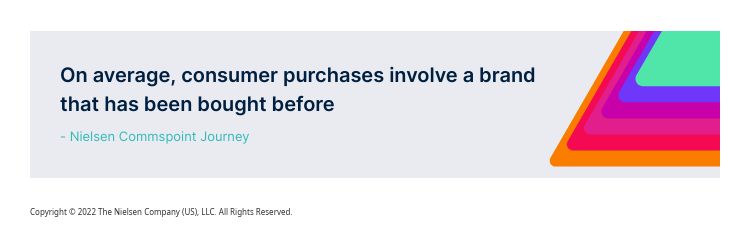
Though wooing new customers is a major focus for marketers, consumers are not inclined to start a relationship with a new brand. Research from Nielsen Commspoint Journey, which helps clients understand the attitudes, motivations and behaviors that lead to purchases, shows that 85% of consumer purchases in over 80 categories involved a brand the consumer had tried in the past. High levels of repeat purchasing might be expected in categories where buying behavior is highly routinized, and consumers are shopping on auto-pilot. But even in high-consideration categories, defined by purchase journeys that are typically longer than a week, hesitation with trying a new brand is still high. Nielsen data shows that in these high-consideration categories, 75% of consumers still buy from a brand they’ve bought in the past.
Jednym z możliwych wyjaśnień wysokiej powtarzalności zakupów jest to, że dla konsumentów wypróbowanie nowej marki jest ryzykowną propozycją, a konsumenci starają się uniknąć tego ryzyka. Dane Commspoint Journey pokazują, że prawie jedna czwarta (22%) konsumentów w USA zgłasza uczucie niepokoju lub zdenerwowania podczas podróży zakupowej w celu zakupu nowej marki. To dwa razy więcej niż poziom niepokoju odczuwanego przez konsumentów (11%), gdy ponownie kupują markę, którą kupili wcześniej. Nic dziwnego, że konsumenci są bardziej zaniepokojeni w kategoriach, w których koszt jest ważniejszym czynnikiem, takich jak technologia, motoryzacja i usługi finansowe.
[infogram id=”213124a7-00a8-4c7d-b320-1c6cf9970148″ prefix=”rGT” format=”interactive” title=”Anxiety Among New Brand Buyers”]
Marki mogą złagodzić wahania konsumentów, budując ich zaufanie. Zaufanie jest podstawą każdej relacji między marką a konsumentem, a w przypadku nowych relacji jest jeszcze ważniejsze. Według danych Nielsen Commspoint Journey, osoby rozważające nową markę są o 25% bardziej skłonne niż przeciętny konsument do opisania swojej idealnej relacji z marką jako takiej, która obejmuje zaufanie.
Consumers evaluate multiple sources of information along their purchase journeys to assess a brand’s trustworthiness. A brand’s reputation, reflected in reviews and word of mouth, certainly carries significant weight. Nielsen’s U.S. Trust in Advertising survey found these sources to be among the most trustworthy among more than 20 sources considered. But it might surprise marketers to know that ads are cited more often than reviews or recommendations as useful or influential resources along the journey. According to Commspoint Journey, just 18% of new brand triers recall using reviews in their journey. By comparison, 30% used recommendations and 45% say they found advertising useful or influential.
Given the critical role of advertising, marketers should give careful thought to where they place their ads. When building trust is at stake, our U.S. Trust in Advertising survey found that marketing investments like sponsorships, newspaper ads and ads before movies were the among most trustworthy. In contrast, ads that appeared in mobile text, online banners or social media were viewed as less trustworthy. And Influencers, which blend elements of sponsorship and social, were seen as about average relative to other marketing investments.
Marki, które mają określonych odbiorców, z którymi chcą się zaangażować, znajdą wartość medialną w zrozumieniu, które kanały są dla nich najbardziej godne zaufania. Na przykład konsumenci z pokolenia X najbardziej ufają reklamom w radiu, podczas gdy seniorzy znacznie częściej ufają reklamom w subskrybowanych przez siebie wiadomościach e-mail.
[infogram id=”c40a8e51-d77c-4fe8-a207-b260f0f47734″ prefix=”9ro” format=”interactive” title=”US Trust in Advertising 2022 top 3″]
Wybór kanałów, które zwiększają prawdopodobieństwo budowania zaufania konsumentów, ma jeszcze większe znaczenie w przypadku niektórych kategorii i branż. Konsumenci najmniej ufają reklamom politycznym, farmaceutycznym i usług finansowych, co oznacza, że reklamodawcy w tych obszarach powinni wybierać kanały marketingowe, które z największym prawdopodobieństwem wzbudzą zaufanie konsumentów.