メディア業界において、今ほど選択肢が豊富な時代はない。コネクテッドTV(CTV)の普及やストリーミング・プラットフォームの増加により、メディアを欲する消費者は、新しく魅力的なコンテンツに魅了され続けている。しかし、選択肢が豊富であるにもかかわらず、多くの人々は、提供されるコンテンツに自分自身の姿が十分に反映されていない。
ダイバーシティとインクルージョンは、今日のメディアにおいて、スクリーン上でもストーリー上でも重要な要素であり、特に米国のラテン系住民を取り上げた本格的なテレビ番組の需要に関しては、メディア業界も注目している。
For example, the Gracenote Inclusion Opportunity Index, which compares the share of screen time for different identity groups against their representation in population estimates, shows a jump of 62 index points in Latino representation across televised entertainment programming between 2019 and 2020. That means that while overall television content featuring Hispanics on-screen in 2019 and 2020 are still below the population estimate, there is a positive movement toward closing the representation gap illustrated by the increased representation in 2020, and it’s more pronounced when evaluated by genre.
インクルージョンへのシフトは多くの理由から重要であり、そのひとつが米国のラテン系人口の顕著な増加である。実際、ヒスパニック系は現在、米国人口の19%を占めており、過去10年間の米国人口増加の50%以上を牽引してきた。
Frustrated by decades of erasure in Hollywood, Latinos are calling for authentic share of screen in content, with 39% saying their individual identity groups aren’t represented enough on TV1. This sentiment is reflected in traditional TV viewing, as Hispanics accounted for just 12% of the linear TV audience in June. Comparatively, Whites accounted for 66% share2. Programs that do attract notable Hispanic audiences are those that star Latinos, such as Selena, エヌシーアイエス そして Criminal Minds. This viewing behavior is in sync with the sentiment from nearly 60% of Latinos who say they’re more likely to watch programming featuring their identity group.
ちょうど1年前、リニアおよびストリーミング・プラットフォーム全体において、画面上のラテン系視聴者の割合はわずか6%だった。今年は10%弱に増えたが、それでも米国人口の19%を大きく下回っている。
As they seek out programming that features their identity group, Latinos are spending an increasing amount of time watching content on streaming platforms, many of which are attracting larger Hispanic audiences than linear programming is. In June, for example, Hispanics accounted for 22% of the minutes streamed on Netflix. The behavior supports the sentiment from 55% of Latinos who say that streaming options have more content that is relevant to them.
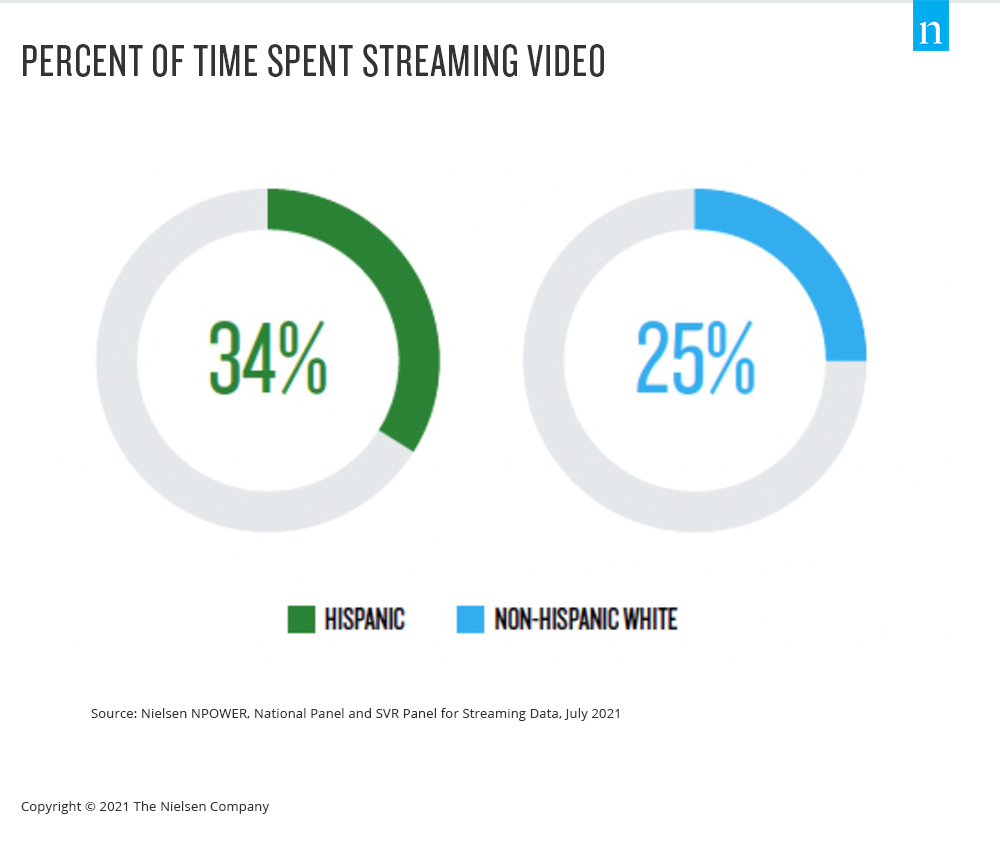
重要なのは、スペイン語コンテンツがスクリーン上の表現力を高めることである。スペイン語コンテンツがなければ、ラテン系の代表はわずか6%に減少する。また、交差性など、多くのジャンルの番組で大きな表現格差がある。例えば、アフロ・ラティーナは、すべてのプラットフォームでほとんど存在せず、わずか0.48%しかいない。また、ラテン系女性が画面に登場する場合、犯罪、家族の機能不全、感情的なドラマをテーマとするコンテンツに限られている。しかし、番組におけるステレオタイプなキャスティングは、ラテン系コミュニティ全体、特に女性の間でも同様に見られる。

選択肢が増えている中で、特にパブリッシャーが満たされていないニーズを特定した場合、本物のコンテンツが重要な差別化要因となる。私たちは、アイデンティティを持つ人々は、自分たちが最も共感できるコンテンツ、つまり自分たちの姿を見ることができるコンテンツを探し求め、それに関与する傾向が強いことを知っています。
For additional insights, download our latest Diverse Intelligence Series report about U.S. Latinos.
備考
- Nielsen Attitudes on Representation on TV Study, May 2021
- ニールセン全国TVパネルとストリーミングメーターホーム数、総ストリーミング分数(加重)のシェア、P2+、総日数、2021年6月