A lasting effect of digitization and the pandemic has been the proliferation of consumer choice. From being able to purchase cars and furniture online, to the pandemic’s effect of pushing more shopping into infinite virtual shelves, consumers are facing more options. That vast choice and supply chain strain have affected brand loyalty to some degree, but not to the degree that you might think. And for marketers seeking to grow their brand through new customer acquisition, all that choice means a lot more competition for new buyers.
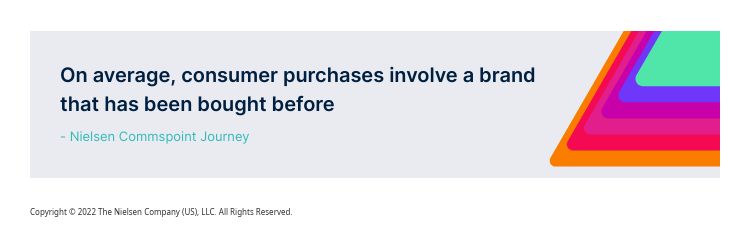
Though wooing new customers is a major focus for marketers, consumers are not inclined to start a relationship with a new brand. Research from Nielsen Commspoint Journey, which helps clients understand the attitudes, motivations and behaviors that lead to purchases, shows that 85% of consumer purchases in over 80 categories involved a brand the consumer had tried in the past. High levels of repeat purchasing might be expected in categories where buying behavior is highly routinized, and consumers are shopping on auto-pilot. But even in high-consideration categories, defined by purchase journeys that are typically longer than a week, hesitation with trying a new brand is still high. Nielsen data shows that in these high-consideration categories, 75% of consumers still buy from a brand they’ve bought in the past.
Una possibile spiegazione dell'elevato numero di acquisti ripetuti è che per i consumatori provare un nuovo marchio è una proposta rischiosa, che cercano di evitare. I dati di Commspoint Journey mostrano che quasi un quarto (22%) dei consumatori statunitensi dichiara di sentirsi preoccupato o nervoso durante l'acquisto di un nuovo marchio. Si tratta di un livello di ansia doppio rispetto a quello che i consumatori provano (11%) quando riacquistano un marchio già acquistato in precedenza. E non sorprende che i consumatori siano più ansiosi nelle categorie in cui il costo è un fattore più importante, come nel settore tecnologico, automobilistico e dei servizi finanziari.
I marchi possono attenuare l'esitazione dei consumatori costruendo la loro fiducia. La fiducia è al centro di qualsiasi relazione tra marchio e consumatore, ed è ancora più critica per le nuove relazioni. Secondo i dati di Nielsen Commspoint Journey, le persone che stanno valutando un nuovo marchio hanno il 25% di probabilità in più rispetto alla media dei consumatori di descrivere il loro rapporto ideale con il marchio come un rapporto che include la fiducia.
Consumers evaluate multiple sources of information along their purchase journeys to assess a brand’s trustworthiness. A brand’s reputation, reflected in reviews and word of mouth, certainly carries significant weight. Nielsen’s U.S. Trust in Advertising survey found these sources to be among the most trustworthy among more than 20 sources considered. But it might surprise marketers to know that ads are cited more often than reviews or recommendations as useful or influential resources along the journey. According to Commspoint Journey, just 18% of new brand triers recall using reviews in their journey. By comparison, 30% used recommendations and 45% say they found advertising useful or influential.
Given the critical role of advertising, marketers should give careful thought to where they place their ads. When building trust is at stake, our U.S. Trust in Advertising survey found that marketing investments like sponsorships, newspaper ads and ads before movies were the among most trustworthy. In contrast, ads that appeared in mobile text, online banners or social media were viewed as less trustworthy. And Influencers, which blend elements of sponsorship and social, were seen as about average relative to other marketing investments.
I marchi che hanno un pubblico specifico con il quale desiderano interagire troveranno un valore mediatico nel capire quali canali quel pubblico ritiene più affidabili. I consumatori della generazione X, ad esempio, si fidano maggiormente degli annunci alla radio, mentre gli anziani sono molto più propensi a fidarsi degli annunci provenienti dalle e-mail a cui sono abbonati.
La scelta di canali che aumentano la probabilità di creare fiducia nei consumatori ha un peso ancora maggiore per alcune categorie e settori. I consumatori si fidano meno della pubblicità politica, farmaceutica e dei servizi finanziari, per cui gli inserzionisti di questi settori dovrebbero scegliere i canali di marketing che hanno maggiori probabilità di suscitare la fiducia dei consumatori.