L'adozione di una mentalità always-on per la pianificazione dei media è la chiave per affrontare il cambiamento
Anche prima che la pandemia avesse un impatto sulla pianificazione dei media, questa aveva bisogno di un riavvio. Per i brand che sono stati costretti a ridurre i budget negli ultimi 18 e più mesi, la pianificazione media comporterà un certo livello di incertezza nel prossimo futuro. La necessità di rimettersi in carreggiata - e il più rapidamente possibile - sarà una priorità verso il 2022. È importante che i marketer riconoscano che l'approccio abituale alla pianificazione dei media sarà meno rilevante ed efficace sia durante la pandemia in corso sia in un mondo post-pandemia. Ed è qui che sta la sfida: rompere l'abitudine di impegnarsi nella pianificazione solo una o due volte l'anno e adottare rapidamente un nuovo approccio sempre attivo.
Nielsen recently identified three pillars of effective media planning that marketers should focus on in order to thrive in an uncertain future—focusing on the people they’re trying to reach, connected planning and continuous planning. While each of the three pillars work deliberately together, enabling continuous planning into a brand’s strategy may give it the quickest bang for its buck—and help brands get back on track after months of ongoing disruption.
Meno certezza significa che è necessario pianificare tutto l'anno
Tenendo presente la volatilità del mercato attuale e futuro, è il momento di adottare un processo di pianificazione continua. I passi per una pianificazione continua efficace includono:
Quando la perturbazione ha preso piede all'inizio della pandemia, i marchi agili sono stati meglio preparati a cambiare per soddisfare le esigenze e gli interessi dei consumatori. Guardando al futuro, i giorni dell'"imposta e dimentica" sono finiti e la pianificazione in cicli di 12-18 mesi probabilmente non sarà più così efficace. Al contrario, i marketer dovrebbero pianificare continuamente durante l'anno per rispecchiare le esigenze in evoluzione dei consumatori, il che può consentire di eseguire i processi in modo più efficiente e di allocare le risorse in modo efficace. La pianificazione iterativa, che prevede l'adattamento dei processi durante lo svolgimento di un progetto e la modifica dei piani quando necessario, può aiutare un marchio a monitorare, tracciare e analizzare le prestazioni delle campagne per identificare le opportunità di ottimizzazione, oltre a ciò che funziona e ciò che non funziona. Ciò consente ai marketer di modificare rapidamente la propria strategia, in base al feedback ottenuto dal processo di monitoraggio e alle modifiche apportate all'ambito, al budget o al calendario.
- Identificare il pubblico di riferimento del marchio e il suo utilizzo dei media: Identificando il pubblico, le misurazioni di attribuzione possono aiutare i responsabili del marketing a capire quali canali i consumatori utilizzano e quali annunci pubblicitari creano coinvolgimento.
- Esaminare la spesa della concorrenza: Una volta acquisita una conoscenza di base del pubblico target, è fondamentale capire come i concorrenti spendono i loro soldi in pubblicità.
- Optimize, plan for and project reach & frequency: Whether using a continuity approach, flighting or pulsing—a combination of both, when frequency increases at times when the additional messaging can have a solid impact—marketers can be more effective.
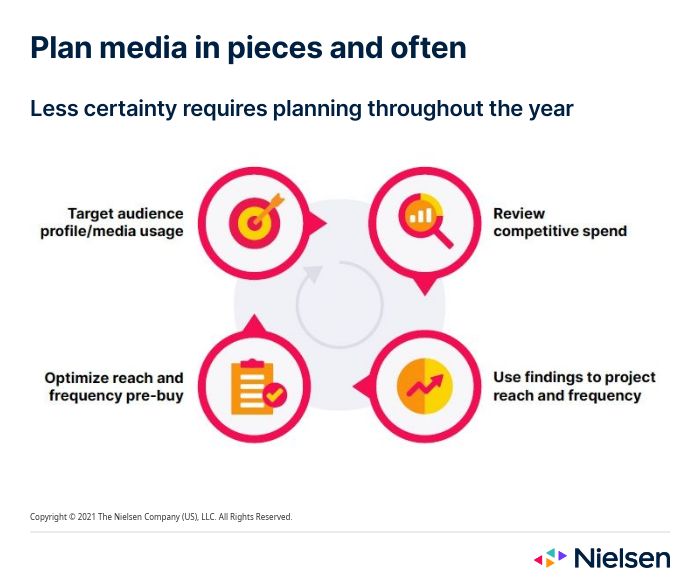
Nell'ambito di queste fasi, è fondamentale definire il pubblico di riferimento del marchio e capire con cosa si sta impegnando, senza prendere decisioni basate solo su ciò che piace o su ciò che fa un concorrente. I marketer dovrebbero anche sondare il loro target per capire i nuovi comportamenti. Grazie alla conoscenza del pubblico e della spesa della concorrenza, i marketer possono proiettare con precisione la portata e la frequenza.
Un processo consolidato dovrebbe anche garantire che un marchio ottimizzi le proprie risorse all'interno del mercato in ogni momento. Tuttavia, l'indagine annuale sul marketing di Nielsen ha rilevato che il 48% degli intervistati si sente poco o per nulla sicuro della propria capacità di misurare il ROI. In questo mondo incerto dei media, i marketer non possono riflettere sull'andamento del loro budget dopo l'utilizzo di una tattica. Al contrario, per dimostrare l'efficacia e allocare le risorse in modo oculato, i marketer dovrebbero ottimizzare le campagne utilizzando i dati sui risultati in volo, che massimizzeranno anche il ROI.
Che si tratti di un'operazione manuale o di strumenti di machine learning, i marketer devono eseguire scenari di ottimizzazione e trovare efficienze per impostare il marchio per il preacquisto, quindi portare quanto appreso nell'attivazione.
L'ambiente dei media è in continua evoluzione e i marchi devono adattarsi costantemente per poter prosperare. Nei mesi e negli anni a venire, l'adattabilità rimarrà fondamentale per i marchi di tutti i settori. Media planning deve essere agile e fluido, consentendo agli addetti al marketing di rivedere le idee dei trimestri precedenti per prendere le decisioni necessarie per andare avanti. Con una mentalità di pianificazione continua, gli inserzionisti possono prepararsi al meglio per ciò che li aspetta in tempi incerti.
For additional insights, download our Abbracciare il cambiamento nella pianificazione dei media: 3 pilastri di efficacia guide.