Niente illustra la capacità di ripresa degli americani come la spesa per i consumi. E dopo aver convissuto con il nuovo coronavirus (COVID-19) negli ultimi otto mesi, la maggioranza degli adulti statunitensi è pronta a mettere la maschera, uscire di casa e tornare a uno stile di vita non ostacolato dalla crisi, anche se in sicurezza.
With so much information now available about ways to safeguard against infection, a consumer lifestyle survey conducted in October by Nielsen Audio found that 53% of Americans believe life is starting to normalize, they are more likely to resume typical activities and are starting to shop more as restrictions permit. That doesn’t mean, however, that these consumers are disregarding health and safety. The study also found that the people who are ready to get out also feel more confident about avoiding risk and staying safe when they leave their homes.
Consumer sentiment about resuming spending is in line with recent data from the U.S. Bureau of Economic Analysis (BEA), which indicated $201.4 billion in consumer spending growth in September. While consumer spending accounts for two-thirds of the country’s economic activity, it’s also a huge part of getting back to normal routines.
It’s worth noting that the more than $3 trillion in federal pandemic relief played a big role in driving this year’s third-quarter economic growth. Despite the depletion of that stimulus, the U.S. unemployment rate, as reported by the Bureau of Labor Statistics, has been trending downward since peaking at 14.7% in April. The most recent addition of 661,000 nonfarm jobs in September cut the unemployment rate to 7.9%.
Nonostante il recente aumento dei nuovi casi di COVID-19 negli Stati Uniti, il sentimento dei consumatori americani rimane tra i più alti al mondo, con la fiducia dei consumatori del secondo trimestre (come riportato dal Conference Board) che ha raggiunto un livello di indice pari a 102 (2 punti di indice al di sopra del valore di base di 100). L'alleggerimento delle restrizioni commerciali in tutto il Paese, la mentalità marginalmente ottimista dei consumatori, una migliore comprensione di come mantenersi in salute e forse un pizzico di febbre da baita hanno influenzato la maggioranza degli americani a iniziare a spendere in beni non essenziali, tra cui la ristorazione fuori casa, la vendita al dettaglio di prodotti non alimentari e i viaggi.
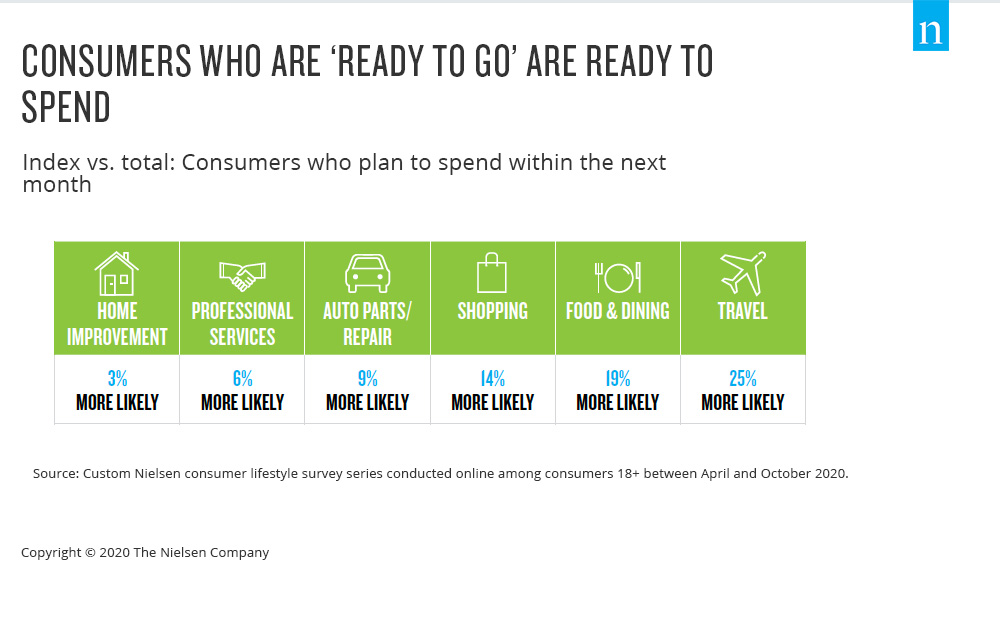
Notably, advertisers aren’t blind to the increased consumer spending, and many big advertisers have re-configured and jump-started their marketing efforts for life in the new normal. While many large advertisers benefit from being in health and e-commerce categories, such as P&G and Amazon, Digiday recently reported increased marketing initiatives from Volkswagen, Expedia and General Motors.
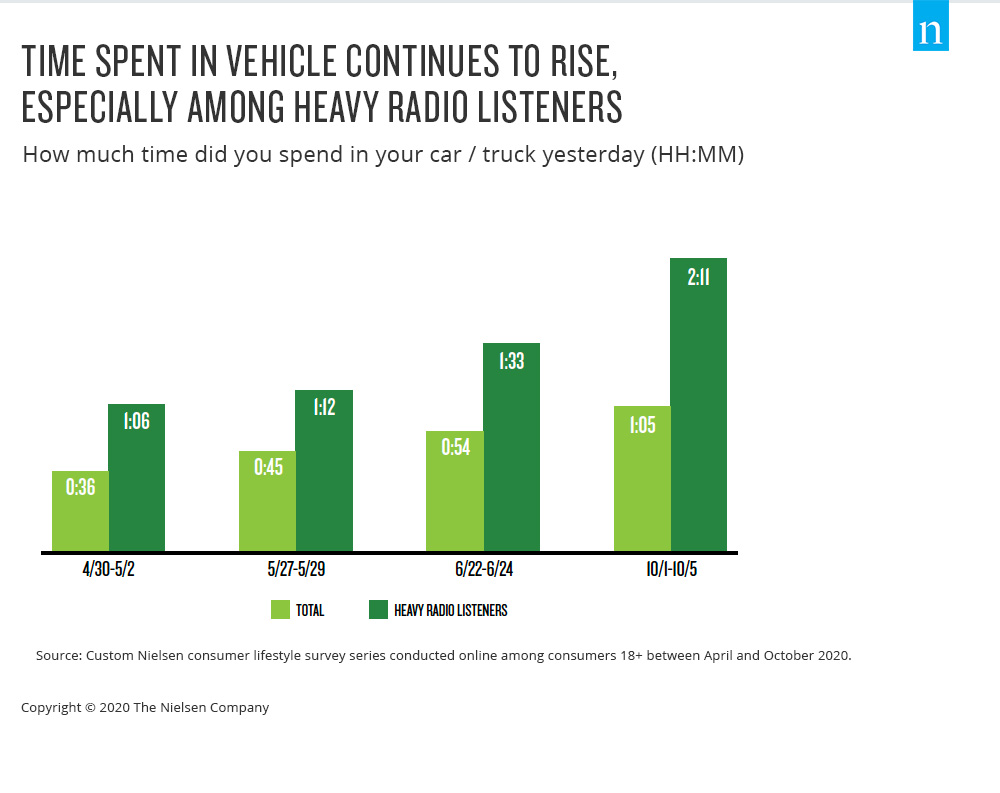
As these, and other, advertisers plan through the final two months of 2020 and into 2021, they will need to consider their prime audience—especially those more likely to spend on non-essentials. Importantly, that means understanding the best ways to reach these consumers. And despite everything that has taken place in 2020, the 53% of Americans who are ready to get back to their lives are heavy AM/FM radio listeners. They’re also a prime target audience for advertisers, as they are more likely to be between 25 and 54, have kids and earn more than $100,000 per year. They’re also more likely to work away from the home (thus the heavy radio listening). And contrary to what you’d expect when many people are staying close to home, heavy radio listeners have been actively driving (and listening) throughout the year. The time they’ve spent in their vehicles, however, has steadily risen since April.
Oltre ad ascoltare più radio rispetto alla media dei consumatori, i forti ascoltatori di radio sono molto più propensi a pianificare un aumento delle spese non essenziali. Ad esempio, hanno il 48% di probabilità in più di fare un acquisto importante, come un elettrodomestico, e il 45% in più di visitare un concessionario di auto o camion. Gli acquisti di veicoli (e la relativa pubblicità) durante una pandemia, anche se è un po' controintuitivo, hanno iniziato a rimbalzare sulla scia di quella che gli analisti del settore definiscono domanda indotta dalla pandemia. Una ricerca di McKinsey e Ipsos ha rilevato che i consumatori considerano i veicoli privati come spazi sicuri rispetto al trasporto pubblico. Anche i tassi di finanziamento molto bassi, insieme ai risparmi dovuti alla riduzione delle vacanze e dei divertimenti, stanno incoraggiando l'acquisto di nuove auto.
È importante notare che non tutti gli ascolti radiofonici avvengono fuori casa. Mentre quasi il 70% degli ascolti radiofonici tra marzo e ottobre è avvenuto fuori casa, la sintonizzazione in casa è rimasta costante e forse più alta di quanto ci si potrebbe aspettare per un mezzo di comunicazione che molti equiparano al pendolarismo. I dati Nielsen PPM mostrano che l'ascolto in casa tra le persone di età superiore ai 18 anni ha oscillato tra il 29% e il 42% nello stesso periodo. La conclusione è che, nonostante i molti titoli di giornale sul passaggio allo streaming, la radio e i suoi ascoltatori rappresentano la capacità di recupero e il desiderio di andare avanti dell'America.
For additional information, download our recent On the Road to Recovery with AM/FM Radio report.