如今,营销人员可以利用各种先进的工具,根据复杂的行为和兴趣细分受众,从而更加专注于受众。然而,即使在这种细分的驱动下,年龄仍然是理解媒体消费的一个基本而有力的视角。真正能吸引从青少年到老一代人的视频、流行语或趋势并不多见,这充分说明了年龄在塑造我们的共同体验和平台偏好方面的持久力量--这一现实使得代际营销成为一种不可或缺的策略。
营销人员在细分受众时,如果能从全局出发,不局限于认为年轻的数字原生受众占主导地位,就能与受众建立重要的联系和互动,而受众独特的媒体习惯和可观的消费能力往往是由他们的年龄决定的。因此,要在不同的接触点上有效捕捉受众的兴趣并推动转化,同时真正与受众建立联系,就必须制定具有年龄智能的媒体规划战略。
单一数字受众是个神话
The term ‘digital native’ often conjures an image of a young person constantly connected via a smartphone, but this isn’t the full picture. Older demographics are also significantly and increasingly engaged online. While younger generations are undeniably heavy digital users, dismissing older demographics as digitally inept is an inaccurate generalization. Platforms like WhatsApp show near-ubiquitous daily usage across all adult age groups in Germany. 71% of Germans aged 55-69 use WhatsApp daily, demonstrating a strong engagement with the online communication tool within this demographic.
These trends suggest that the idea of a singular, young ‘digital audience’ is an oversimplification; digital engagement is prevalent and growing across all adult age groups, even if device preferences differ. For example, the declining weekly PC/laptop usage among 18- to 34-year-olds in Germany doesn’t signal a move away from the digital world, but rather a shift in how this key demographic engages—a pattern that contrasts with, yet exists alongside, the increasing digital adoption of other age groups on different platforms.1
年龄仍是影响我们收听率的关键因素
Even as digital technologies become more accessible and familiar to people of all ages, fundamental differences persist in the methods and platforms generations favor for media consumption. The way we choose to ‘tune in’ is still heavily influenced by our age group. For instance, in the U.S., viewers aged 2-34 spend over 60% of their TV time on streaming services whereas for viewers aged 65-99, a significant 74.7% of their television consumption remains rooted in traditional linear TV.2
Divergence in media engagement based on age is not confined to how we watch video content; it is evident in other forms of media as well. For example, when we look at how different age groups in Germany use social media, we see clear differences in their platform choices and usage intensity. Younger adults, aged 18 to 34, exhibit a strong daily affinity for visually-oriented platforms like Instagram, with 59% engaging daily, and short-form video platforms like TikTok, with 38% daily usage. Among older adults aged 55-69, daily Facebook usage is at 36%. YouTube’s daily usage also varies, with 48% of the youngest adults using it compared to 18% of the oldest. When it comes to audio, 74% of Germans aged 18 to 34 show a strong preference for music streaming services, while older generations aged 55 to 69 still find comfort and connection in traditional radio broadcasts, with 64% weekly usage in this age group.3
老年受众不断发展
认为老年受众在采用新媒体习惯方面落后的观点也已经过时。事实上,老年人群的发展速度可以与年轻一代相媲美,在某些领域甚至超过了年轻一代。虽然年轻消费者一直走在数字应用的前沿,但在对灵活性、点播内容和优质媒体体验的渴望等因素的推动下,老年群体正在迅速迎头赶上。
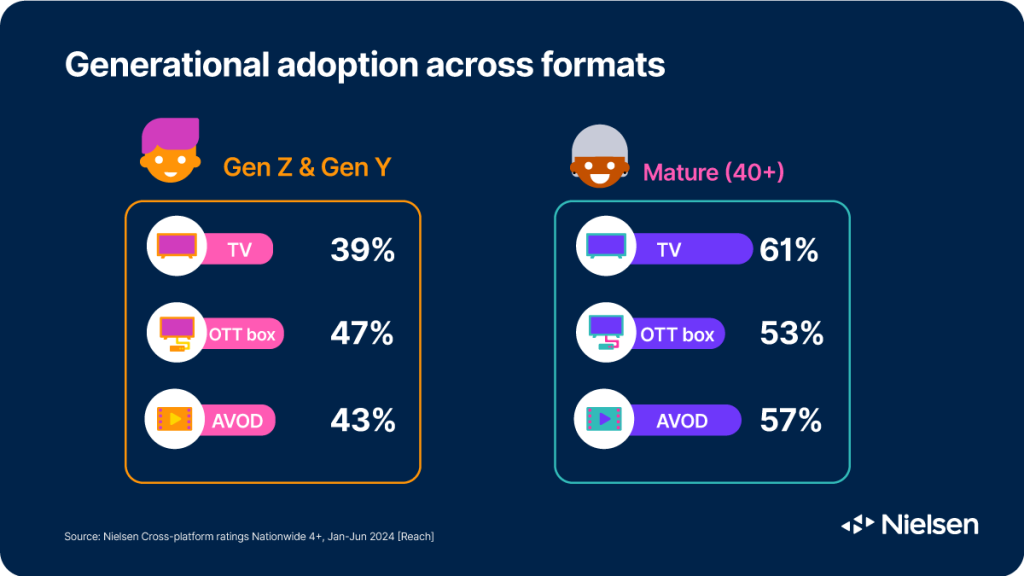
In Thailand, mature audiences aged 55 and above are just as likely as Gen Z and Gen Y to watch TV in their free time—62% versus 47%—but they tend to favor different formats. They show a much higher inclination towards traditional TV at 61% compared to Gen Z and Gen Y at 39%, and also favor AVOD at 57% versus 43% for the younger generations. Older adults also show a slightly higher preference for OTT boxes at 53% compared to 47% for Gen Z and Gen Y.4 In Germany, weekly use of video streaming among adults aged 55–69 rose from 49% in 2023 to 57% in 2024, within just one year.5 The evolution in viewing habits reflects broader shifts in how older audiences engage with premium content, a space once dominated by younger consumers. These trends underscores the growing importance for marketers to recognize that older demographics aren’t static—they’re quickly adapting and redefining their media behaviors.
年龄不是唯一的透镜
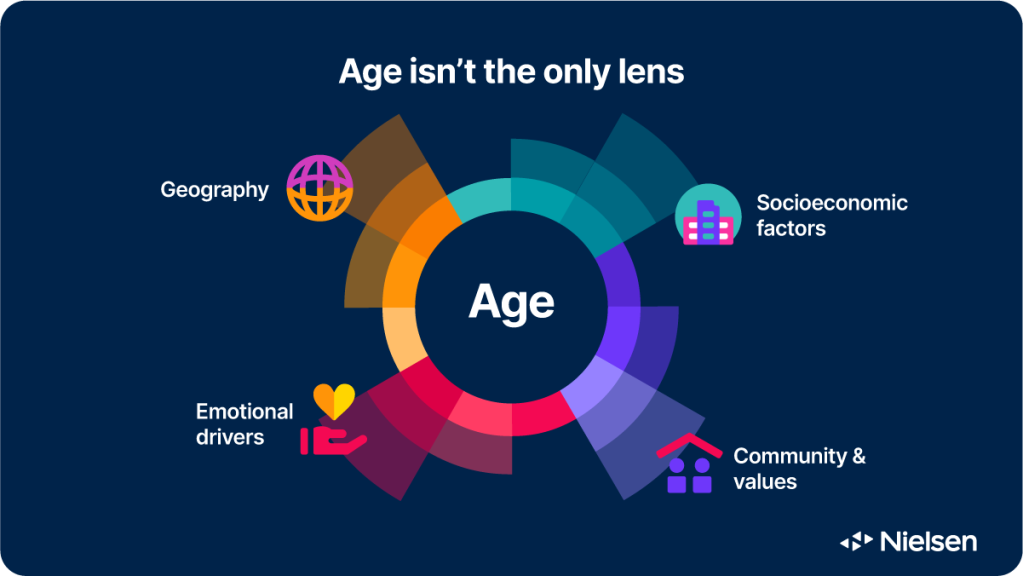
Demographic data like age provides a starting point, but it’s not the only factor to consider when seeking a deeper understanding of today’s audience and effective targeting. Marketers need to explore the richer dimensions of identity and connection that offer a more nuanced view of media behavior. Hence, it’s important to also think about these factors:
- Geography: Where individuals live significantly impacts their media access, preferences for local content, and exposure to regional trends. Marketers should consider geographic relevance in their messaging and channel selection to connect effectively with audiences in specific locations.
- Socioeconomic factors: An individual’s education level and income significantly influence their purchasing power, access to different types of media (e.g., premium subscriptions, devices), and overall lifestyle, which in turn affects their media consumption habits and responsiveness to marketing.
- Community and shared values: People often form strong connections with others who share their hobbies, beliefs, or principles, leading to communities that include individuals of all ages. When marketing aligns with these shared interests and values, it can foster deep engagement and strong loyalty within these communities, regardless of age demographics.
- Emotional drivers: Beyond demographics, fundamental human emotions like belonging and aspiration along with psychological needs for information, entertainment, or connection, powerfully influence the media we choose and how we react to marketing. Content that effectively taps into this resonates with people across all age groups, creating lasting impact on their media choices.
The media landscape today demands a nuanced understanding of audience behavior, and age remains a fundamental factor in shaping those behaviors. Discounting age in favor of a singular focus on younger, digitally native audiences is shortsighted and also risks alienating significant consumer segments with substantial purchasing power and distinct media preferences. Embracing an age-inclusive marketing strategy—one that strategically leverages both traditional and digital channels to reach diverse demographics with tailored messaging is essential for marketers to drive more meaningful connections with their audiences. To gain the comprehensive insights and actionable strategies needed to implement such an age-inclusive approach in your media plans, download our 2025 年全球规划指南.
说明
1 Source: Nielsen Survey: Media usage in Germany, Spring 2024
2 Source: Nielsen National TV Ratings, Persons 2+, October 2024
3 Source: Nielsen Survey: Media usage in Germany, Spring 2024
4 Source: Nielsen Cross-platform ratings Nationwide 4+, Jan-Jun 2024 [Reach]5 Source: Nielsen Survey: Media usage in Germany, Spring 2024