Worldwide retail media ad spending is projected to increase by nearly $100 billion between 2020 and 2025. Its 21.8% predicted rise this year will outpace growth rates in nearly all other forms of ad spending. Simply put, advertisers are putting greater emphasis on retail media in their ad plans.
Based on Nielsen’s 2024 年度营销报告, 68% of global marketers say retail media is more important to their media strategies than a year ago. Advertisers are eager to turn to retail media networks (RMNs) to better connect with their consumers using robust first-party data. But while this data presents exciting opportunities for advertisers to better connect with their consumers, much of it is contained within walled gardens.
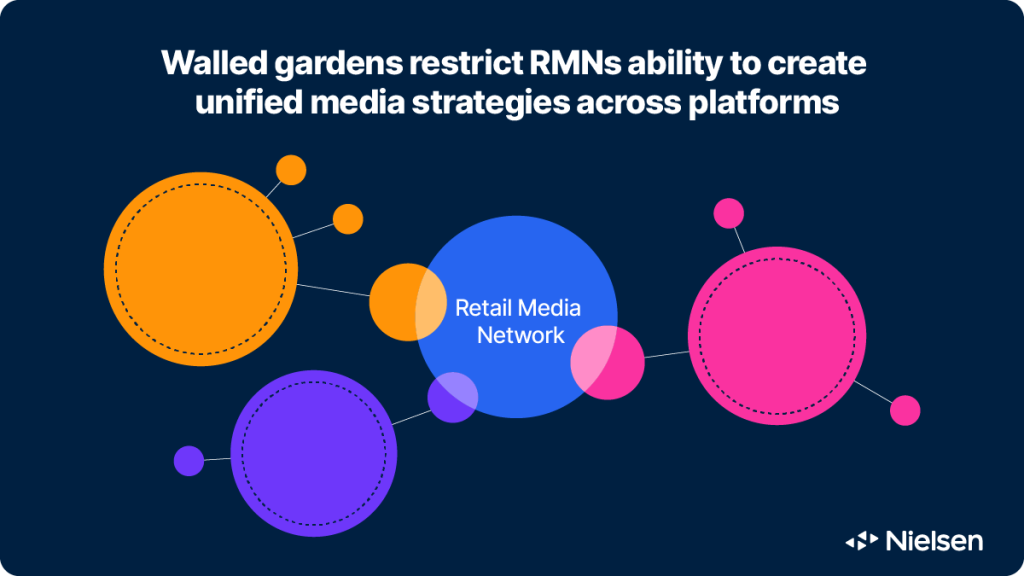
对于广告业来说,"围墙花园 "并不陌生--任何拥有专有数据、限制信息共享的封闭平台都可以被称为 "围墙花园"。对于广告商而言,当这类封闭平台同时提供广告效果承诺和效果评估时,就会产生顾虑。这种双重角色可能会产生潜在的利益冲突,而且随着时间的推移,RMN 提供的孤立视角已被证明是不够的。随着市场变得越来越拥挤,广告主越来越不满足于将来自不同 RMN 的性能数据拼凑在一起,他们正在多个平台上寻求更全面的投资视角。
Given these challenges, independent third-party measurement has become critical for advertisers to get a clear view of what they’re buying and ensure that they’re getting what they paid for across different RMNs.
零售媒体网络的优势
Over the past few years, RMNs have experienced significant global growth amongst increasingly fierce e-commerce competition. As brands eagerly seek to capture market share, retail media networks have emerged as a powerful tool to reach and engage consumers at the point of purchase.
对于零售商来说,零售媒体带来的好处显而易见--在竞争日益激烈的电子商务环境中提供了新的创收机会。但好处不仅仅是金钱。零售媒体可以帮助发展品牌合作关系,加深零售商对客户的了解,并通过更相关的广告改善客户体验。
For advertisers, the lure of the first-party data retailers can offer through their networks is appealing. Transaction-based data collected at the point of sale can help advertisers create and reach highly targeted advanced audience segments.
虽然丰富的第一方数据通过提供直接从购物交易中收集的详细数据吸引了广告商和品牌,但封闭的生态系统和专有平台也会造成盲点。数据仍然被限制在这些封闭社区的边界内。
鉴于这些潜在的局限性,您能真正信任这些数据吗?
RMN 的挑战
根据 Digiday 的数据,目前约有三分之一的公司正在利用零售媒体渠道。在美国,亚马逊(Amazon)、家得宝(Home Depot)、Instacart、克罗格(Kroger)、塔吉特(Target)和沃尔玛(Walmart)等零售巨头现在都拥有自己的零售媒体网络,使品牌能够在自己的网站和其他数字财产上锁定购物者。在全球范围内,家乐福、FlipKart、Mercado Libre、Lazada、乐购和 Zalando 等本地和区域性公司也在迅速扩大自己的业务范围。对于在多个 RMN 上开展营销活动的广告商而言,报告一致且可比较的指标可能具有挑战性。
These challenges are also compounded by recent changes in digital consumer data collection practices. The gradual phaseout of third-party cookies, long essential for digital advertising and user tracking, is one such change. Another is the implementation of stricter privacy regulations worldwide, such as GDPR in Europe and CCPA in California.
由于这些零售媒体网络的分散性和数字隐私的发展,广告商在这一分散环境中制定跨越不同平台和接触点的以数据为导向的统一营销战略时面临着种种限制。平台也有自己的一系列挑战--这些封闭的生态系统限制了它们验证数据、基准性能和创建跨平台统一媒体战略的能力。
第三方测量的作用
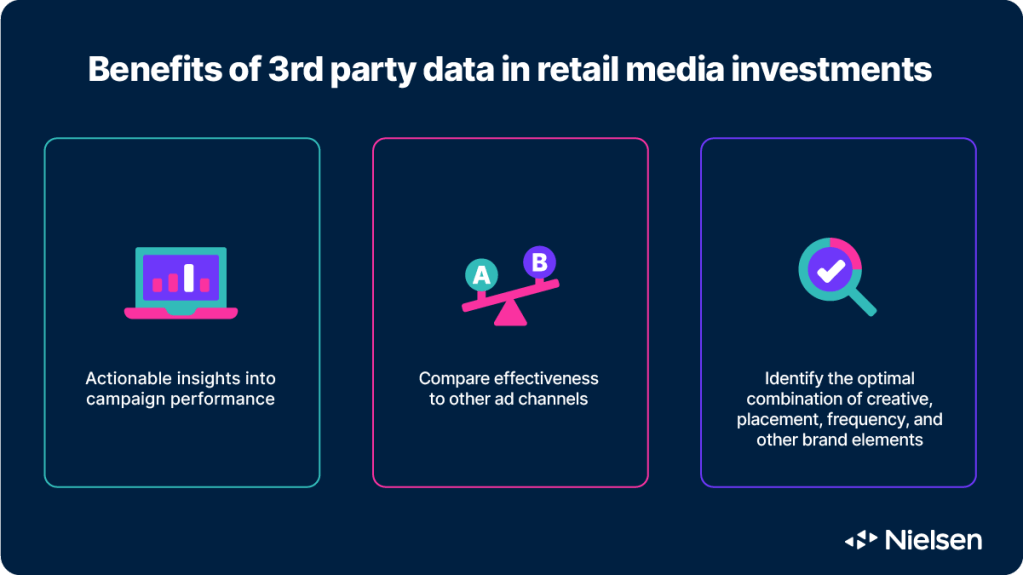
如果没有独立的第三方对零售媒体网络进行测量,广告商将很难衡量他们的广告活动在更大的媒体计划中的效果如何。第三方测量提供商可以帮助品牌了解哪些 RMN 对他们最有效,以及为什么。品牌不仅可以发现零售媒体投资相对于其使用的许多其他广告渠道的表现,还可以发现创意、投放、频率和其他品牌选择对效果的影响。
同样,平台也可以从第三方测量中受益,获得提供透明度和竞争洞察力的能力,使其能够展示其库存价值,与其他 RMN 进行比较,最重要的是,有效地向广告商展示其价值。
在这两种情况下,第三方数据都能确保跨 RMN 的透明度、可比性和全面洞察力。零售媒体归因的独立测量可通过以下方式实现这些重要目标:
- 可信和公正的信息
Neutrality in measurement addresses a major challenge in the retail media ecosystem, where platforms may have an inherent bias toward presenting their performance in the most favorable light. Unlike self-reported metrics from platforms or advertisers’ internal analytics, independent entities have no vested interest in inflating or downplaying results. With independent measurement, advertisers can trust that the data they receive is an accurate representation of their campaigns’ effectiveness, free from potential conflicts of interest or biased interpretations.
- 标准化指标
不同的平台可能会对印象、点击或转化等指标使用不同的定义。第三方测量在所有渠道和平台中引入了标准化指标。这种标准化使广告商能够在不同 RMN 之间以及与其他广告渠道进行苹果对苹果的比较。
- 统一衡量框架
第三方实体提供的综合分析方法可全面了解所有渠道的广告效果。这种综合方法使广告商能够了解不同媒体投资之间的相互作用。它有助于通过基于增量的结果关键绩效指标来衡量广告的真正影响,确定协同效应,并提供对跨多个接触点的客户旅程的了解。
独立测量可以作为仲裁者,在整个媒体组合中建立一致性。作为此类测量的提供者,尼尔森的目标是帮助营销人员了解他们是否得到了他们所支付的东西--不偏不倚,没有自我报告或不同方法造成的偏差。
Nielsen ONE, the industry’s most reliable cross-media planning solution, facilitates a holistic view of advertising performance across mediums. Effective retail media attribution, supported by Nielsen’s measurement, helps advertisers understand the impact of their media campaigns in the context of their broader marketing efforts.
Nielsen’s Need to Know reviews the fundamentals of audience measurement and demystifies the media industry’s hottest topics. Read every article here.