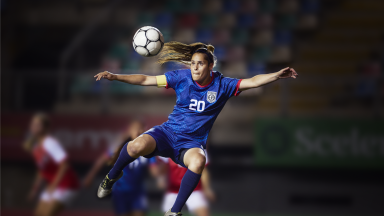
女性占美国人口的一半以上,但在体育界,她们仍在为争取平等而奋斗,而在体育界,基于性别的歧视太常见了。最近,在 "妇女历史月 "期间,我们看到了一个非常公开和令人痛苦的例子,那就是在美国大学生篮球联赛(NCAA)中,女运动员与男运动员的待遇明显不平等。令人难以理解的是,忽视为女学生运动员提供适当的设备和设施--尤其是在她们所从事的体育运动中规模最大的比赛中--怎么会在今天仍然发生。不幸的是,体育运动中的性别歧视似乎从我们的孩子参加青少年体育运动时就根深蒂固了。这种不平等也被制度化了--从我们如何定义什么是体育运动,到用来代表女运动员的形象、设施上的差距以及对女运动员的支持。
As superstar athlete and World Cup champion Megan Rapinoe testified to Congress, “One cannot simply outperform inequality or be excellent enough to escape discrimination of any kind.” As a mother of a son and a daughter, this inequality hit very close to home just last week. Up until two weeks ago, in my state of California, all youth sports, which were prohibited for nearly a year, were permitted to return. All sports, that is, except for one female-dominated sport: cheer. While my son was able to get back on the field and enjoy his sport, I, alongside many other concerned parents, had to continue to advocate at the state level for equity for cheer athletes. We were successful, but why did we even have to fight for recognition and equal treatment for these athletes? Women and girls in sports should not be an afterthought.
It is disheartening to see that the fight for equality for women’s sports continues beyond grade school, as collegiate athletes in the NCAA Women’s Basketball Tournament recently experienced firsthand. Like many of you, I recently saw the viral video from University of Oregon sophomore forward Sedona Prince showing the weight room facilities provided for the female players at the basketball tournament compared with the facilities provided for the men. The women’s weight room consisted of a single set of dumbbells and some yoga mats, while the men’s weight room was stocked with state-of-the-art training equipment, rows of weights, and workout machines. Her TikTok video was further socialized on Instagram and 推特 and now has more than 20 million views.
许多人迅速批评了这些女运动员的公然不平等行为,引起了人们的强烈不满,但品牌商的介入速度更快。不仅名人、体育记者和粉丝们强烈要求纠正这种情况,一些公司也加入了进来。Orange Theory、Dick's Sporting Goods 和 Tonal 等健身和零售品牌在第二天就做出了回应,为这些女运动员(她们在社交媒体上具有强大的影响力)提供了设备支持,并表示愿意提供适当的训练设施。此后不久,NCAA 承认了这一可怕的判断失误,并在道歉的同时设置了功能齐全的女子举重室。
These brands understand the power of the moment and of female athletes. Research from Nielsen Sports illustrates the power female athletes hold as social media endorsers. Fans like to buy products and services that their favorite athletes endorse on social media. When brands partner with athletes to embrace their power and advocate for equity, they can enact change as well as accountability in sports institutions. That’s a winning play for brands—fully embracing the power of female athletes, while proactively building equity in women’s sports and not just in response to a crisis.
There are several fundamental truths here that brands need to embrace: social media is powerful; female athletes are powerful influencers; and consumers are asking more from brands when it comes to social responsibility. For example, a global Nielsen Fan Insights study reveals that 47.5% of respondents have a greater interest in brands that have been socially responsible and “do good.” The good news is that some brands are taking notice and recalibrating business and marketing models to meet consumers’ changing needs in a new era of sports sponsorship. The brands stepping in to act on the values they espouse as an organization are a perfect example. Brands, including leagues, teams, owners, and even school districts, must address changing consumer and social demands and their female athletes’ needs by operating with equity in women’s sports.
更多机会带来更多受众
The weight room in San Antonio isn’t the only place where we need to see change. While we’re seeing progress in how women are represented on television in scripted content, we have not seen the same visibility in women’s sports. This isn’t for lack of women’s sporting events or even viewer interest, but rather the relative lack of access to women’s team sporting events being broadcast and promoted on TV compared with men’s events. We know this needs to change, but it is a catch 22. Far fewer women’s sports are being broadcast, and when they are, games are often carried on difficult to find, smaller outlets, and are under-promoted, naturally resulting in smaller audiences. This overall lack of investment and promotion on television negatively affects audience draw, and therefore ROI for advertisers and sponsors. This lower brand investment is being used to justify disparities in resources for women’s sports. And the cycle continues.
好消息是,潮流似乎正在发生变化。由于 ESPN 扩大了覆盖范围,今年 NCAA 女篮锦标赛的覆盖范围成为历史上最广的赛事之一--到目前为止,女篮锦标赛首轮比赛的观众覆盖范围比 2019 年扩大了一倍。
Along with the gripping game play, the increase in reach is most likely attributed to the number of games actually being aired. Round 1 of the tournament in 2019 was exclusively broadcast on ESPN2, which aired just nine game windows. This year’s NCAA women’s games have been on ABC, ESPN, ESPN2 and ESPNU, and every single one of the 32 games has been aired in round 1. When audiences have access to women’s sports, they tune in. Female athletes deserve the facilities, equipment and support they need to thrive. While the men’s tournament has seen multi-network coverage since 2011, the women’s tournament is finally seeing increased coverage, with 2021 marking the first time the women’s tournament has been on network TV—and not just on cable—in decades. Because that viewing opportunity exists, more people are watching. It is time women’s sports get the investment, coverage and support they deserve. Advertisers should take note: A growing fan base means a bigger audience.
自《第九章》(Title IX)立法赋予女性平等的运动机会以来,已经过去了近 50 年。但该立法还规定,从装备到竞技设施,再到宣传和推广等方面,男女学生运动员应享有同等待遇。我希望,随着越来越多的品牌倡导女性运动的公平性,女性运动员作为品牌代言人的影响力越来越大,我们将看到在上场时间、设施、品牌合作以及屏幕上对女性运动的报道方面的差距会越来越小。对于未来的女运动员来说,女性运动的公平性将是一个大问题。