With iconic superheroes, action-packed first-person shooters and fast-paced sports action, today’s video gaming industry is certainly not short on energy or flash. And given the hype around many of the industry’s most-anticipated game franchises, it’s easy to lose sight of the genres that don’t have a popular brand like Marvel or Madden promoting them—as well as who’s engaging with them.
模拟游戏是一种超大类别的沉浸式游戏,允许用户模拟真实世界的活动,其游戏节奏与角色扮演、冒险和体育游戏不同,但在一个重要的游戏人口群体中,LGBTQ+ 群体是许多玩家的最爱。事实上,尼尔森的 2020 Games 360 调查发现,在所有平台上,LGBTQ+ 玩家玩模拟游戏的几率明显高于非 LGBTQ+ 玩家。
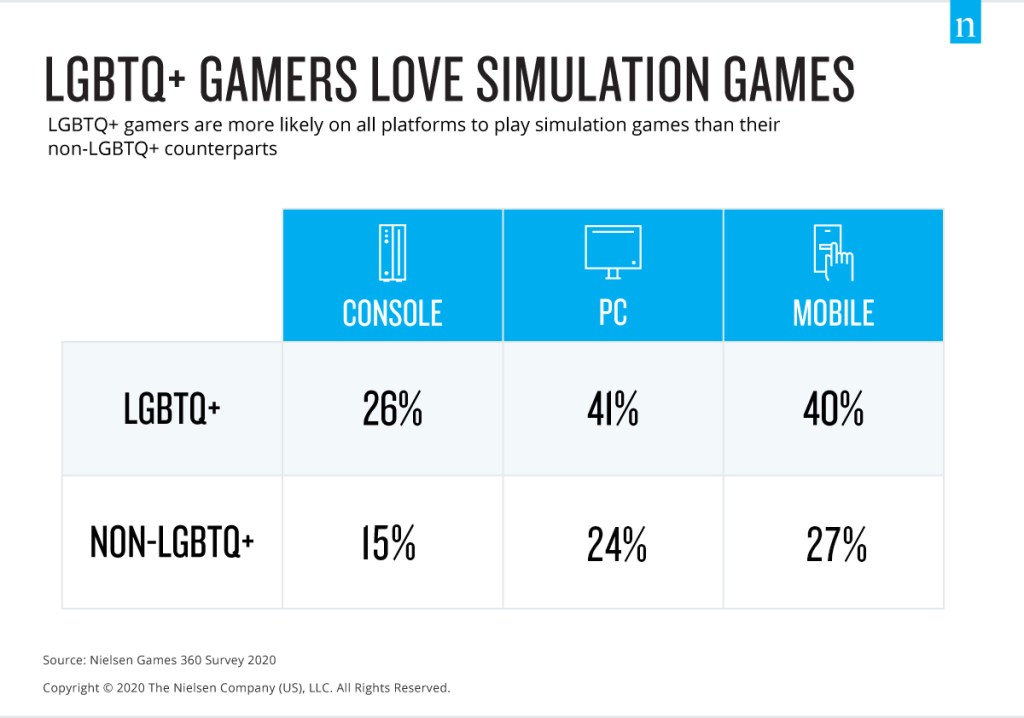
As video games and digital channels remain at the forefront of the modern entertainment experience, it’s clear that the gaming industry should continue innovating to keep audiences engaged and online. Given the LGBTQ+ community’s penchant for simulation games, the industry stands to gain by amplifying its efforts in this sub-genre. According to SuperData, a Nielsen company, the simulation game audience accounted for 13% of the U.S. games audience last year and accounted for $1.5 billion in revenue.
In addition to gravitating more frequently to simulation games, LGBTQ+ consumers are younger (33 vs. 44) and more likely to have a gaming system (54% vs. 44% [non-LGBTQ+ consumers]) than the general U.S. population. They also spend more money on video games each month ($13.14 vs. $10.40) and amplify their experience along the way, as they’re much more likely to own a specialized headset for media/music than the general population (29% vs. 19%) and continue the conversation online via gaming social media platforms like Twitch and Discord.
While the video game industry has been growing steadily in recent years, it’s been among the industries best suited for the new normal that the novel coronavirus (COVID-19) has forced on consumers. With a shift toward life online, a Nielsen study found that 82% of global consumers were passing the time at the height of shelter-in-place restrictions earlier this year by playing video games and watching video game content. And the increase was highest in the U.S. (46%), followed by France (41%), the U.K. (28%) and Germany (23%).
Now, eight months into living in a pandemic, many of our media behaviors have largely normalized, while the gaming industry continues to adapt to a more virtual world—a world where games have become a place to hang out with friends, see a concert and participate in other communal experiences. That increased engagement is good news for the games industry, as worldwide digital game revenue was up significantly in March, April, May and June of this year on a year-over-year basis.
尼尔森 2020 年游戏 360 调查显示,LGBTQ+ 游戏玩家在各种设备和服务上的花费高于普通玩家。
重要的是,COVID-19 的流行并没有阻止这一群体对视频游戏的渴望。尼尔森-斯卡伯勒公司 2020 年 9 月的数据显示,LGBTQ+ 家庭拥有游戏机的可能性比美国普通家庭高出 25%,而且计划在未来 12 个月内购买新游戏机的可能性高出 91%。
While Americans’ media consumption has been trending up in recent years, there’s no mistaking the early spring spike brought on by the COVID-19 pandemic. The latest Nielsen Total Audience report found that Americans now spend 12 hours and 21 minutes with media per day, which is up nearly an hour from the previous year. As the U.S. prepares for the colder fall and winter months, many will turn to media options as social distancing remains the safest way to stay healthy. And if the options are there, many in the LGBTQ+ will be in search of simulation options as they seek to get their gaming fixes.