当然,现在看台上可能空无一人,球场上一动不动,球场的灯光也暗淡无光,但根据尼尔森公司最近对体育收视的分析,COVID-19 的体育停播并没有影响许多球迷对媒体行为的热情。
根据尼尔森体育的数据,去年全球体育赞助交易额接近 500 亿美元,其中 37% 的交易(超过 170 亿美元)与美国有关,因此联赛、媒体所有者、营销人员甚至运动员本身都处于紧张状态,这已不是什么秘密。
还有与体育相关的广告。在电视领域,尼尔森Ad Intel 解决方案(NielsenAd Intel solution)指出,去年品牌在体育相关节目上投入了近 200 亿美元,其中约 170 亿美元(85%)用于体育赛事。品牌还在与体育相关的网站上投放了近 12 亿美元的数字广告,如联赛官方网页和球迷网站。
But not all of that money needs to be sidelined—and it shouldn’t be. All players in the sports business should be thinking about how to maintain brand equity and awareness with sports viewers. Even though live sports are on hold, fans are hungry for content. That’s why it’s crucial that brands and sellers of media know where, how and what these consumers are viewing as a way to reach and maintain relationships with them. After all, this is the same segment that has helped live sports events rise to the top of the TV telecast charts year after year.
回顾过去,当 NBA 从 3 月 11 日开始取消比赛时,其他体育联盟也纷纷效仿,大量节目和观看机会随之消失。例如,在 3 月 8 日,也就是联赛停赛前的那个周日,美国成年人的总体收视时间中有 9% 花在了体育赛事上。尼尔森的分析报告将 "重度体育观众"(2 月 10 日至 3 月 8 日期间体育赛事直播观众的前五分之一)进行了细分,发现体育赛事占据了他们高达 26% 的时间。
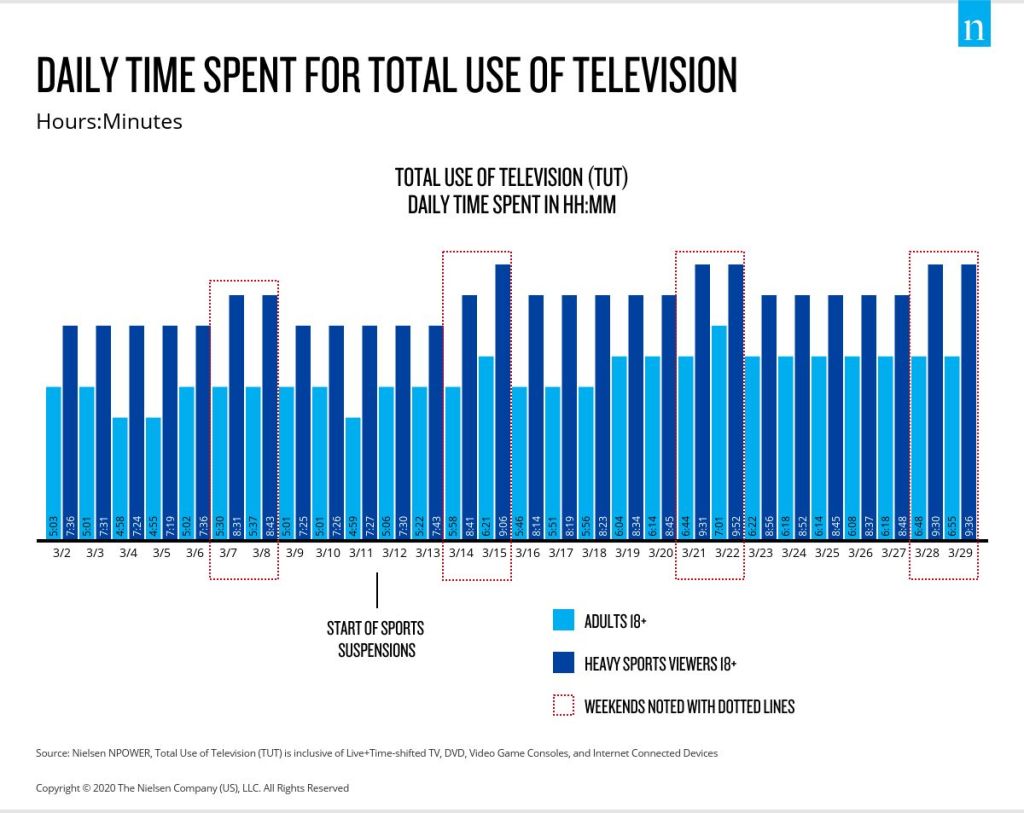
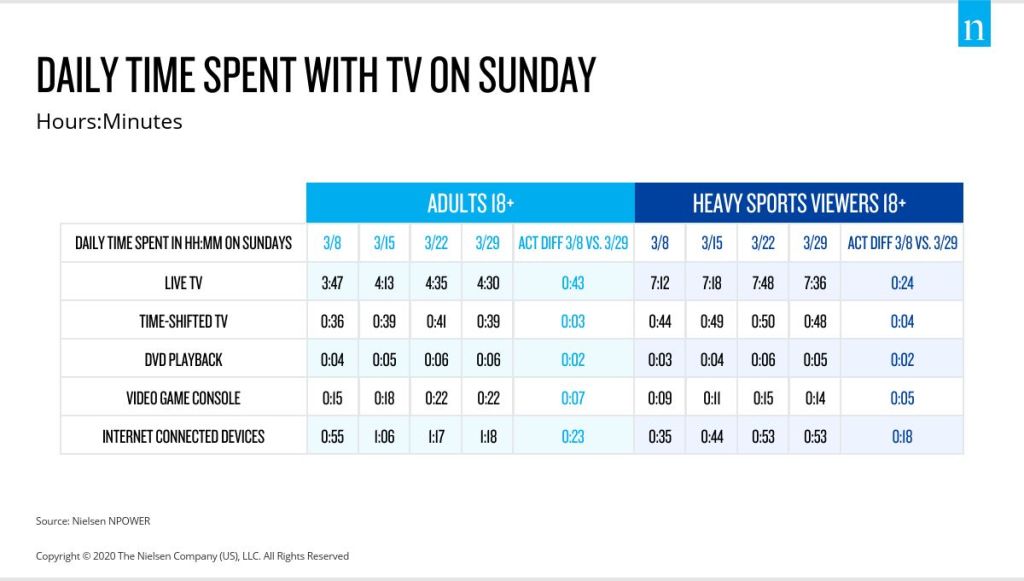
重度体育观众和美国其他观众一样,由于被困在自己的公寓、住宅、公寓和家中,他们一般会观看更多的媒体。但是,由于这一群体往往比普通观众观看更多的内容,因此他们的收视率增长并不像其他人群那样剧烈。例如,从 3 月 8 日(星期日)到 3 月 29 日(星期日),重度体育观众的收视率增加了 10%,而成人观众的收视率增加了 23%。
在美国成年人和 "体育超级观众 "中出现的这种增长也并非传统电视独有。它发生在联网电视和设备上。例如,仅互联网连接设备的使用(使用可将流媒体传输到电视机的设备)就在 "超级体育观众 "中增长了近 20 分钟--与三个星期天前相比增长了 50%以上,当时联赛仍在进行,体育赛事仍在直播。
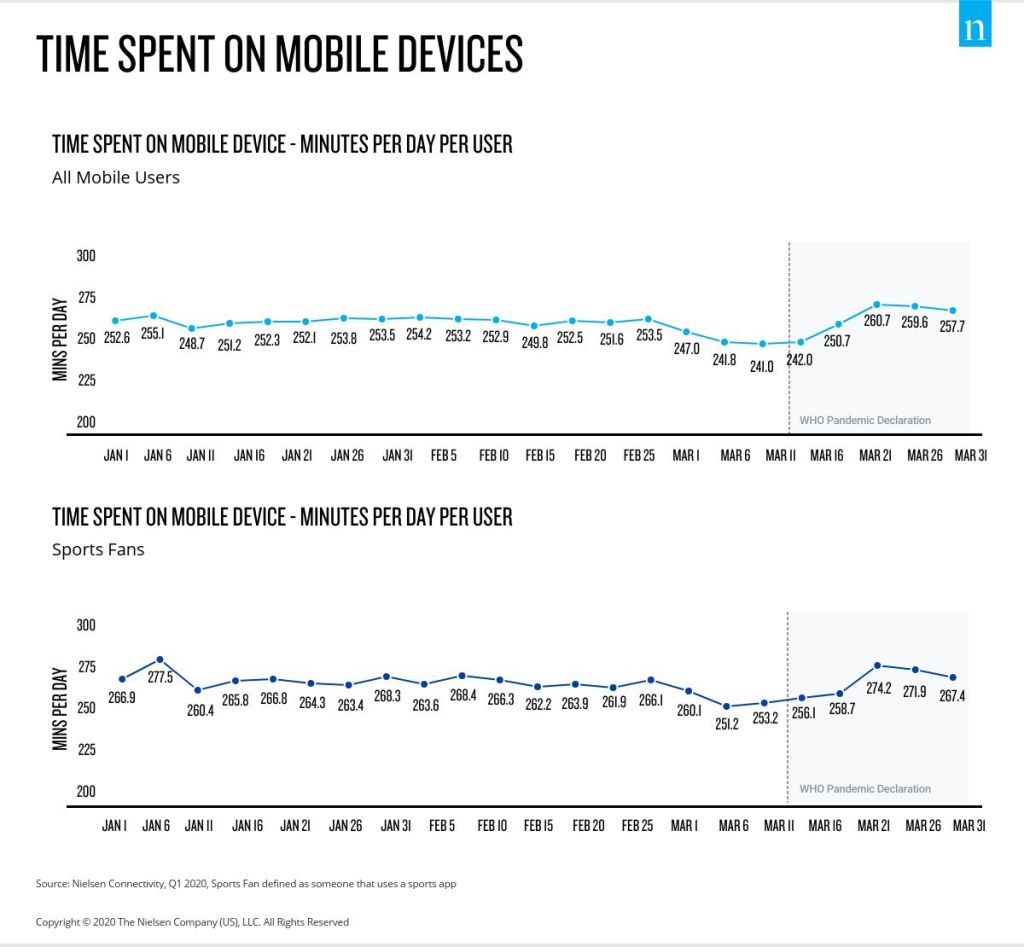
尼尔森利用其连接性面板(Connectivity Panel)中的 100,000 个选择使用安卓设备的用户进行了移动部分的分析,发现这些增长也发生在移动设备上--即使是在大多数消费者原地踏步的时候。体育迷通常是移动应用的忠实用户,而不是移动应用的普通用户。自 3 月 11 日 COVID-19 被宣布为流行病以来,所有移动用户使用移动设备的时间都有所增加,每天增加近 20 分钟。在体育迷中,这一增长比平时多出约 15 分钟。
移动应用程序的使用也发生了变化。毫不奇怪,自 3 月初以来,体育相关移动应用程序的使用率下降了约 40%,其中博彩和幻想应用程序的使用率下降幅度最大。
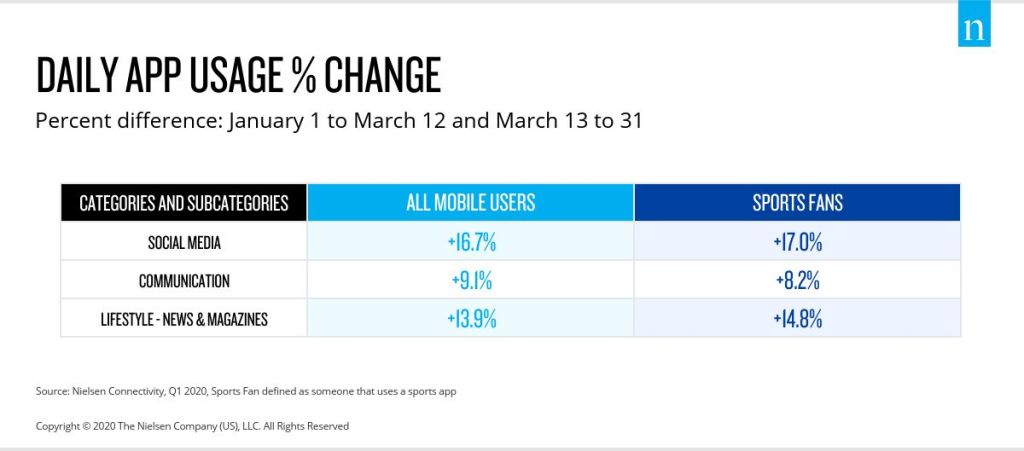
在这种新的观看动态中,如果消费者不需要比分更新或比赛集锦,那么与家人和朋友保持联系似乎是下一个最佳选择。在整体移动用户和体育迷中,增幅最大的应用程序是那些能让用户与亲朋好友保持联系以获取信息的应用程序。社交媒体应用程序的增幅最大,在 3 月 12 日之前每天增加 17%。通讯应用程序(如 Zoom、Hangouts 或 Kik)的使用时间也增加了约 9%,其中包括消息应用程序和视频通话应用程序。由于用户关注最新时事,新闻和杂志应用程序的使用时间增长了约 14%。
Beyond how much is being consumed by Heavy Sports Viewers and the types of platforms that they are consuming on, what this group is watching, sports or non, is also of particular note to media owners, buyers and brands.
那么,他们到底在看什么呢?
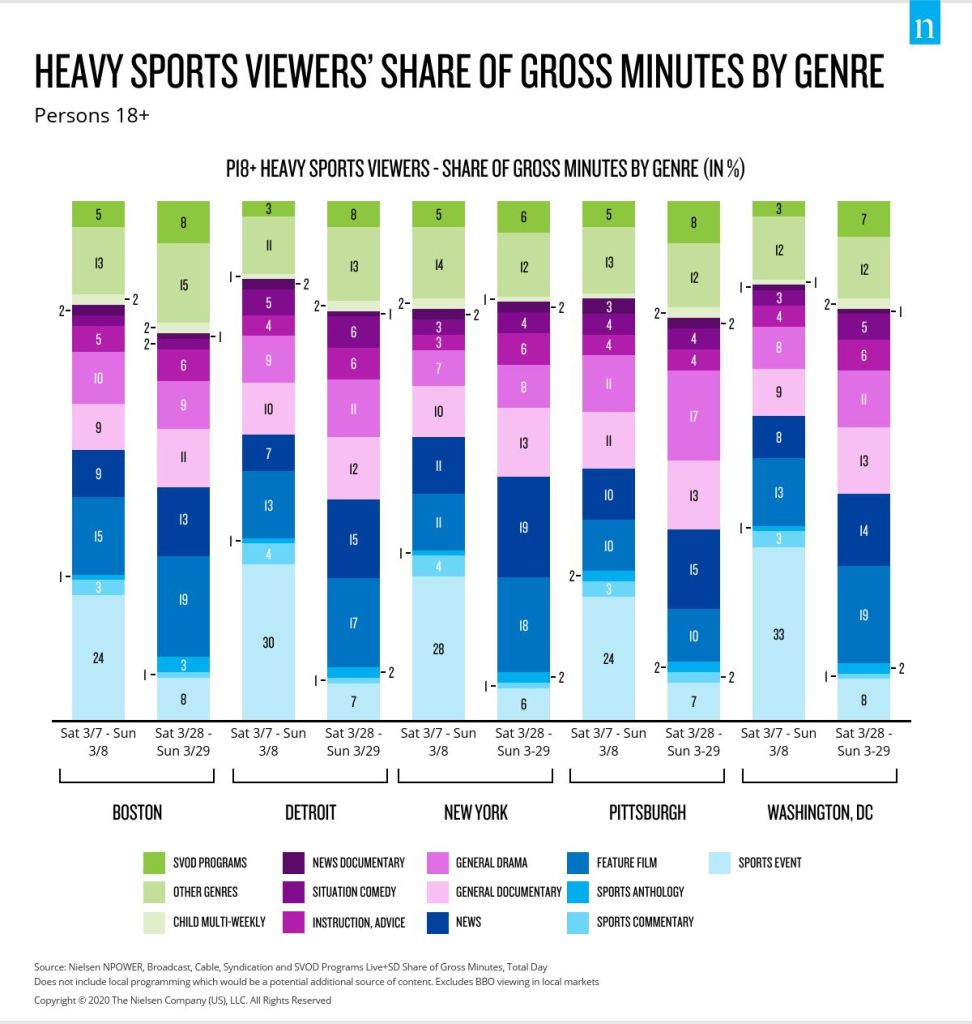
这项分析利用尼尔森的全国调查小组,对三月份周末的电视节目进行了调查,发现新闻在消费者的收视时间中所占的比例越来越大,因为他们希望了解大流行病的最新情况。此外,观看故事片的时间也在增加,这在 "重度体育观众 "中更为突出。当然,订阅视频点播(SVOD)节目也在这些成年人中占据了更大的收视份额。事实上,从 3 月 7 日(星期六)到 3 月 28 日(星期六),"重度体育观众 "观看 SVOD 节目的时间几乎翻了一番,达到 9%。
但是,"重度体育观众 "不会轻易放弃寻找替代品来满足他们对体育直播的渴望!
In fact, among these Heavy Sports Viewers, sports programming still accounts for about one-tenth of their time on Sundays despite the suspension of live sports. Seems like reruns of Larry Bird highlight games, Pittsburgh Pirates World Series runs or Mets classics are sufficing a bit even if they come with obvious spoilers. So, despite the cancellation of live sports, these passionate TV viewers continue to find sports content to watch and enjoy and brands should consider this viewing before going dark on them as well, less they potentially undermine any equity they have built over the prior months or years.

从地方层面来看,由于 COVID-19 在不同时期不幸进入了不同地区,这一情况仍然保持一致。从 3 月 7 日周末与 3 月 28 日周末的对比来看,在少数几个受影响的市场中,重度体育观众的收视偏好发生了相似的变化。
此外,虽然缺乏电视直播体育赛事,但分析发现,在某些市场,重度体育观众在联赛暂停后仍在继续寻找与体育相关的内容--尤其值得注意的是,这些地区以体育迷的热情而著称。在波士顿,重度体育观众观看体育相关内容的时间占总观看时间的 12%,其次是匹兹堡和华盛顿特区(11%)以及底特律和纽约市(10%)。
Leagues and programmers can also keep consumer continuity and help engage viewers while maintaining brand momentum, and perhaps even build some equity, by thinking outside the pandemic penalty box as it were. When NASCAR moved its series from the gasoline-vapored pavement to a virtual experience, they lured talent out of retirement and drove, literally, both ratings and social buzz. They also exposed new fans to both the sport and the huge amount of branding that goes along with it.
随着消费者适应新常态,媒体所有者和营销人员也必须适应新常态,这意味着无论在什么情况下,无论消费者身在何处,也无论他们通过什么设备观看内容,都要尽可能利用最佳数据来找到消费者并与之互动。