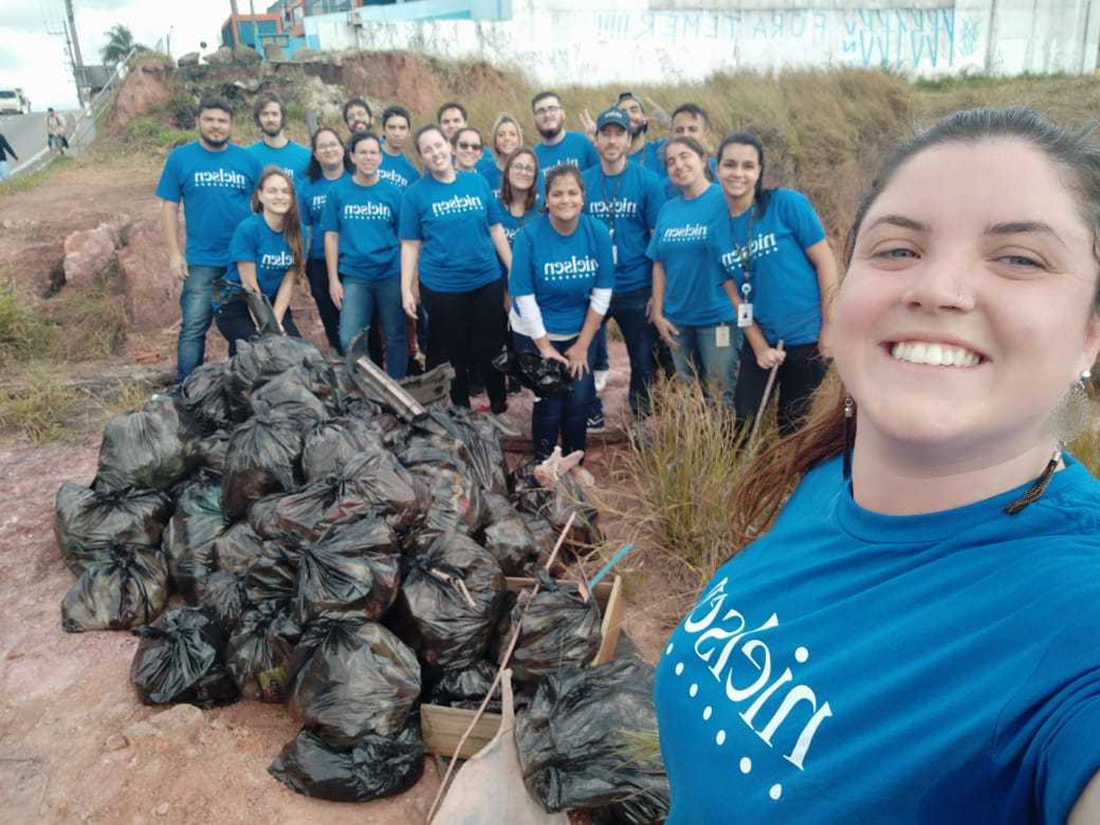
In September 2018, Nielsen celebrated its first World Cleanup Day (WCD)-a day our associates came together to lead and participate in global cleanup activities in their communities while creating awareness around the global issue of waste, one of the top areas of focus for our environmental sustainability programs as identified through our non-financial materiality assessment.
As we built our volunteering efforts to make a grassroots impact through local cleanups, we learned about an opportunity with Let’s Do It Foundation, the team that initiated World Cleanup Day (WCD), to further the cause of waste management. Our Nielsen volunteers engaged in a Data for Good project to lead a pro bono survey for the Foundation to assess consumer perceptions about trash, and learn about trash blindness. Our Data for Good projects are aimed at sharing Nielsen’s consumer insights and data with the world, including non-profit organizations and academic researchers, to make a difference.
Simply put, “trash blindness” is when someone does not see or notice the trash in front of them or does not understand the problem related to it. The goal of this “trash blindness survey” was to understand the true impact of large environmental responsibility movements, such as global cleanup days, on consumers. We wanted to learn whether massive cleanups help erase trash blindness, if they change peoples’ attitudes and behaviors related to mismanaged waste, and if they create a readiness to find solutions. How Will the Let’s Do It Foundation use the data?
หัวหน้าทีมของมูลนิธิจะใช้ข้อมูลจากการสำรวจโดยไม่คิดค่าใช้จ่ายในเครือข่าย 158 ประเทศเพื่อพิจารณาผลกระทบของการทำความสะอาดครั้งใหญ่และระบุเครื่องมือที่มีประสิทธิภาพสูงสุดในการสร้างการเปลี่ยนแปลงที่ยั่งยืน การใช้ข้อมูลดังกล่าวจะช่วยให้องค์กรบรรลุเป้าหมายในการดึงดูดให้ประชากร 5% ในแต่ละประเทศเข้าร่วมในความพยายามจัดการขยะทั่วโลก
นีลเส็นทำอะไร?
We took a two-survey approach for the project: round one took place in August 2018, before WCD in September 2018, and round two took place in December 2018 after WCD. Our goal was to see if there were any behavioral changes as a result of the cleanup efforts. We ran the surveys in three countries: France, Indonesia and South Africa. The Let’s Do It Foundation selected these countries because each represented a different continent, and in that, the countries where it was expecting larger cleanup turnout for their WCD event in September.
ผลการค้นพบเบื้องต้น
จากการสำรวจ 3 ประเทศ พบว่าผู้ตอบแบบสอบถามมีส่วนร่วมในโครงการ WCD สูงที่สุดในอินโดนีเซีย (80%) รองลงมาคือแอฟริกาใต้ (71%) และฝรั่งเศส (24%) เนื่องจากจุดประสงค์หลักของการสำรวจความไม่รู้เรื่องขยะคือการทำความเข้าใจว่ากิจกรรมทำความสะอาดครั้งใหญ่ส่งผลต่อการตระหนักรู้เรื่องขยะอย่างไร มูลนิธิ Let's Do It จึงได้ดำเนินการวิเคราะห์ข้อมูลและสังเกตเห็นการเปลี่ยนแปลงในคำตอบจากก่อนและหลังโครงการ WCD
For example, more respondents in all three countries said they noticed more trash after WCD than before. In Indonesia, 21% didn’t think their area was clean before WCD, which increased to 24% after WCD. In France, the shift was from 20% to 21%, and in South Africa, the percentage of respondents noticing trash increased from 26% before WCD to 27% after.
Based on the data, the team deduced that cleanup events like WCD can have an impact on reducing trash blindness. However, there are many variables that can affect awareness and trash blindness, and a one-time effort isn’t sufficient for broad-ranging conclusions. Thus, continuous work in this area, including looking at survey data over time, can help make a stronger argument for cleanup actions across different cultures where the waste pollution landscape is varied.
Our continued learning
Trash blindness exists. We all may have had those moments when we stepped over a discarded piece of trash on the road and not even realized it. There could be many reasons for not noticing trash: apathy, lack of data, our conditioning, absence of resources, or weak infrastructure to name a few. But regardless of the specific reason, the global problem of waste affects us all.
While Nielsen continues to identify and initiate ways to do our part in mitigating this environmental issue, we also recognize that improvement efforts are needed across all regions globally, to truly advance awareness and action. “Our role here is that of an enabler and facilitator,” said Yamini Dixit, Director, Global Responsibility & Sustainability. “As responsible global citizens, we commit to using the resources, skills and platform we have to support the people and organizations that are tirelessly working to fill the gaps in addressing big environmental challenges like that of waste.”
เราจะยังคงแสวงหาทักษะการทำงานอาสาสมัครและโอกาสในการทำอาสาสมัครเพื่อสาธารณประโยชน์ซึ่งเราสามารถสนับสนุนความพยายามด้านสิ่งแวดล้อมที่ส่งผลกระทบต่อชุมชนที่เราอาศัยและทำงานทั่วโลก
