As marketers, we are all too familiar with the challenge of communicating in an over-saturated marketplace. It’s like trying to have a conversation in a crowded room—you need to know exactly who you are talking to and how to get their attention. To cut through the noise, marketers need to embrace hyper-local strategies, recognizing that audience preferences and behaviors can vary dramatically not just between major markets, but even within individual neighborhoods of the same city. Understanding these nuanced local differences is key to crafting messages that truly resonate. But how do you achieve that deep understanding?
แนวทางที่มีประสิทธิภาพอย่างยิ่งประการหนึ่งคือการใช้ข้อมูลที่แบ่งตามภูมิศาสตร์ ซึ่งนอกเหนือไปจากมุมมองระดับประเทศ โดยเจาะลึกไปถึงรายละเอียดว่ากลุ่มผู้ชมต่างๆ รับชมเนื้อหาโทรทัศน์ท้องถิ่นในตลาดต่างๆ อย่างไร เมื่อใด และที่ไหน ในสหรัฐอเมริกา อุตสาหกรรมสื่อมักอ้างถึงพื้นที่ตลาดที่กำหนด (Designated Market Areas หรือ DMAs®) ซึ่งเป็นภูมิภาคทางภูมิศาสตร์ที่เป็นกรรมสิทธิ์ซึ่งกำหนดโดย Nielsen เท่านั้น เพื่อเป็นตัวแทนของพื้นที่รับชมโทรทัศน์เฉพาะกลุ่ม
The need for DMAs® emerged in the 1950s when television began to dominate the media landscape.1 As TV stations proliferated across the country, marketers and advertisers faced a growing need to understand and define television markets for more targeted advertising purposes. Over time, this system has become a widely used resource for marketers and advertisers seeking to better understand regional audience patterns.
DMAs® คืออะไรกันแน่?
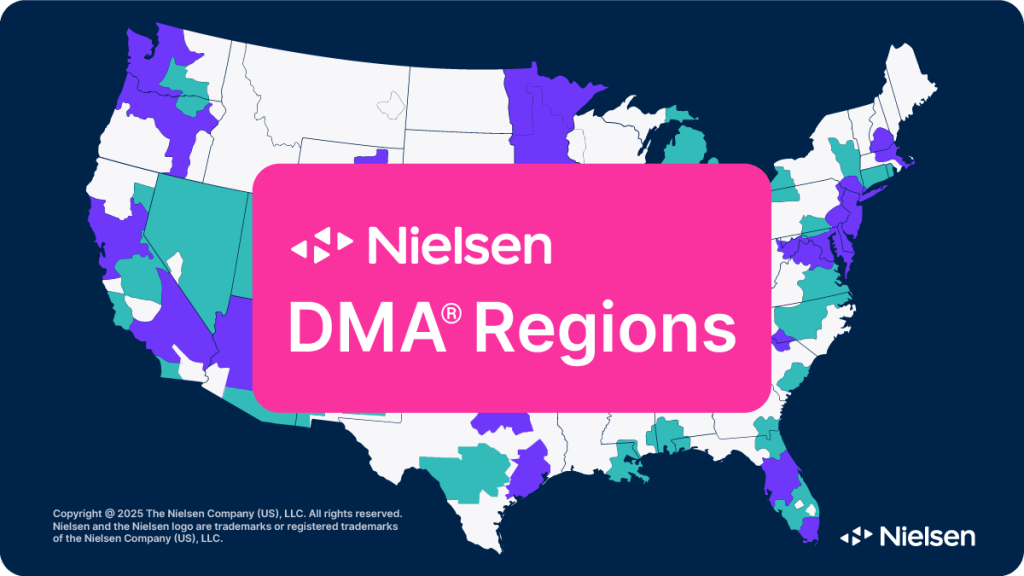
Designated Market Areas (DMAs®) are a proprietary geography defined by Nielsen. They are non-overlapping geographic regions that group counties based on television viewing areas. Each DMA® represents an area in which local television stations capture a dominant share of viewing. There are currently 210 DMA® regions in total, covering the entire continental U.S., Hawaii, and parts of Alaska. Each year, we review all DMA® regions to determine if we should add or remove any counties from a DMA® region. These defined areas are used extensively in the television industry for audience measurement, advertising planning and media buying.
DMA® ช่วยเหลือผู้โฆษณาอย่างไร?
For advertisers, certain regional metrics—such as market size, ratings, viewership patterns and consumption habits—have become instrumental in media planning and buying. Here’s how DMAs® contribute to more strategic and efficient advertising:
- การโฆษณาแบบกำหนดเป้าหมาย: DMA® ช่วยให้นักโฆษณาสามารถมุ่งเน้นแคมเปญไปยังพื้นที่ทางภูมิศาสตร์ที่เฉพาะเจาะจงได้ ภายในตลาดที่กำหนดไว้เหล่านี้ ข้อความมักจะสอดคล้องกับความชอบและความต้องการของกลุ่มเป้าหมายในภูมิภาคนั้นๆ มากขึ้น การกำหนดเป้าหมายที่แม่นยำดังกล่าวจะช่วยสร้างโฆษณาที่เกี่ยวข้องและน่าสนใจยิ่งขึ้น ซึ่งอาจนำไปสู่อัตราการตอบสนองที่สูงขึ้นและผลตอบแทนจากการลงทุนที่ดีขึ้น
- Optimized media buying: Understanding each DMA®’s unique characteristics, including viewership patterns and media consumption habits, helps advertisers make more informed decisions about ad placement timing and location. Leveraging this knowledge, they can maximize their reach while minimizing wasted impressions.
- Budget allocation: A clear understanding of the size and consumer profile of each market enables more efficient use of marketing budgets. Such insight facilitates strategic resource allocation, balancing high-impact campaigns in larger, costlier markets with targeted efforts in smaller, less saturated regions to reach specific consumer groups cost-effectively.
- การวัดประสิทธิภาพ: DMA® นำเสนอกรอบการทำงานทางภูมิศาสตร์มาตรฐานสำหรับการเปรียบเทียบประสิทธิภาพแคมเปญโฆษณาในภูมิภาคต่างๆ การใช้ประโยชน์จากข้อมูลระดับ DMA® ช่วยให้เข้าใจถึงพื้นที่ที่แคมเปญมีประสิทธิภาพดีหรือทำได้ไม่ดี ทำให้เห็นภาพประสิทธิภาพของแคมเปญได้ชัดเจนยิ่งขึ้น
อะไรทำให้ DMAs® มีความสำคัญต่อเครือข่าย?
สำหรับผู้แพร่ภาพกระจายเสียงและเครือข่าย DMA® เป็นภูมิภาคทางภูมิศาสตร์ที่สำคัญซึ่งกำหนดไว้สำหรับการวิเคราะห์ผู้ชมโทรทัศน์ โดยจะช่วยกำหนด:
- การวัดผลผู้ชมในท้องถิ่น: DMA® ทำหน้าที่เป็นหน่วยพื้นฐานในการวัดจำนวนผู้ชมทีวีในท้องถิ่น ทำให้ DMA มีความจำเป็นสำหรับเครือข่ายและผู้แพร่ภาพกระจายเสียง DMA® มอบข้อมูลเฉพาะตลาดแบบละเอียดเกี่ยวกับนิสัยและความชอบในการรับชม ทำให้ DMA® มีประโยชน์ต่อผู้โฆษณาด้วยตัวชี้วัดผู้ชมในท้องถิ่นที่แม่นยำ
- การตัดสินใจด้านโปรแกรม: การกำหนดตลาดจะช่วยให้ DMA® ตัดสินใจเกี่ยวกับโปรแกรมในท้องถิ่นได้ ผู้แพร่ภาพกระจายเสียงและเครือข่ายสามารถเข้าใจโปรแกรมที่จะตอบสนองความต้องการและความชอบของผู้ชมในท้องถิ่นได้ดีขึ้น และทำให้มั่นใจได้ว่าพวกเขาจะจัดเตรียมเนื้อหาที่เกี่ยวข้องเพื่อเพิ่มจำนวนผู้ชมให้สูงสุด
- ขนาดและการเข้าถึงตลาด: DMA® แต่ละรายการจะได้รับการจัดอันดับตามจำนวนครัวเรือนที่รับชมโทรทัศน์ในแต่ละตลาด โดยการทำความเข้าใจขนาดของแต่ละตลาด เครือข่ายท้องถิ่นและผู้แพร่ภาพกระจายเสียงสามารถตัดสินใจเรื่องราคาสินค้าคงคลังโฆษณาได้อย่างชาญฉลาดขึ้น และเข้าใจบริบทของการเข้าถึงเมื่อเทียบกับคู่แข่ง
ความเกี่ยวข้องของ DMAs® ในยุคดิจิทัล
DMA® ยังคงมีความสำคัญอย่างยิ่งในยุคดิจิทัล และในหลายๆ ด้าน ความสำคัญของ DMA® ยังคงเพิ่มขึ้นเรื่อยๆ การแบ่งกลุ่มทางภูมิศาสตร์พื้นฐานที่ DMA® มอบให้ยังคงมีความจำเป็นต่อการทำความเข้าใจรูปแบบการรับชมในแต่ละภูมิภาคและพฤติกรรมของผู้ชม แม้จะมีแพลตฟอร์มดิจิทัลเพิ่มขึ้น แต่ผู้บริโภคในแต่ละภูมิภาคก็มีความชอบและพฤติกรรมการบริโภคโทรทัศน์ที่แตกต่างกัน ซึ่งส่งผลต่อการมีส่วนร่วมกับเนื้อหาและโฆษณา DMA® ไม่ได้ล้าสมัย แต่เป็นส่วนประกอบสำคัญของระบบนิเวศการโฆษณาที่ขับเคลื่อนด้วยข้อมูล
Nielsen ช่วยอย่างไร?
Nielsen’s DMA® insights are a game-changer for media buyers and sellers. By providing granular data on what people are actually watching across local markets, Nielsen helps media buyers gain confidence that their ads will reach the right audience, maximizing their impact. Media sellers can leverage this data to accurately value their inventory, demonstrating the true reach and engagement of their content.
Our unique combination of big data and person-level panel measurement captures the viewing habits of every individual, regardless of when they consume content, from primetime favorites to daytime viewing. The result? A nuanced picture of the local TV.
Curious how these insights could help maximize your local TV impact? Learn more about your DMA® reporting or get in touch with a Nielsen representative to get an accurate picture of your local audience.
Notes
1 Ponce de Leon, C. (2015). That’s the Way It Is: A History of Television News in America. The University of Chicago Press.
Nielsen’s Need to Know reviews the fundamentals of audience measurement and demystifies the media industry’s hottest topics. Read every article here.