หากคุณค้นหาผ้าห่มลายวาฟเฟิลบน Amazon สไตล์ฤดูร้อนบน Target หรือเครื่องล้างจานบน Best Buy มีโอกาสสูงที่ผลการค้นหาแรกที่คุณเห็นจะเป็นโฆษณาแบบสปอนเซอร์ นอกจากนี้ คุณอาจได้รับแบนเนอร์โปรโมตที่ด้านบนของหน้าและวิดีโอที่มีแบรนด์ดังหลังจากเลื่อนดูหนึ่งหรือสองครั้ง นั่นคือการทำงานของสื่อค้าปลีก: การโฆษณาที่ปรับให้เข้ากับอารมณ์การจับจ่ายของคุณ
Retail media networks are all about seizing the moment, so let’s jump right in.
เครือข่ายสื่อค้าปลีกคืออะไร?
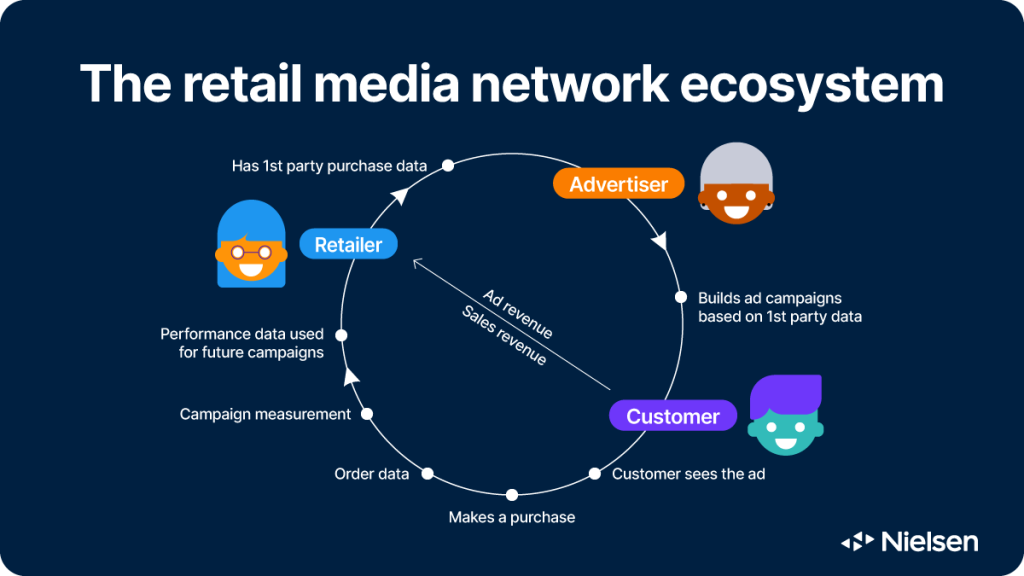
According to eMarketer, a retail media network is “an asset owned and operated by a retailer that publishes advertisements, or a third-party publisher with ads that leverage a retailer’s first-party shopper data.”
ผู้ค้าปลีกรวบรวมข้อมูลเกี่ยวกับพฤติกรรมการซื้อของคุณและใช้เพื่อปรับแต่งประสบการณ์ของคุณ รวมถึงโฆษณาที่คุณเห็น พวกเขาสามารถใช้โปรไฟล์การซื้อของคุณและสิ่งอื่นๆ ที่พวกเขาเรียนรู้เกี่ยวกับคุณจากการโต้ตอบของคุณกับพวกเขา เพื่อมีอิทธิพลต่อโฆษณาที่คุณเห็น (หรือได้ยิน) บนโซเชียลมีเดีย CTV และวิทยุดิจิทัล และยิ่งไปกว่านั้น เครือข่ายสื่อค้าปลีกยังสามารถเชื่อมโยงการแสดงผลกับยอดขายบนแพลตฟอร์มได้อย่างราบรื่น ซึ่งเป็นสิ่งที่ไม่แพร่หลายมาก่อน
สื่อค้าปลีกเริ่มต้นขึ้นมาได้อย่างไร?
สำหรับผู้สังเกตการณ์ในอุตสาหกรรมส่วนใหญ่ การกำเนิดของสื่อค้าปลีกคือการเปิดตัวโซลูชั่นโฆษณาตามโปรแกรมของ Amazon ที่ชื่อว่า Amazon Ads Platform (AAP) ในปี 2012
Learning from people’s shopping behavior, presenting them with relevant offers and reaching them at the point of purchase wasn’t exactly a new idea. Direct to consumer (DTC) brands, and brands with loyalty programs before them, had long used first-party shopper data to target consumers. And grocery chains and big box retailers have always featured in-store displays and promotions. But the scale and automation offered by Amazon were unprecedented.
From about $600 million that first year to $45 billion in 2023, the rise of Amazon’s ad business has been meteoric—and that was before the launch of its ad-supported Prime Video tier in early 2024. Over time, its success has drawn hundreds of other retailers into the media business. Walmart, Target, Kroger, Instacart, The Home Depot and others are fueling a sector that’s growing at twice the pace of social media (16.3% vs. 8.7% in 2023, according to the IAB) and is expected to overtake linear TV over the next couple of years.
ทำไมถึงมีความกระตือรือร้นมากขนาดนี้?
เครือข่ายสื่อค้าปลีกเป็นสิ่งที่ทั้งสามฝ่ายได้ประโยชน์ทั้งผู้ค้าปลีก แบรนด์ และผู้บริโภค
For large retailers, scale and specialized audiences can represent a whole new revenue stream—with much stronger margins than their core retail business to boot. BCG estimates retail media margins in the 70% to 90% range for onsite ads and 20% to 40% for offsite ads, at a time when inflation, supply-chain issues and other macroeconomic conditions are putting intense pressure on retailers’ standard lines of business.
For brands, retail media networks offer a chance to create audiences based on recent shopping behavior and reach those audiences with finely tuned messages at a time when they’re likely to be more receptive to those messages. Relevant ads to the right people and in the right context is a great combination, especially now that third-party cookies and other legacy identifiers are (slowly) being deprecated. And retail media networks aren’t limited to lower-funnel campaigns either. No wonder 70% of global marketers say retail media networks are more important to their 2024 media plan than the previous year.
ผู้บริโภคก็ได้รับชัยชนะด้วยเช่นกัน เพราะพวกเขาไม่เห็นโฆษณาเสื้อแจ็คเก็ตกันหิมะหรือล่องเรือไปที่อลาสก้าเมื่อพวกเขากำลังซื้อกางเกงขาสั้นและเรียนดำน้ำตื้นที่ฮาวาย
ข้อควรพิจารณาเกี่ยวกับการผสมผสานสื่อที่สำคัญ
แม้ว่าสื่อค้าปลีกจะเป็นช่องทางใหม่ที่น่าตื่นเต้นสำหรับผู้โฆษณา แต่คุณควรลงทุนในสื่อนี้ด้วยเหตุผลที่ถูกต้องเท่านั้น กลุ่มเป้าหมายคุ้มค่ากับต้นทุนที่สูงขึ้นหรือไม่ คุณสามารถเข้าถึงไม่เพียงแค่ลูกค้าที่มีอยู่แล้วเท่านั้น แต่ยังรวมถึงกลุ่มเป้าหมายใหม่ที่น่าสนใจด้วยหรือไม่ สื่อดังกล่าวเข้ากันได้ดีกับสื่ออื่นๆ ของคุณหรือไม่ คุณมีการรายงานที่สม่ำเสมอเพื่อเปรียบเทียบประสิทธิภาพในเครือข่ายค้าปลีกอื่นๆ หรือไม่
แม้ว่าสื่อค้าปลีกจะเป็นช่องทางใหม่ที่น่าตื่นเต้นสำหรับผู้โฆษณา แต่คุณควรลงทุนในสื่อนี้ด้วยเหตุผลที่ถูกต้องเท่านั้น
Too many marketers add retail media to their mix out of fear of missing out or out of concern that retailers might retaliate with inferior ‘shelf’ placement if they don’t buy advertising on the platform—something Forrester described as a form of hidden tax. Some advertisers are also under the impression that retail media networks solve the attribution puzzle with their closed-loop measurement because they’re so close to the moment of purchase. But last touch attribution isn’t any more reliable just because it’s on retail media.
การปฏิบัติต่อสื่อค้าปลีกเหมือนกับเป็นช่องทางหนึ่ง
With hundreds of options on the market, over two-thirds of ad buyers (69%) are overwhelmed by the complexity of the current retail media buying process. While there are calls for standardization, it’s still largely siloed from other media transactions—to say nothing of the process of reconciling retail media buying with the rest of the media ecosystem. Four in ten ad buyers have only enough bandwidth to work with at most three retail media networks at a time.
In a sign that retail media is maturing, the IAB just proposed new standards in Europe to tear down silos between players and harmonize their offerings. At Nielsen, we think that’s a good first step. Brands need consistent, transparent and outcomes-minded measurement across all of their media partners to get a full picture and build confidence in their overall media spend.
แบรนด์ต่างๆ ต้องมีตัวชี้วัดที่สอดคล้อง โปร่งใส และคำนึงถึงผลลัพธ์ทั่วทั้งพันธมิตรสื่อทั้งหมดเพื่อให้ได้ภาพรวมและสร้างความมั่นใจในการใช้จ่ายสื่อโดยรวม
ปัจจัยความเชื่อมั่นนั้นมีความสำคัญต่อการปลดล็อกการใช้จ่ายจริง แม้ว่าผู้โฆษณาจะยินดีปรับเปลี่ยนงบประมาณบางส่วนเนื่องจากยอดขายที่เพิ่มขึ้นที่วัดได้ แต่ยังคงมีความไม่แน่นอนเกี่ยวกับมูลค่าเพิ่มที่สื่อค้าปลีกสามารถมอบให้ได้ สิ่งที่ดีที่สุดที่อาจเกิดขึ้นกับสื่อค้าปลีกคือการปฏิบัติต่อสื่อค้าปลีกเหมือนกับช่องทางอื่นๆ และการเปลี่ยนแปลงงบประมาณจริงในระดับขนาดใหญ่จะต้องมีการเปรียบเทียบระหว่างตัวชี้วัดการวัดทั้งหมด
โอกาสใหม่ๆ ของสื่อค้าปลีก
This is the right time for standards. Online and offline retail media are merging thanks to the rise of digital “smart” shelves, in-store mobile experiences and loyalty programs that connect in-store and online data to build holistic consumer profiles. And retail media is already growing beyond lower-funnel activities and even retail, for that matter, with market leaders like Lyft, Marriott และ Chase showing the way. It’s also crossing over into the CTV space, with trailblazing partnerships between Instacart and Roku, Walmart and Peacock, and of course Amazon and Prime Video.
Nielsen’s Need to Know reviews the fundamentals of audience measurement and demystifies the media industry’s hottest topics. Read every article here.