นอกจากการดึงดูดแฟนๆ หลายล้านคนทั่วประเทศแล้ว กีฬายังเป็นธุรกิจขนาดใหญ่ โดยเฉพาะอย่างยิ่งเมื่อเป็นเรื่องของสิทธิ์ในการถ่ายทอดทางโทรทัศน์ และเมื่อเราพิจารณาถึงโอกาสทางการค้าแล้ว ไม่มีอะไรจะเหนือกว่าฟุตบอลได้อีกแล้ว ซึ่งเป็นสิ่งที่อุตสาหกรรมสื่อได้สัมผัสด้วยตัวเองท่ามกลางการเปลี่ยนแปลงสมาชิกล่าสุดภายในคอนเฟอเรนซ์ NCAA ชั้นนำ
การเปลี่ยนแปลงเหล่านี้ไม่น่าจะส่งผลกระทบต่อความชื่นชอบของทีมใดทีมหนึ่ง แต่การเปลี่ยนแปลงซึ่งถือเป็นการเปลี่ยนแปลงครั้งใหญ่ที่สุดในประวัติศาสตร์เมื่อไม่นานนี้ จะส่งผลต่อการปรากฏตัวทางทีวีของทีมต่างๆ และใครจะได้ชมเกมของทีมเหล่านั้น
เช่นเดียวกับหลายๆ แง่มุมของอุตสาหกรรมสื่อ ผู้ชมเป็นปัจจัยสำคัญในการปรับโครงสร้างการประชุม ซึ่งส่วนใหญ่จะยังไม่มีผลบังคับใช้จนกว่าจะถึงฤดูกาล 2024 นั่นคือเมื่อนั้น 8 ทีมจะออกจาก Pac-12 เพื่อเข้าร่วมการประชุมที่มีข้อตกลงทางทีวีที่คุ้มค่ากว่า โดย 4 ทีมจะเข้าร่วม Big Ten และอีก 4 ทีมจะเข้าร่วม Big 12
Unlike the other Power Five1 conference members, the Pac-12 does not have a long-term TV rights deal, which has a direct impact on the revenue each member school receives. For example, the Big Ten expects its seven-year deal with CBS, FOX and NBC to be lucrative enough to distribute between $80 million and $100 million annually to each member school. The $8 billion deal is the biggest in the history of college athletics, and it gives the contract holders access to some of NCAA football’s highest-ranked and most-watched teams, including Michigan, Ohio State and Penn State.
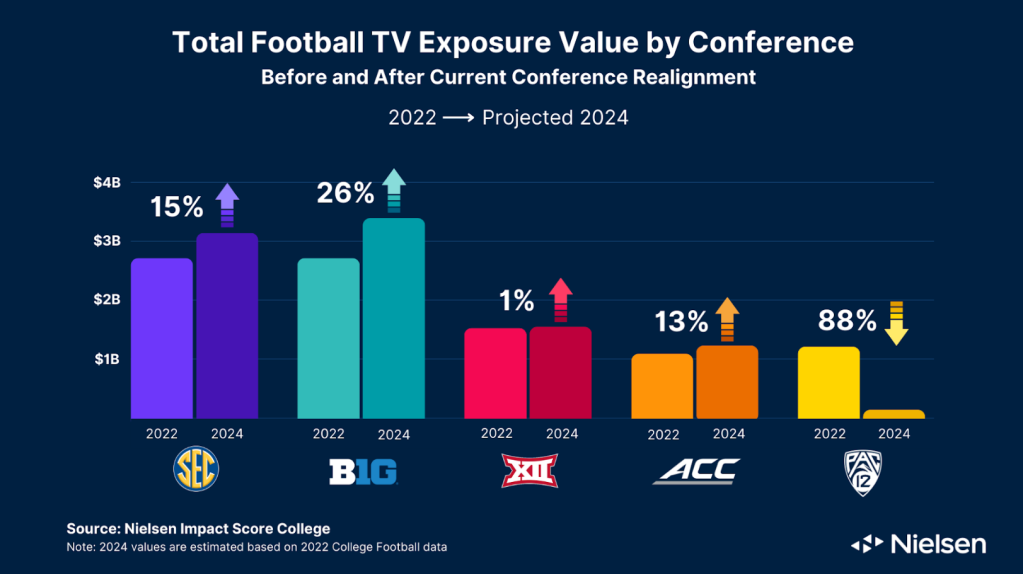
การเป็นสมาชิกของคอนเฟอเรนซ์ส่งผลกระทบต่อกีฬาทุกประเภทภายในโรงเรียนสมาชิกแต่ละแห่ง แต่การเปลี่ยนแปลงในช่วงไม่กี่ปีที่ผ่านมาล้วนเกิดจากสิทธิที่เกี่ยวข้องกับการแข่งขันฟุตบอลสด จากการวิเคราะห์มูลค่าที่เกี่ยวข้องกับการรับชมทางทีวีของแต่ละคอนเฟอเรนซ์ในช่วงฤดูกาล 2022 การจัดตำแหน่งใหม่ที่มีผลบังคับใช้ในปีหน้าจะมีผลกระทบอย่างมีนัยสำคัญต่อ SEC, Big Ten และ Pac-12
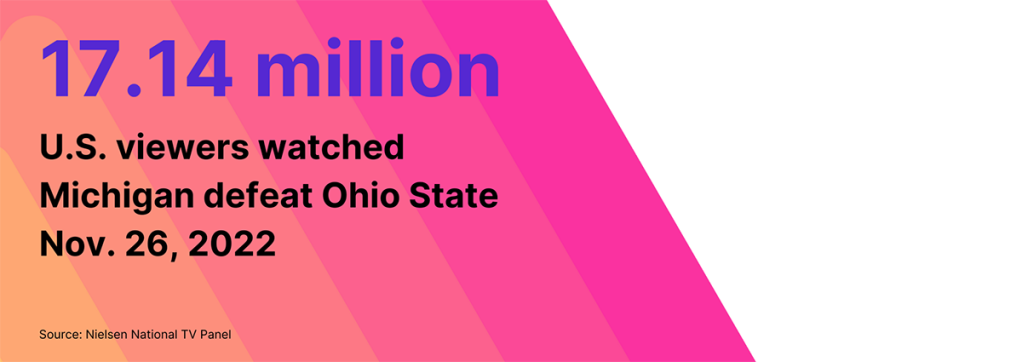
The value of TV exposure is clear. One-third of Americans say they’re college football fans2, making the league the fourth-most popular in the U.S. (behind the NFL, NBA and MLB). And big teams draw big viewership: More than 17 million viewers3 watched last year’s marquee late-season matchup between Ohio State and Michigan, the highest viewership of the regular season. For comparison, nearly 2.3 million viewers3 watched the Brooklyn Nets play the Philadelphia 76ers in the first round of last year’s NBA playoffs.
While top-ranking teams and storied rivalries will always command national TV coverage, the implications of the conference membership changes will have different outcomes at the local market level. Last year’s week 8 game between UCLA and Oregon (which will both leave the Pac-12 next year) attracted a national audience of 3.34 million3. Once these two teams join the Big Ten, they will expand the conference’s TV audience across the entire country and both coasts.
To better understand how the conference changes will shape local TV viewership beyond individual games, we examined the difference between Pac-12 and Big Ten TV viewing in Los Angeles, Portland and Seattle during the 2022 season. These designated market areas (DMAs) are home to four West Coast teams4 that will switch conferences next year.
Due to the size of these three markets, last season’s Pac-12 programming reached 123% more households and 151% more individual viewers than Big Ten programming did5. And while the 0.1 difference in co-viewing might seem insignificant at face value, it becomes far more meaningful when you multiply it by the total viewing population of the three DMAs.
เมื่อเราแยกการรับชมการประชุมโดยรวม เราจะเห็นผลกระทบที่การเปลี่ยนแปลงของการประชุมจะมีต่อตลาดแต่ละแห่ง แม้ว่าประชากรในลอสแองเจลิสซึ่งเป็นที่ตั้งของ UCLA และ USC จะมีจำนวนมาก แต่พอร์ตแลนด์มีแนวโน้มที่จะมีผู้ชมเพิ่มขึ้นเป็นเปอร์เซ็นต์สูงสุดในฤดูกาลหน้า
While the Big Ten will benefit next year from the arrival of USC, UCLA, Oregon and Washington, the Big 12 will benefit from the arrival of the University of Colorado, home to this year’s hottest college football story. The Colorado Buffaloes have been in the news ever since NFL legend Deion Sanders took over as head coach last year, but the team’s 3-1 start, including an upset over TCU (Texas Christian University) to open the season, has made their games must-see TV for football fans. In fact, the team’s double-overtime victory over Colorado State on Sept. 16 attracted 9.3 million viewers3 despite the fact that it didn’t start until after 10 pm ET. The team’s Sept. 23 game against Oregon attracted more than 10 million live and same-day viewers, the largest audience of the season.
แม้ว่าการวิเคราะห์มูลค่าการรับชมทางทีวีระดับประเทศของเราจะไม่ได้บ่งชี้ถึงการเปลี่ยนแปลงที่สำคัญ (+1%) สำหรับ Big 12 เมื่อ Colorado เข้าร่วมในปีหน้า (พร้อมกับ Arizona, Arizona State และ Utah) แต่ผลกระทบต่อการรับชมทางทีวีในท้องถิ่นนั้นเป็นเรื่องที่แตกต่างกัน ผลกระทบของ Coach Prime นั้นเกิดขึ้นทันที เนื่องจากผู้ชมทางทีวีของ Denver สำหรับเกมแรกของ Buffaloes นั้นสูงกว่าปีที่แล้วถึง 117% และนั่นเป็นเพียงจุดเริ่มต้นเท่านั้น
โดยรวมแล้ว การได้รับความสนใจเพิ่มขึ้นถือเป็นลางดีสำหรับ Pac-12 ในปีนี้และ Big 12 ในปีหน้า เนื่องจากผู้ชมโดยเฉลี่ยในระดับครัวเรือนเพิ่มขึ้น 976% และเพิ่มขึ้นมากกว่า 1,100% ในกลุ่มผู้ชมที่มีอายุ 2 ปีขึ้นไป นอกจากนี้ กระแสฮือฮาเกี่ยวกับ Buffaloes ยังทำให้ผู้ชมร่วมกันเพิ่มขึ้น 15% ในปีนี้ด้วย
แฟนกีฬาต่างจับตามองการแข่งขันฟุตบอลระดับมหาวิทยาลัยของ NCAA ได้เป็นอย่างดี โดยเฉพาะเมื่อมีแมตช์ใหญ่ๆ เกิดขึ้น และแม้ว่าการแข่งขันชิงแชมป์ระดับประเทศจะได้รับความสนใจจากผู้ชมทางทีวีทั่วประเทศ แต่เราก็จะเห็นได้ว่าการรับชมทางทีวีในตลาดท้องถิ่นมีส่วนช่วยสร้างมูลค่าให้กับทีมต่างๆ ที่เกี่ยวข้องกับการเปลี่ยนแปลงล่าสุดในกลุ่ม Power 5 NCAA ได้อย่างไร
แหล่งที่มา
1The five most prominent and highest-earning athletic conferences in Division I NCAA football: ACC, Big Ten, Big 12, Pac-12, SEC
2Nielsen Fan Insights; Q2 2023
3Nielsen National TV Panel; live + same day viewing (3 a.m.-3 a.m.)
4UCLA, USC, Oregon, Washington
5Nielsen Local TV measurement