การวัดแบบดิจิทัลเปรียบเทียบกับการวัดแบบทีวีได้อย่างไร?
In a lot of ways, it’s similar: It involves panels, big data and technology to capture what people are doing online and who they are. As with TV, publishers use measurement to gauge the popularity of their content and value their ad inventory, and advertisers use it to verify that their campaigns are running and reaching their intended audience at the right frequency1.
แม้ว่าหลักการพื้นฐานและวัตถุประสงค์สูงสุดของการวัดผลทีวีและดิจิทัลจะคล้ายคลึงกัน แต่เครื่องมือ กระบวนการ และระบบนิเวศที่เกี่ยวข้องนั้นแตกต่างกันมาก
มาเจาะลึกเพื่อทำความเข้าใจความแตกต่างอย่างละเอียดในการวัดผลกลุ่มเป้าหมายและแคมเปญทางดิจิทัลกัน
เราหมายถึงอะไรด้วย 'การวัดแบบดิจิทัล'
At the most basic level, digital measurement means monitoring a user’s exposure to ads and content delivered over the internet. When we talk about digital measurement in the media industry, we generally focus on two dominant digital experiences: walled gardens and the open web.2
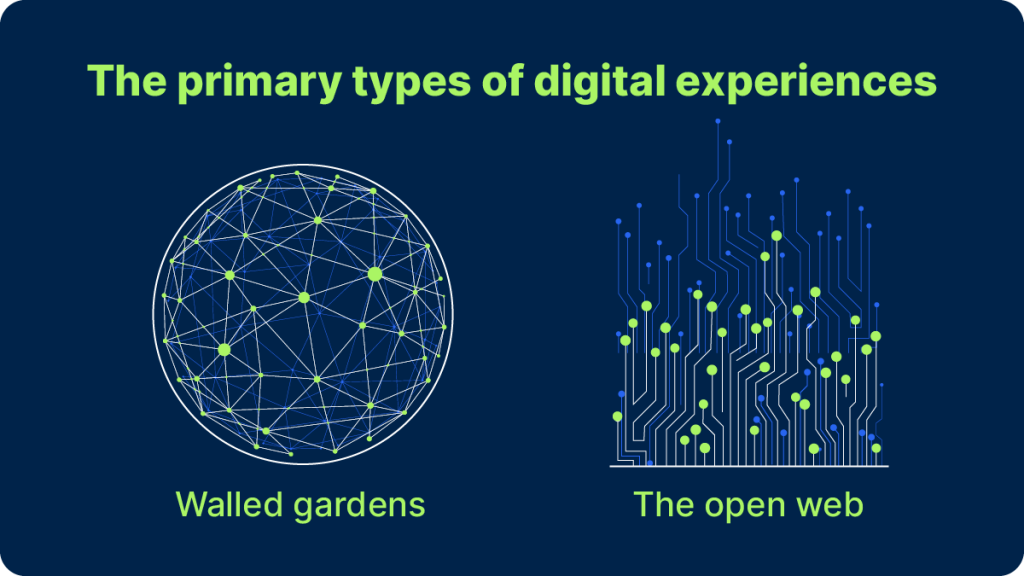
ความแตกต่างที่สำคัญระหว่างทั้งสองอย่างคือ สวนที่มีกำแพงจำกัดการเข้าถึงข้อมูลของบุคคลที่หนึ่ง เช่นเดียวกับสวนที่ถูกล็อกไว้หลังกำแพง แต่เว็บเปิดจะไม่ทำเช่นนั้น เว็บไซต์โซเชียลมีเดียเป็นตัวอย่างของสวนที่มีกำแพง ในขณะที่เว็บไซต์และแอปอย่าง Weather.com, Words With Friends และ CNN เป็นส่วนหนึ่งของเว็บเปิด
นี่คือความแตกต่างที่สำคัญสำหรับวัตถุประสงค์ในการวัดผล: ในทางเทคนิคแล้ว สวนที่มีกำแพงล้อมรอบควรมีแนวคิดที่ค่อนข้างชัดเจนว่าใครกำลังเข้าถึงเนื้อหาและดูโฆษณาบนแพลตฟอร์มของตน แต่หากบริษัทอื่นต้องการวัดผลการใช้โฆษณาหรือเนื้อหาภายในสวนที่มีกำแพงล้อมรอบเหล่านี้ โดยทั่วไปแล้ว บริษัทเหล่านั้นจะต้องสร้างการบูรณาการแบบกำหนดเองที่สอดคล้องกับกฎระเบียบความเป็นส่วนตัว
แม้ว่าเว็บไซต์บนเว็บแบบเปิดจะมีข้อมูลของบุคคลที่หนึ่งที่น่าเชื่อถือและผ่านการรับรอง แต่ก็ไม่ได้เป็นเช่นนั้นเสมอไป ในกรณีดังกล่าว เว็บไซต์ทั่วไปมักจะใช้รหัสพร็อกซีและโซลูชันเทคโนโลยีโฆษณาอื่นๆ เพื่อระบุ กำหนดเป้าหมาย และวัดผลผู้ใช้
ความท้าทายของอุตสาหกรรมในปัจจุบัน
On the open web, the ongoing deprecation of third-party cookies and device IDs is making it more difficult to identify users and is forcing stakeholders to rethink their measurement approach. Apple’s decision in 2021 to change default app tracking permissions (from opt-out to opt-in) wiped out three-fourths of IDFAs (Apple’s mobile ad IDs) from consideration. And Google is scheduled to phase out third-party cookies in the second half of 2024, the final blow to an ID system that held up for the most part, but was always an imperfect solution. Cookies aren’t people, after all.
For walled gardens, the practice of sharing granular subscriber data with outside parties is largely a thing of the past, even for anonymized measurement purposes. To comply with major data global privacy regulations, walled gardens are now sharing activity data with advertisers and measurement companies in aggregate form, if they’re sharing it at all.
สิ่งเหล่านี้เป็นความท้าทายที่สำคัญสำหรับการวัดผลที่บังคับให้ภาคอุตสาหกรรมต้องมองหาตัวระบุผู้บริโภค สัญญาณ และคุณลักษณะอื่นๆ และทั้งหมดนี้เริ่มต้นด้วยความประทับใจ
‘อิมเพรสชั่น’ ดิจิทัลคืออะไรกันแน่?
ก่อนที่เราจะเจาะลึกถึงรายละเอียดของกระบวนการวัดแบบดิจิทัลสมัยใหม่ เรามาทำความเข้าใจก่อนว่าความประทับใจคืออะไร
จำนวนการแสดงผลวัดจำนวนครั้งที่โฆษณาหรือเนื้อหาถูกส่งไปยังอุปกรณ์ดิจิทัล แม้ว่าจำนวนการแสดงผลจะระบุปริมาณการรับชมโฆษณาหรือเนื้อหาของคุณทั้งหมด แต่ไม่ได้วัดจำนวนคนที่เห็นโฆษณาหรือเนื้อหานั้นจริงๆ (นั่นคือการเข้าถึง) ตัวอย่างเช่น หากมีคนห้าคนเห็นโฆษณา LinkedIn ของคุณสองครั้ง นั่นหมายความว่าจำนวนการแสดงผลแคมเปญของคุณคือ 10
หลักเกณฑ์ปัจจุบันเกี่ยวกับความสามารถในการรับชมสื่อดิจิทัลเพื่อให้เกิดการแสดงผลนั้น กำหนดให้โฆษณาต้องอยู่ในโฟกัสของหน้าจอผู้ใช้อย่างน้อย 50% ไม่ซ่อนอยู่หลังหน้าต่างอื่น เช่น ไม่เล่นอยู่เบื้องหลัง เป็นเวลาอย่างน้อย 1 วินาทีสำหรับโฆษณาแบบแสดงผล และ 2 วินาทีติดต่อกันสำหรับโฆษณาแบบวิดีโอ ปัจจุบันเกณฑ์เวลาในการแสดงผลและความสามารถในการรับชมเป็นพื้นฐานที่มั่นคงสำหรับผู้โฆษณาและผู้เผยแพร่เพื่อกำหนดเงื่อนไขการทำธุรกรรมสื่อของตน
ตอนนี้เราเข้าใจแล้วว่ากิจกรรมดิจิทัลที่เรากำลังวัดคืออะไร มาดูกันว่าเราจะวัดมันได้อย่างไร
5 ขั้นตอนสำคัญในกระบวนการวัดผลแบบดิจิทัล
ที่ Nielsen เราพิจารณาการวัดผลแบบดิจิทัลเป็นกระบวนการ 5 ขั้นตอน:
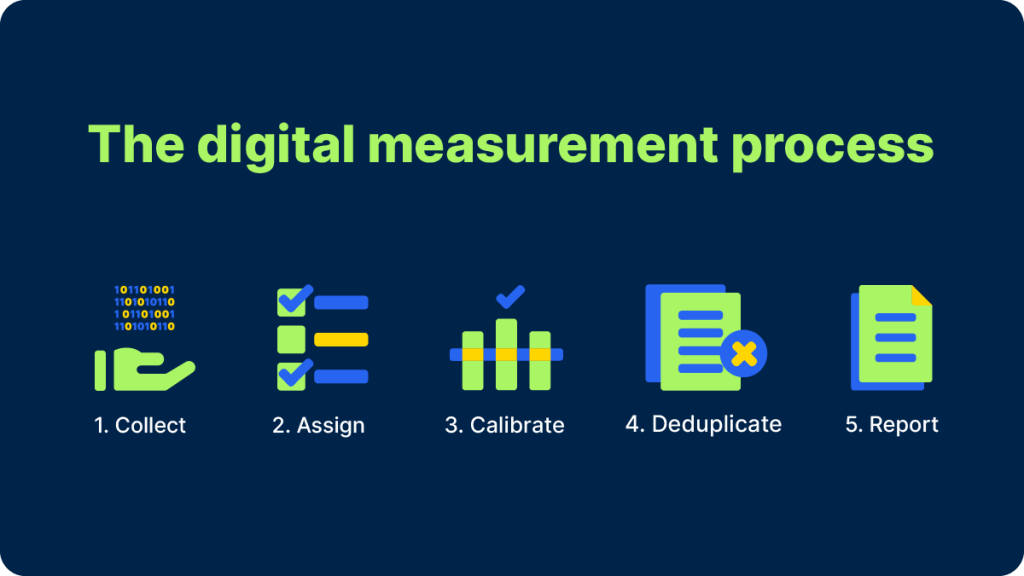
ขั้นตอนที่ 1: รวบรวม
The first step in the process is to make sure that the content and ads data is all properly captured and identified. For web content, a page URL is an acceptable identifier, but there might be multiple ads on a single url that will need to be uniquely identified. For content measurement, clients’ integrate Nielsen’s SDK3 within their websites or apps. For ads measurement, we either use direct integrations with publishers, or ask advertisers or their agencies to integrate Nielsen tags in their ads when they traffic campaigns. When ads are delivered to the user’s browser or app, those Nielsen tags ping our servers with information about the ad that was delivered along with important meta-data information that enables us to filter out any invalid robotic traffic. Javascript tags, on top of all the campaign data, capture additional signals for measuring second-by-second viewability data (for display and video ads) and audio volume levels (for video ads). This allows us to accurately collect all the impression data.
ขั้นตอนที่ 2: มอบหมาย
The next step is to assign those impressions to a person. With the ecosystem changes discussed above, we’re now transitioning to a system where cookies are replaced with alternate identifiers and first-party data provided by clients—such as hashed email addresses, Unified ID 2.0 or self-reported demographic labels—and verified against our own growing ID graph. The goal is to get as close as possible to the demographic profile of the person who was exposed to the content or ad, and if that’s not possible, at least attach some useful information about their behavior and interests.
ขั้นตอนที่ 3: การสอบเทียบ
Then, you need to calibrate your data for demographic accuracy. It’s important to acknowledge that even the best demo assignment process in the world will still return many cases where the user couldn’t be identified, and those misses can’t be assumed to be randomly distributed across all demographic groups. This may lead an advertiser to draw erroneous conclusions about the impact of their campaign. A panel can be used as a source of truth to calibrate census-level impressions. At Nielsen, we maintain digital and participant panels of 725,000 for exactly that purpose. Some are equipped with a computer meter, others with a mobile meter to measure their app and web usage on smartphones and tablets. And we make sure we have accurate demographic and profiling data for everyone in the panel
ขั้นตอนที่ 4: การลบข้อมูลซ้ำซ้อน
Next, you must ensure your campaign reach isn’t inflated across devices . Over the course of a campaign, people are typically exposed to it many times, especially when that campaign is running on multiple walled gardens and on the open web. Multiple exposures are generally a good thing—it takes a few impressions to make an impression—but advertisers are rightfully very mindful of ad waste4 and putting off consumers with repetitive ads. Deduplicating reach—that is, ensuring the same viewer isn’t counted multiple times—and calculating a campaign’s true frequency are critical steps in the measurement process.
ขั้นตอนที่ 5: รายงาน
Finally, you need to monitor performance. Everything above needs to happen on a continuous basis, and actionable reports need to be available as quickly as possible to give marketers the insights they need to reallocate funds to their most effective channels and most receptive audiences while their campaign is still in flight and there’s still time to change course.
กำลังมุ่งสู่การวัดผลแบบข้ามสื่อ
อุตสาหกรรมการวัดผลอยู่ภายใต้แรงกดดันอย่างหนักที่จะต้องปรับตัวให้เข้ากับการเปลี่ยนแปลงครั้งใหญ่ที่เกิดขึ้นแล้วในระบบนิเวศดิจิทัล ผู้โฆษณาจำเป็นต้องมีมุมมองที่ชัดเจนเกี่ยวกับประสิทธิภาพของแคมเปญบนอุปกรณ์ดิจิทัล ความเชื่อมั่นในผลลัพธ์ และเครื่องมือที่เชื่อถือได้เพื่อเพิ่มประสิทธิภาพแคมเปญที่กำลังดำเนินการอยู่
But there’s even more pressure to get digital and TV impressions on a level playing field. This is an ongoing effort—what constitutes an impression on linear TV and on digital platforms aren’t the same yet—but thanks to the development of a common ID system and launch of Nielsen ONE, we’re already helping marketers deduplicate reach and frequency across select digital and linear platforms in key markets around the world.
At Nielsen, we’ve also recently launched ‘Always On’ digital measurement with proactive partners like YouTube to emulate the way that linear measurement is done and help marketers turn on digital measurement capabilities on a continuous basis, rather than campaign-by-campaign.
ยังมีงานอีกมากที่ต้องทำเพื่อให้การวัดผลสื่อหลายรูปแบบเกิดขึ้นจริงในอุตสาหกรรมของเรา แต่ด้วยลำดับความสำคัญ เครื่องมือ และกระบวนการที่เหมาะสม เราก็ใกล้จะบรรลุเป้าหมายมากกว่าที่เคย
Nielsen’s Need to Know reviews the fundamentals of audience measurement and demystifies the media industry’s hottest topics. Read every article here.
แหล่งที่มา
1For an overview of TV measurement, read Need to Know: How Are TV Audiences Measured?
2Connected-TV platforms and retail media networks share many characteristics with both walled gardens and the open web. Stay tuned for a future Need to Know article on those fast-growing media channels.
3The Nielsen software development kit (SDK) is one of multiple framework SDKs that Nielsen provides to measure both static and video content across platforms.
4Nielsen’s Digital Ad Ratings estimate that 37% of digital ad spend is currently wasted on impressions that are off-target, out-of-view or SIVT.