While the pandemic may have been the catalyst for accelerating streaming adoption among the masses, it’s clear that audiences are making streaming a permanent, and growing, part of their lives. In fact, April marked a milestone for streaming, as for the first time, audiences spent more than 30% of their total TV time watching over-the-top video content.
In addition to increased time spent, audiences, particularly AANHPI consumers, are finding more representation on streaming services than on broadcast and cable television. Last year, AANHPI representation on streaming services was more than double that of broadcast or cable. According to Nielsen Gracenote Inclusion Analytics, AANHPI share of screen grew by 80% last year. But inclusion isn’t just increasing across streaming services. Overall Asian representation across cable, broadcast and SVOD increased 31% last year.
เมื่อมีรายการที่มีตัวแทนมากขึ้น เนื้อหาที่เกี่ยวข้องกับวัฒนธรรมก็จะยิ่งเพิ่มมากขึ้นด้วย การนำเสนอที่เพิ่มขึ้นนี้ทำให้ครอบครัวที่มีสมาชิกหลายช่วงวัยมาอยู่รวมกันเพื่อแบ่งปันเนื้อหาร่วมกัน ตัวอย่างเช่น ใน Disney+ ผู้ชมชาวอเมริกันเชื้อสายเอเชียอายุน้อยอายุ 18-24 ปีรับชมเนื้อหาของ AANHPI ร่วมกับผู้ที่มีอายุ 65-74 ปี มากกว่าผู้ชม Disney+ โดยรวมเกือบ 8 เท่า แนวโน้มนี้ยังคงดำเนินต่อไปในทุกแพลตฟอร์มสตรีมมิ่ง ใน Netflix การรับชมร่วมกันระหว่างกลุ่มอายุทั้งสองนี้สูงกว่าผู้ชมโดยรวม 4.3 เท่า
Disney’s Turning Red, which was originally released direct to consumers in the U.S. on Disney+, highlights both the power of representational content and co-viewing. The family-friendly movie about a young girl coming of age struck a chord with AANHPI audiences of all ages. The movie was among the most streamed titles in first-quarter 20221, and drew a multigenerational Asian audience far exceeding the average audience.
Asian viewers aged 75+ streamed Turning Red with kids in the home at nearly 3x the rate of viewers in the age group overall. And, the week following its premiere, 1.5x the number of Asian American 65-74 year-olds watched the movie with kids in the home.
All of this co-viewing can mean big opportunities for content creators who want to tap into the booming U.S. AANHPI audience—the Asian American community has experienced 39% growth in the last 10 years2 and had 2.1 trillion minutes of viewing power in 20213.
แม้ว่าจะมีการพัฒนาการนำเสนอภาพชาวอเมริกันเชื้อสายเอเชียบนหน้าจอ แต่เนื้อหาสื่อยังคงไม่สามารถตอบสนองความต้องการของผู้ชมที่ต้องการภาพที่มีความแม่นยำมากขึ้น ผลการสำรวจทัศนคติของ Nielsen Attitudes on Representation on TV เมื่อไม่นานนี้พบว่าชาวอเมริกันเชื้อสายเอเชียส่วนใหญ่รู้สึกว่าไม่มีการนำเสนอกลุ่มตัวตนของตนเองบนทีวีเพียงพอ และเมื่อเห็นพวกเขาบนจอ พวกเขาก็รู้สึกว่าภาพที่แสดงนั้นไม่ถูกต้อง
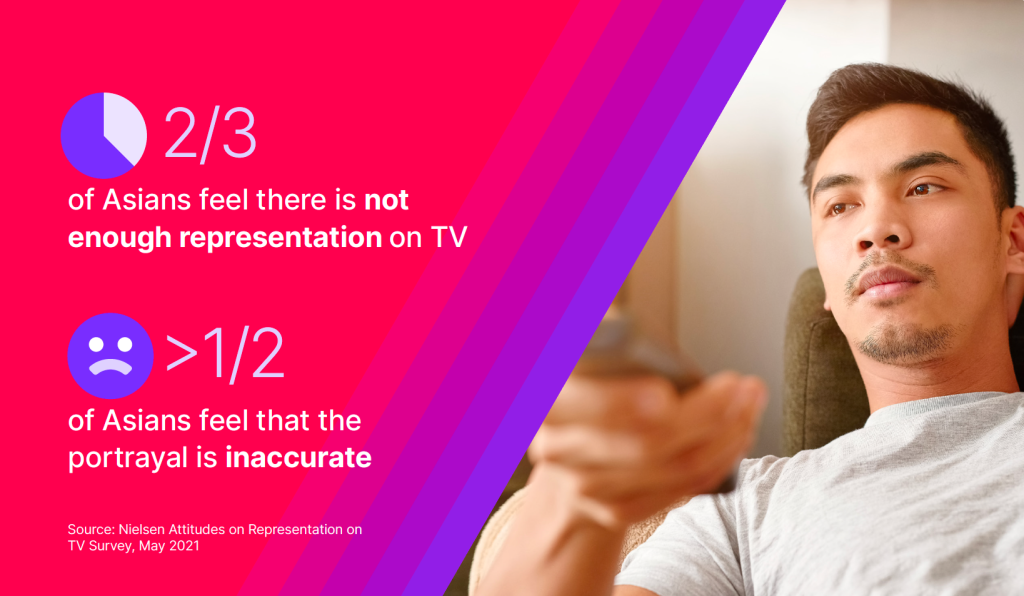
ผู้ชมของ AANHPI ต้องการรู้สึกว่าตนเองได้รับการมองเห็น และมีแนวโน้มที่จะสนใจเนื้อหาที่เกี่ยวข้องกับวัฒนธรรมซึ่งมีความสมบูรณ์แบบเท่ากับประสบการณ์ของตนเองมากขึ้นบนแพลตฟอร์มที่มีตัวเลือกให้เลือกมากที่สุด ผู้สร้างเนื้อหาที่สามารถบอกเล่าเรื่องราวที่มีเอกลักษณ์เฉพาะตัวและละเอียดอ่อนเกี่ยวกับชุมชนชาวอเมริกันเชื้อสายเอเชียสามารถเข้าถึงผู้ชมที่มีอิทธิพล มีส่วนร่วม และหลากหลายช่วงวัยได้
For additional insights, download our AANHPI report—Confronting myth and marginalization: Asian American audiences and on-screen representation.
Notes
- การจัดอันดับเนื้อหาสตรีมมิ่งของ Nielsen
- สำนักงานสำมะโนประชากรสหรัฐอเมริกาปี 2020
- Nielsen Media Impact รับชมนาที 2021