ไม่ว่าจะเป็นกีฬาประเภทใด แฟนๆ ต่างก็รักเกมและทีมโปรดของตนอย่างสุดหัวใจ ความรักดังกล่าวเป็นเชื้อเพลิงให้กับประเพณีของครอบครัว ความขัดแย้งในชุมชน และเวลารับชมนานหลายชั่วโมง นอกจากนี้ยังเป็นความรักที่เป็นศูนย์กลางของวัฒนธรรมอเมริกัน แต่จะเกิดอะไรขึ้นเมื่อความรู้สึกผูกพันนั้นต้องแลกมาด้วยวัฒนธรรมหรือมรดกที่ถูกทำลายมาหลายศตวรรษในนามของชาวอเมริกันพื้นเมือง สำหรับชาวอเมริกันพื้นเมืองจำนวนมาก การยึดถือสัญลักษณ์ศักดิ์สิทธิ์และการเผยแพร่แบบแผนถือเป็นเรื่องปกติในกีฬาอเมริกันทั้งในระดับอาชีพ วิทยาลัย และระดับอนุบาลถึงมัธยมศึกษาตอนปลาย แต่แฟนๆ หลายคนในปัจจุบันบอกว่าไม่จำเป็นต้องเป็นแบบนั้นอีกต่อไป
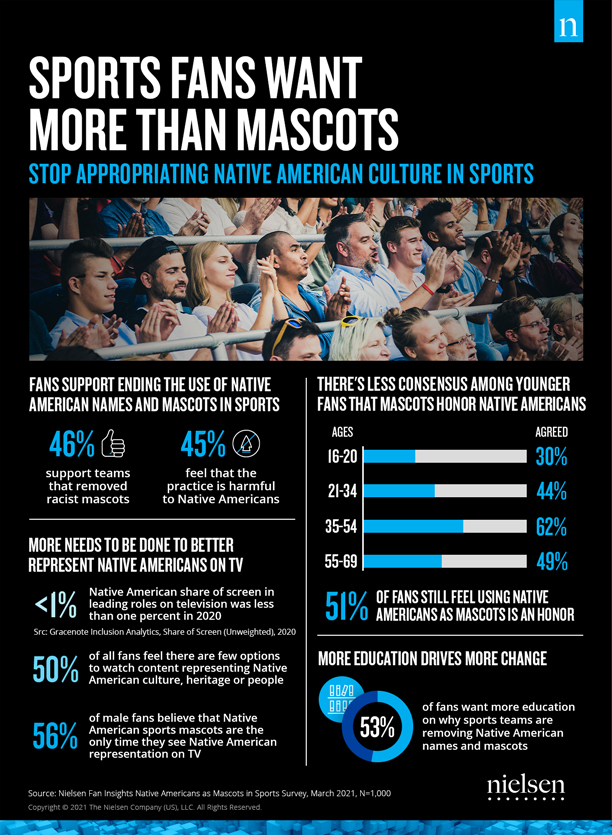
Fans applaud the shift away from the appropriation of Native American culture as mascots. In fact, a recent ข้อมูลเชิงลึกของแฟน ๆ Nielsen survey in collaboration with IllumiNative found that 46% of respondents believe teams are doing the right thing by changing their names and stopping the use of culturally insensitive mascots. For example, after years of pressure, the Washington Football Team finally retired the use of its former name and logo in 2020. The Cleveland Indians made a similar move at the start of the 2019 baseball season when it stopped using its former mascot, Chief Wahoo.
But 45% of fans want sports teams to do more than just stop using culturally insensitive mascots and names. They want them to end the appropriation of Native American culture as well, citing the harm it does to the community and the damaging emotional effects on Native Americans. And much of the appropriation starts in school sports, which the American Psychological Association says establishes an unwelcome and oftentimes hostile learning environment for American Indian students that affirms negative images/stereotypes that are then promoted in mainstream society.
การตอบสนองต่อความรู้สึกของผู้บริโภคที่เปลี่ยนไปก็เปลี่ยนไปเช่นกัน โดยทีม Cleveland Indians ได้แสดงจุดยืนของตนมากกว่าการเลิกใช้มาสคอตตัวเดิมเมื่อเดือนธันวาคมปีที่แล้ว โดยประกาศว่าจะเปลี่ยนชื่อ ซึ่งถือเป็นการเปลี่ยนชื่อที่เป็นกลางมากกว่ามาสคอตตัวเดิม การเปลี่ยนแปลงบุคลิกของทีมแบบค่อยเป็นค่อยไปนั้นสะท้อนให้เห็นถึงการที่ผู้บริโภคเปลี่ยนจากการไม่ยอมรับมาสคอตที่สร้างความไม่พอใจไปเป็นไม่ยอมรับการละเมิดวัฒนธรรมใดๆ ทั้งสิ้น
In some instances, sports organizations and teams had good intentions, using Native American culture and mascots to honor the community. Crystal Echo Hawk (Pawnee), founder and CEO of IllumiNative, explains that what is intended as an honor can often have a demoralizing effect. “Native Americans are the only group being used as sports mascots, depicting our Native American communities not as people, but as ‘other’. It’s dehumanizing and objectifying.”
Not only do fans recognize that sports mascots are the primary means by which Native American cultures are represented on television, 50% of respondents in our recent survey acknowledged that options to see Native American culture or people are represented on TV were limited—especially in contemporary roles and not just historical context. Outside of team names and logos, Native peoples’ share of screen stands at just 0.27%—a figure about one-sixth the presence of Native Americans in the U.S. population today. Increased news coverage has broadened awareness of ongoing policy issues such as voting access and land rights, but when audiences seek out scripted content on TV that includes Native Americans, representation of Native American talent in lead roles is less than 1% in multiple TV genres:
More needs to be done to expand representation of Native Americans on their terms. And when it comes to championing social issues, sports are leading the way. Nielsen Sports Managing Director Jon Stainer says the changing tide is another opportunity for pro sports teams: “Sports fans want more from the teams they love—beyond watching their favorite teams play their best, fans want their teams to represent their values. The racial reckoning in the U.S. has created a greater awareness, and sports fans expect their favorite teams to stand up for underrepresented communities and take a stand against cultural appropriation of Native Americans.”
Trading cultural appropriation in sports for the visibility that Native Americans deserve—representation that is defined by and not dictated to Native peoples—is a long overdue way to truly honor this underrepresented population.