The word podcast was added to the Oxford English Dictionary back in 2005, but the term had yet to gain much traction in the media industry—as well as with the average consumer. Fast forward 16 years, and podcasting has blossomed into a burgeoning industry that provides brands with an opportunity to engage with a growing base of consumers that are very receptive to the engagement.
The transformation certainly didn’t happen overnight, but the rise in popularity of podcasts over the past six-plus years has effectively changed the landscape of the entire market. In addition to attracting rampant celebrity involvement and fueling original TV content, podcasts are attracting big ad dollars, with the Interactive Advertising Bureau (IAB) predicting that ad revenue will hit $2 billion by 2023, well above the $842 million generated last year.
รายได้จากโฆษณาที่เพิ่มขึ้นยังส่งผลต่อกลุ่มผู้ฟังที่กว้างขวางขึ้นอย่างเห็นได้ชัด ซึ่งปัจจุบันฟังพอดแคสต์กันมากขึ้น การเปลี่ยนแปลงนี้ถือเป็นเรื่องสำคัญ โดยเฉพาะอย่างยิ่งเมื่อผู้โฆษณาหันมาใช้พอดแคสต์เพื่อหาโอกาสใหม่ๆ ในปัจจุบัน ผู้ฟังพอดแคสต์ในสหรัฐอเมริกาเกือบครึ่งหนึ่ง (49%) เป็นผู้ใช้แบบไม่จริงจังซึ่งคาดว่าจะยังใหม่ต่อสื่อประเภทนี้ โดยผู้ฟังจะฟังประมาณ 1 ถึง 3 ครั้งต่อเดือน ซึ่งถือเป็นความแตกต่างอย่างเห็นได้ชัดจากผู้ฟังพอดแคสต์ทั่วไปเมื่อ 5 หรือ 10 ปีก่อน ซึ่งผู้ฟังส่วนใหญ่มักจะฟังทุกตอนจากรายการโปรดของตน ซึ่งมักจะเผยแพร่ตอนละครั้งต่อสัปดาห์

วิวัฒนาการของการมีส่วนร่วมของพอดแคสต์ในช่วงไม่กี่ปีที่ผ่านมาเน้นย้ำเรื่องราวที่สำคัญสองเรื่อง:
- ความสนใจของผู้บริโภคในเนื้อหาใหม่ๆ ที่น่าสนใจจากสื่อต่างๆ ยังคงเพิ่มขึ้นอย่างต่อเนื่อง และเนื้อหาพอดแคสต์ได้รับการพิสูจน์แล้วว่าเป็นตัวเลือกที่น่าสนใจในสื่อของชาวอเมริกันหลายล้านคน โดยเฉพาะอย่างยิ่งในช่วงที่มีการระบาดของโควิด-19 ทั่วโลก
- The pandemic paused the growth of heavy podcast listeners. With revised lifestyles and schedules over the past year, this isn’t surprising. Yet while the percentage of heavy listeners declined slightly last year, we’re now seeing it increase, rising from 25% earlier this year to just under 30% as of May. So we know there is a segment of the population that was very engaged with podcast content before the pandemic arrived, and we expect that audience to increase its engagement when the conditions (or content) are right.
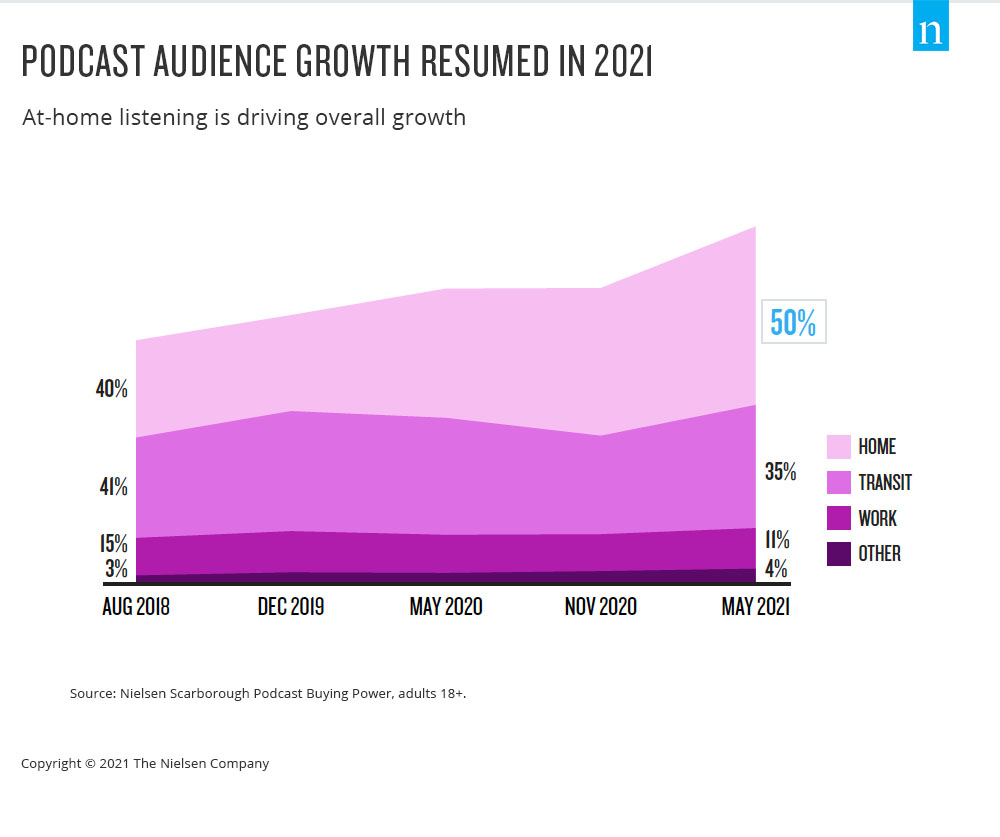
Importantly, the pandemic has not had a negative impact on overall podcast engagement. While listener growth flattened somewhat during the second half of last year, it has ramped up notably in 2021, largely due to an increase in at-home listening, which is attributable to light listeners checking out the medium. The rise in at-home listening is also somewhat counter to historical podcast engagement, and again, speaks to the transformation of industry to a broader audience. According to Nielsen อำนาจการซื้อพอดแคสต์ data, the percent of the adult U.S. population listening to podcasts has grown more than 40% in the past three years.
The increasing appeal of podcasts to general audiences is exactly why brands and agencies need to be tracking engagement with them and leveraging the opportunities in their marketing strategies and campaigns. And given the wealth of data about podcast listeners, brands have the ability to engage with listeners who are the most receptive to learning about their products and services.
For additional insights, download our latest Podcasting Today report.