ผลกระทบของการระบาดของ COVID-19 ต่ออุตสาหกรรมสื่อทั่วโลกนั้นไม่มีการขายชอร์ต และผลกระทบในวงกว้างจะยังคงมีอยู่ต่อไปในอนาคตอันใกล้นี้ แม้จะมีการแยกส่วนครั้งใหญ่ แต่ตัวบ่งชี้บางอย่างก็ให้แนวทางเกี่ยวกับอนาคตที่จะเป็นอย่างไร การโฆษณา โดยเฉพาะโฆษณาในท้องถิ่น เป็นหนึ่งในนั้น เนื่องจากธุรกิจในท้องถิ่นเป็นเส้นเลือดใหญ่ที่หล่อเลี้ยงชุมชนหลายพันแห่งทั่วสหรัฐอเมริกา และที่สำคัญ การวิเคราะห์ใหม่ของ Nielsen บ่งชี้ว่าการโฆษณาแบบสปอตในตลาดท้องถิ่นดูเหมือนจะเริ่มฟื้นตัว หลังจากที่ลดลงในบางพื้นที่มากถึง 35% เมื่อสิ้นเดือนมีนาคม
Even in tough times, there’s a need and place for advertising. In more recent weeks, local spot TV ad units are coming back faster, rising 5% during the week of April 27, 2020. Unlike national and cable TV ads, which most TV viewers in the U.S. see regardless of location, local spot ads appear in specific markets and clusters of markets. As such, monitoring local ad spot trends provides insight into the future health of our local media markets.
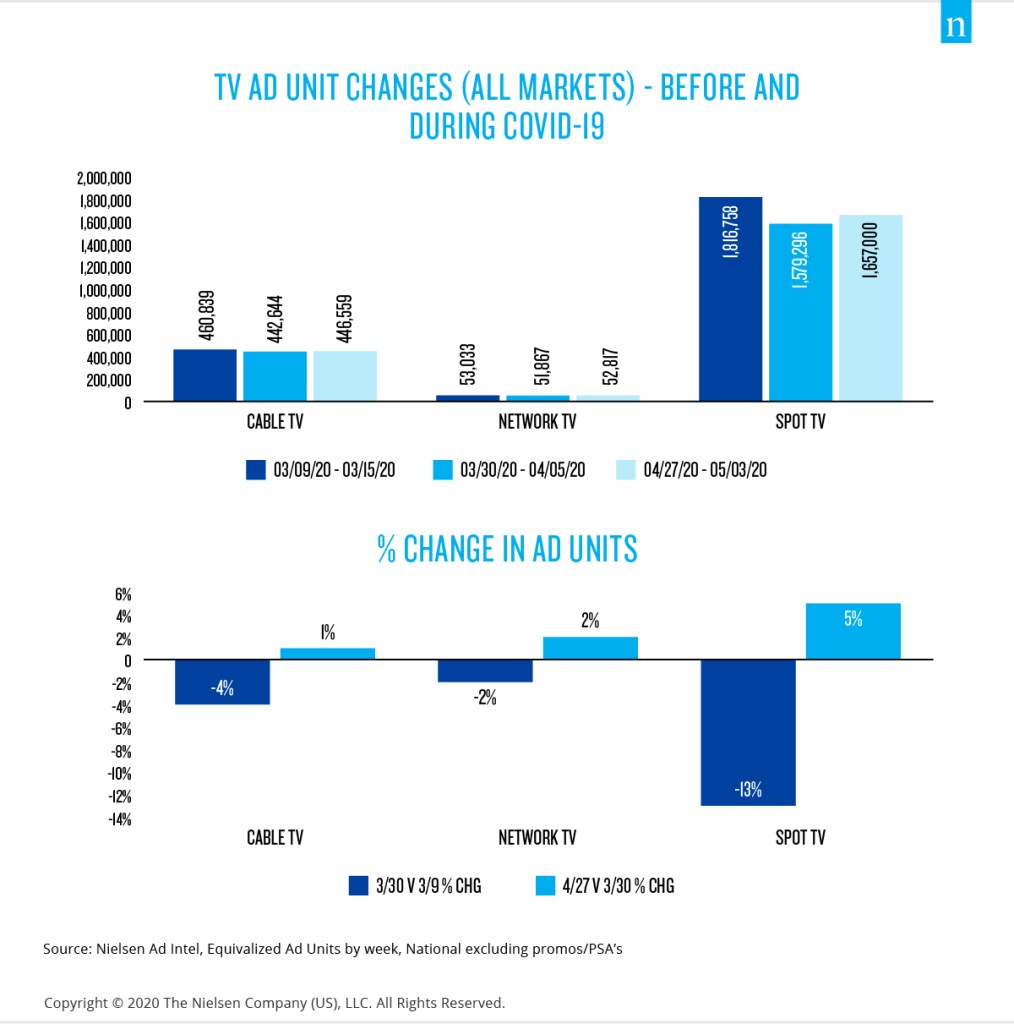
Notably, the pandemic and resulting shelter-in-place restrictions hit local businesses particularly hard. With 49 U.S. states now at least partially re-open, local businesses can actively use local advertising to re-engage consumers seeking to get back to life away from their homes. Many advertisers are already activating, as we’ve seen an uptrend and leveling of ad units following the local ad spot low during the week of March 30, 2020.

Not all markets are on the upswing from a local spot ad perspective, but a majority are, indicating a strengthening business environment for many regions. For the week ended April 27, 2020, ad units in 101 out of the top 132 markets increased. While the average increase was 5%, some ad units in some markets are up by double-digits. Ad units in Lansing, Mich., Portland, Maine, Flint, Mich., Harlingen, Texas, Boise, Idaho, and Honolulu, Hawaii, for example, were up more than 20%.

ที่สำคัญ แนวโน้มโดยรวมและตามภูมิภาคไม่ได้เน้นที่ข้อมูลเชิงลึกเกี่ยวกับหมวดหมู่โฆษณาเฉพาะเจาะจง ดังนั้น เพื่อทำความเข้าใจแนวโน้มหมวดหมู่โฆษณาในระดับท้องถิ่นได้ดียิ่งขึ้น เราจึงตรวจสอบการเปลี่ยนแปลงของหน่วยโฆษณาในตลาดท้องถิ่นทั้งหมด และแบ่งหมวดหมู่ออกเป็น 3 กลุ่ม ได้แก่ ลดลง ยืดหยุ่น และฟื้นตัว
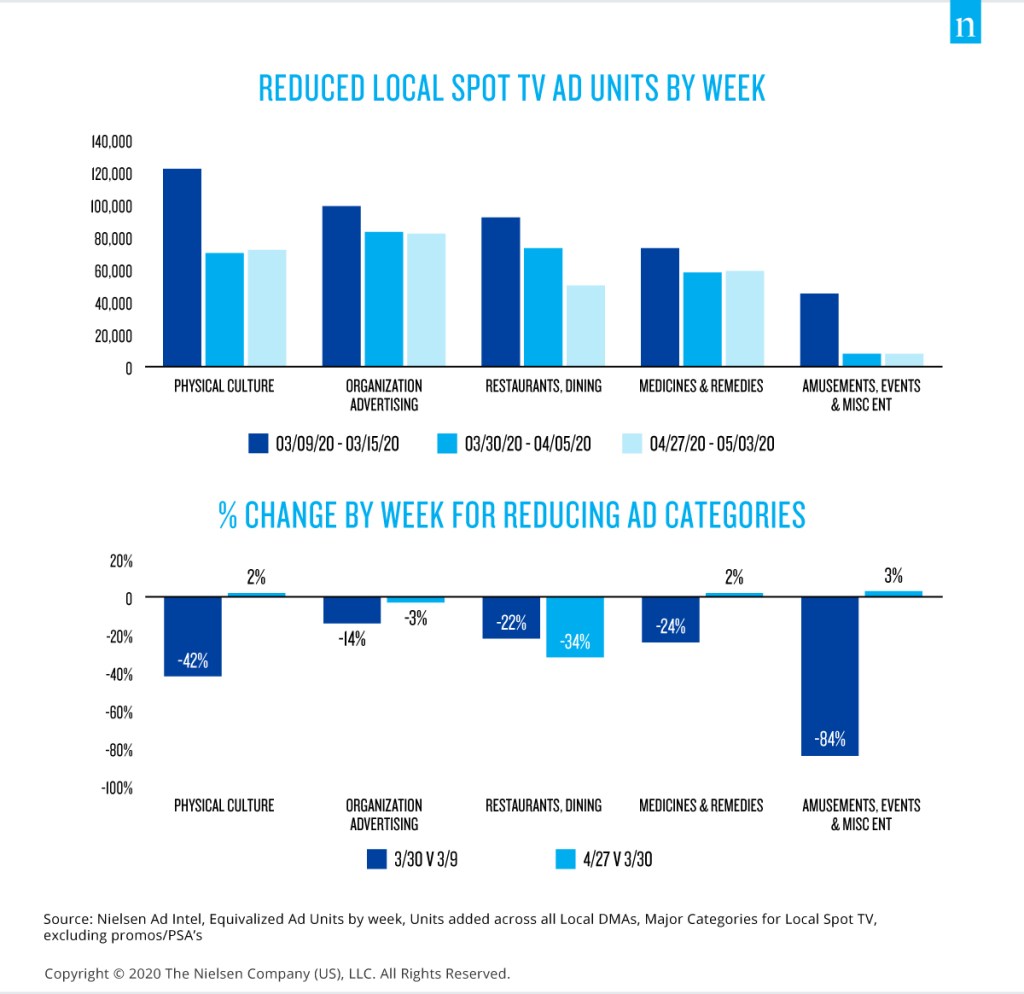
Businesses in the reduced bucket include those most affected by business closures during the height of shelter-in-place restrictions, such as gyms, restaurants and salons. These businesses reduced advertising the most and ad units in this bucket remain low.
Businesses and organizations in the resilient bucket include those that were somewhat insulated from the shelter-in-place restrictions and have stayed the course over the past few months. Examples include direct response, engineering and government. In the local ad market, ad units from this grouping increased from just under 25% to almost 36%.

Businesses and organizations in the rebound bucket are the ones to watch going forward, as they are largely connected to the communities in which they operate. Retail stores are the most prominent in this bucket, as they account for more than 10% of local spot ads. Ad units in the rebound bucket dropped 32% between March 9 and March 30, but then increased 8% by April 27. Auto advertising, like retail, is a key business health indicator for a local market, and share of all spot TV ads began trending up during the week of April 27 (up to almost 6%) after dropping just under 5% in late March. Other rebounding sectors include communications and public utilities, and hotels/resorts.

เมื่อพิจารณาอย่างใกล้ชิดในแวดวงยานยนต์ กลุ่มย่อยของตัวแทนจำหน่ายและสมาคมตัวแทนจำหน่ายได้ฟื้นตัวอย่างแข็งแกร่งยิ่งขึ้นในบางตลาด ตัวอย่างเช่น ซอลต์เลกซิตีได้รับประโยชน์จากการผ่อนปรนข้อจำกัดทั่วทั้งรัฐสำหรับธุรกิจร้านอาหาร ฟิตเนส และร้านเสริมสวยเมื่อวันที่ 1 พฤษภาคม ตลาดมีหน่วยโฆษณาเพิ่มขึ้นเกือบ 300 หน่วยในสัปดาห์ของวันที่ 27 เมษายน มากกว่าในสัปดาห์ของวันที่ 9 มีนาคม หน่วยโฆษณาของตัวแทนจำหน่ายยังเพิ่มขึ้นมากกว่า 100 หน่วยใน 9 ตลาดที่มีการเติบโตสูงสุด เฟรสโน ฟอร์ตไมเออร์ส และโคลัมบัส รัฐโอไฮโอ เป็นผู้นำด้วยอัตราเพิ่มขึ้นมากกว่า 260 หน่วยในช่วงเวลาเดียวกัน

Case Study
โฆษณาทางการเมือง: จุดที่น่าสนใจสำหรับทีวีท้องถิ่น
แม้ว่าผู้บริโภคและธุรกิจทั่วโลกจะให้ความสำคัญกับสุขภาพ ความปลอดภัย และความเป็นอยู่ที่ดีท่ามกลางการแพร่ระบาดของ COVID-19 แต่ชาวอเมริกันยังคงให้ความสนใจกับการเลือกตั้งประธานาธิบดีที่กำลังจะมาถึง รวมถึงข้อความจากผู้สมัครรับเลือกตั้ง อย่างไรก็ตาม เช่นเดียวกับหมวดหมู่อื่นๆ การโฆษณาหาเสียงทางการเมืองทางทีวีท้องถิ่นลดลงอย่างเห็นได้ชัดระหว่างช่วงปลายเดือนกุมภาพันธ์ถึงปลายเดือนมีนาคม โดยมีจำนวนโฆษณาลดลงมากกว่า 200,000 รายการ
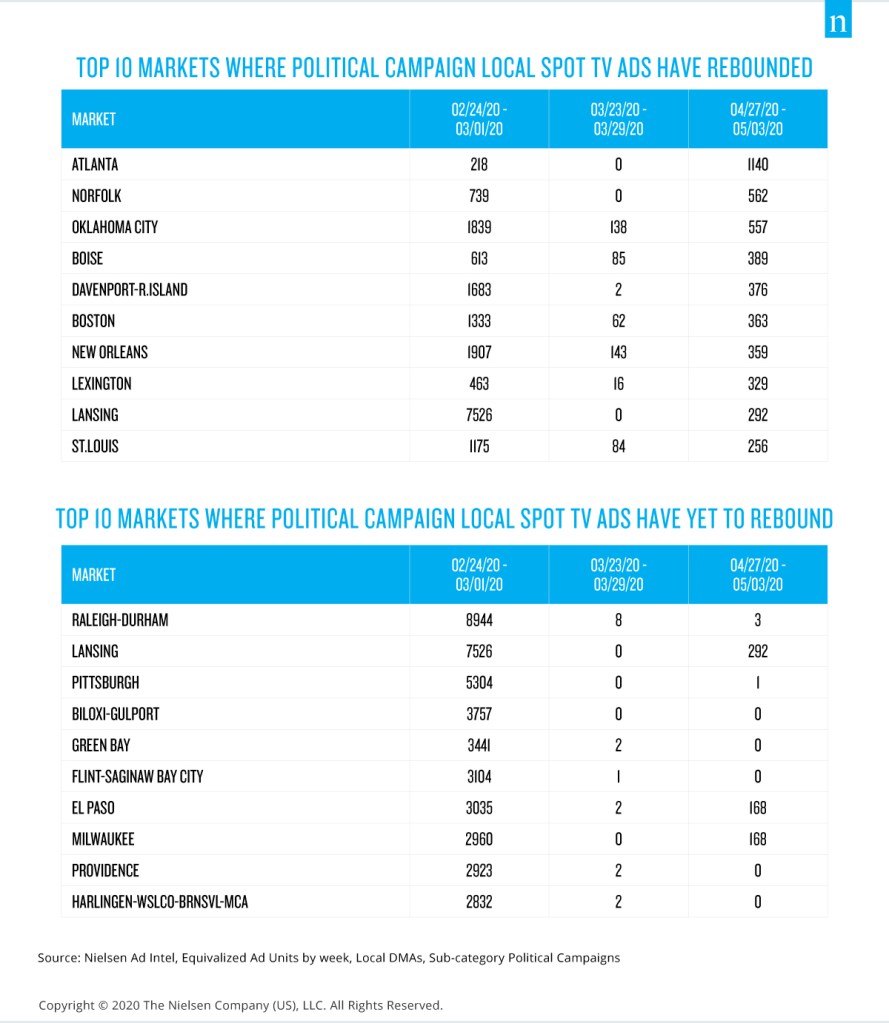
อย่างไรก็ตาม โฆษณาทางทีวีท้องถิ่นเพื่อการหาเสียงทางการเมืองกลับฟื้นตัวขึ้นอย่างเห็นได้ชัด โดยโฆษณาเพิ่มขึ้นมากกว่าสองเท่าตั้งแต่วันที่ 23 มีนาคม และเพิ่มขึ้นอย่างต่อเนื่องตลอดสัปดาห์ของวันที่ 27 เมษายน ซึ่งทำให้โฆษณาเหล่านี้ฟื้นตัวขึ้น และเมื่อธุรกิจต่างๆ กลับมาเปิดทำการอีกครั้งและรัฐต่างๆ ยังคงลดข้อจำกัดต่างๆ ลง เราคาดว่าโฆษณาทางการเมืองจะยังคงเพิ่มขึ้นต่อไปเมื่อใกล้ถึงวันเลือกตั้งสำคัญๆ

เช่นเดียวกับหมวดหมู่อื่นๆ โฆษณาทางการเมืองยังไม่กลับมาในทุกตลาด อย่างไรก็ตาม การใช้จ่ายโฆษณาในภูมิทัศน์ทางการเมืองจะสัมพันธ์น้อยลงกับการเปิดธุรกิจอีกครั้ง และสัมพันธ์มากขึ้นกับรัฐที่เป็นสมรภูมิสุดท้ายสำหรับผู้สมัครรับเลือกตั้ง การเลือกตั้งประธานาธิบดีเทียบได้กับซูเปอร์โบว์ลในแวดวงการเมืองของสหรัฐฯ ซึ่งหมายความว่าโทรทัศน์และการโฆษณาในท้องถิ่นจะมีความสำคัญอย่างยิ่ง
อย่างที่เราได้เริ่มเห็นแล้วว่าตลาดต่างๆ จะมีแนวทางการฟื้นฟูที่แตกต่างกัน อย่างไรก็ตาม ยังมีสัญญาณต่างๆ ในทุกตลาดที่บ่งชี้ว่าผู้บริโภคและธุรกิจกำลังค่อยๆ ปรับตัวเข้าสู่ภาวะปกติใหม่ ซึ่งเป็นแรงบันดาลใจให้เกิดความหวังสำหรับตลาดโฆษณาที่แข็งแกร่งขึ้น
เรียนรู้เพิ่มเติมเกี่ยวกับ Nielsen’s Ad Intel solutions.