For consumers around the globe, mobile phones have become ubiquitous—providing instant, real-time access to information, social networks, entertainment and connectivity. In Africa, the world’s second-largest mobile market behind Asia, that connectivity has super-charged the mobile money industry, with Sub-Saharan Africa (SSA) now accounting for 43% of the world’s active mobile money accounts.
A adoção generalizada de serviços de pagamento móvel (m-payment), que se acelerou durante a pandemia da COVID-19, fez com que muitos africanos olhassem para as criptomoedas como um próximo passo natural - um passo que está longe dos sistemas bancários convencionais e oferece proteção contra a desvalorização da moeda. Na verdade, o burburinho social em torno do termo "cripto" em vários países africanos tem aumentado este ano, impulsionado pela introdução de uma série de moedas digitais de alto nível, plataformas de liquidação e aplicativos de blockchain.
SSA has been at the forefront of the mobile money industry for over a decade, largely because a growing network of fintech companies have stepped in to provide digital payment options to consumers who lack access to a formal savings account or credit. According to the Fintech Times, approximately 57% of the country’s population do not have a traditional bank account. Comparatively, the Wall Street Journal reported late last year that SSA alone is now home to nearly half of the world’s 1.04 billion registered mobile money accounts.
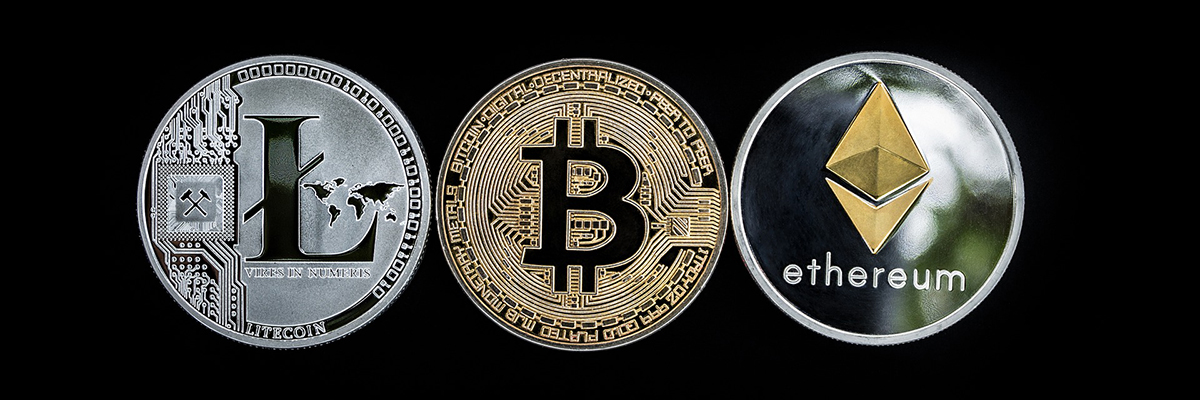
A alta adoção de serviços bancários móveis na África, combinada com o fato de que o continente tem a população mais jovem do mundo, aumenta o interesse e a conscientização sobre as criptomoedas. E como esses são os consumidores mais jovens do mundo, os pagamentos digitais e as criptomoedas representam um apelo muito maior do que as ofertas bancárias tradicionais. Para esses consumidores que priorizam os dispositivos móveis, os pagamentos e as moedas digitais proporcionam independência e liberdade financeira, e eles estão otimistas quanto às perspectivas futuras das criptomoedas. Isso apresenta oportunidades notáveis para provedores, plataformas e serviços nos cenários de telecomunicações e serviços financeiros.
Adoption of crypto currencies, particularly across emerging economies, has skyrocketed this year, with blockchain data company Chainalysis reporting global adoption growth of more than 2300% between Q3 2019 and Q2 2021. Africa represents the world’s smallest crypto economy (2% of global value), but the prominence of this form of money is accelerating adoption. In fact, Nigeria, Africa’s largest economy, recently became the first nation on the continent to roll out its own digital currency: the eNaira.
But buzz about crypto started well before the introduction of the eNaira. Many consumers across the continent began learning about digital currencies when Senegalese-American singer and entrepreneur Akon announced plans in 2018 to build a blockchain and crypto currency-powered city in Senegal. Consequently, Akon’s “Akoin” currency that he wants to power Akon City, his planned sustainable smart city in Senegal, is among the most popular crypto topics that Nielsen has been tracking across the media landscape.
Despite the buzz about Akon and Akoin, however, Bitcoin is the most discussed crypto currency in Africa, accounting for 63% of conversations about digital currencies, followed by Ethereum (10%) and Doge (7.5%). More importantly, overall consumer sentiment about digital currencies is neutral to positive. While growing and lucrative—even sanctioned by governments—the crypto landscape is fertile for scams, with many attaching themselves to aspects of pop culture, including the recent Squid Game cryptocurrency.
As technology advances infrastructures and sustainable development, fintech will grow to play a particularly important role for emerging economies. Strategy&, PwC’s consulting business, expects cashless transaction volume in Africa to increase 78% through 2025 and then 64% between 2025 and 2030.
Com tantas oportunidades pela frente, as empresas precisarão desenvolver e manter relacionamentos significativos com os consumidores, dada a ampla - e crescente - gama de opções disponíveis para eles. Como em qualquer iniciativa de marketing, as marcas precisam provar seu valor para os consumidores, trabalhar para manter sua fidelidade e mantê-los no centro de tudo o que fazem.