A lasting effect of digitization and the pandemic has been the proliferation of consumer choice. From being able to purchase cars and furniture online, to the pandemic’s effect of pushing more shopping into infinite virtual shelves, consumers are facing more options. That vast choice and supply chain strain have affected brand loyalty to some degree, but not to the degree that you might think. And for marketers seeking to grow their brand through new customer acquisition, all that choice means a lot more competition for new buyers.
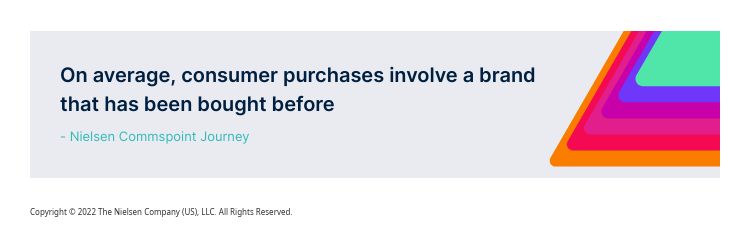
Though wooing new customers is a major focus for marketers, consumers are not inclined to start a relationship with a new brand. Research from Nielsen Commspoint Journey, which helps clients understand the attitudes, motivations and behaviors that lead to purchases, shows that 85% of consumer purchases in over 80 categories involved a brand the consumer had tried in the past. High levels of repeat purchasing might be expected in categories where buying behavior is highly routinized, and consumers are shopping on auto-pilot. But even in high-consideration categories, defined by purchase journeys that are typically longer than a week, hesitation with trying a new brand is still high. Nielsen data shows that in these high-consideration categories, 75% of consumers still buy from a brand they’ve bought in the past.
높은 재구매율에 대한 한 가지 가능한 설명은 소비자에게 새로운 브랜드를 시도하는 것은 위험한 제안이며, 소비자는 이러한 위험을 피하려고 한다는 것입니다. Commspoint 여정 데이터에 따르면 미국 소비자의 약 4분의 1(22%)이 새로운 브랜드를 구매하기 위한 구매 여정에서 걱정이나 불안감을 느낀다고 답했습니다. 이는 이전에 구매했던 브랜드를 재구매할 때 소비자가 느끼는 불안감(11%)의 두 배에 달하는 수치입니다. 그리고 당연히 기술, 자동차, 금융 서비스 등 비용이 더 중요한 요소인 카테고리에서 소비자들이 더 불안해하는 것은 당연한 일입니다.
브랜드는 소비자의 신뢰를 구축함으로써 소비자의 주저함을 완화할 수 있습니다. 신뢰는 모든 브랜드와 소비자 관계의 핵심이며, 새로운 관계에서는 더욱 중요합니다. 닐슨 컴포인트 여정 데이터에 따르면, 새로운 브랜드를 고려하는 사람들은 이상적인 브랜드 관계를 신뢰가 포함된 관계라고 답할 확률이 일반 소비자보다 25% 더 높습니다.
Consumers evaluate multiple sources of information along their purchase journeys to assess a brand’s trustworthiness. A brand’s reputation, reflected in reviews and word of mouth, certainly carries significant weight. Nielsen’s U.S. Trust in Advertising survey found these sources to be among the most trustworthy among more than 20 sources considered. But it might surprise marketers to know that ads are cited more often than reviews or recommendations as useful or influential resources along the journey. According to Commspoint Journey, just 18% of new brand triers recall using reviews in their journey. By comparison, 30% used recommendations and 45% say they found advertising useful or influential.
Given the critical role of advertising, marketers should give careful thought to where they place their ads. When building trust is at stake, our U.S. Trust in Advertising survey found that marketing investments like sponsorships, newspaper ads and ads before movies were the among most trustworthy. In contrast, ads that appeared in mobile text, online banners or social media were viewed as less trustworthy. And Influencers, which blend elements of sponsorship and social, were seen as about average relative to other marketing investments.
참여를 원하는 특정 오디언스가 있는 브랜드는 해당 오디언스가 가장 신뢰하는 채널을 이해하는 데 미디어의 가치를 찾을 수 있습니다. 예를 들어, X세대 소비자는 라디오 광고를 가장 신뢰하는 반면, 시니어 세대는 구독하는 이메일의 광고를 훨씬 더 신뢰하는 것으로 나타났습니다.
특정 카테고리와 업종에서는 소비자와 신뢰를 쌓을 가능성이 높은 채널을 선택하는 것이 더욱 중요합니다. 소비자는 정치, 제약 및 금융 서비스 광고를 가장 신뢰하지 않으므로 이러한 분야의 광고주는 소비자의 신뢰를 이끌어낼 가능성이 가장 높은 마케팅 채널을 선택해야 합니다.