For consumers around the globe, mobile phones have become ubiquitous—providing instant, real-time access to information, social networks, entertainment and connectivity. In Africa, the world’s second-largest mobile market behind Asia, that connectivity has super-charged the mobile money industry, with Sub-Saharan Africa (SSA) now accounting for 43% of the world’s active mobile money accounts.
코로나19 팬데믹 기간 동안 모바일 결제(모바일 결제) 서비스의 광범위한 채택이 가속화되면서 많은 아프리카 사람들이 기존 은행 시스템에서 벗어나 통화 평가절하로부터 보호받을 수 있는 암호화폐를 자연스럽게 다음 단계로 고려하고 있습니다. 실제로 올해 들어 여러 아프리카 국가에서 '암호화폐'라는 용어에 대한 사회적 관심이 높아지면서 다양한 유명 디지털 통화, 결제 플랫폼, 블록체인 애플리케이션의 도입이 활발하게 이루어지고 있습니다.
SSA has been at the forefront of the mobile money industry for over a decade, largely because a growing network of fintech companies have stepped in to provide digital payment options to consumers who lack access to a formal savings account or credit. According to the Fintech Times, approximately 57% of the country’s population do not have a traditional bank account. Comparatively, the 월스트리트 저널 reported late last year that SSA alone is now home to nearly half of the world’s 1.04 billion registered mobile money accounts.
아프리카의 높은 모바일 뱅킹 서비스 채택률과 아프리카 대륙이 세계에서 가장 젊은 인구를 보유하고 있다는 사실은 암호화폐에 대한 관심과 인지도를 높입니다. 세계에서 가장 젊은 소비자들이라는 점에서 디지털 결제와 암호화폐는 기존 은행 서비스보다 훨씬 더 큰 매력을 지니고 있습니다. 모바일을 우선시하는 이 소비자들에게 디지털 결제와 암호화폐는 재정적 독립과 자유를 제공하며, 이들은 미래의 암호화폐 전망에 대해 낙관적입니다. 이는 통신 및 금융 서비스 환경 전반의 공급업체, 플랫폼, 서비스에 주목할 만한 기회를 제공합니다.
Adoption of crypto currencies, particularly across emerging economies, has skyrocketed this year, with blockchain data company Chainalysis reporting global adoption growth of more than 2300% between Q3 2019 and Q2 2021. Africa represents the world’s smallest crypto economy (2% of global value), but the prominence of this form of money is accelerating adoption. In fact, Nigeria, Africa’s largest economy, recently became the first nation on the continent to roll out its own digital currency: the eNaira.
But buzz about crypto started well before the introduction of the eNaira. Many consumers across the continent began learning about digital currencies when Senegalese-American singer and entrepreneur Akon announced plans in 2018 to build a blockchain and crypto currency-powered city in Senegal. Consequently, Akon’s “Akoin” currency that he wants to power Akon City, his planned sustainable smart city in Senegal, is among the most popular crypto topics that Nielsen has been tracking across the media landscape.
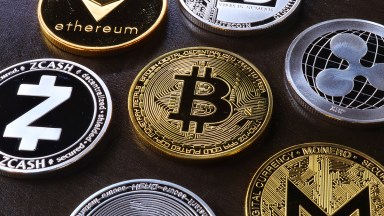
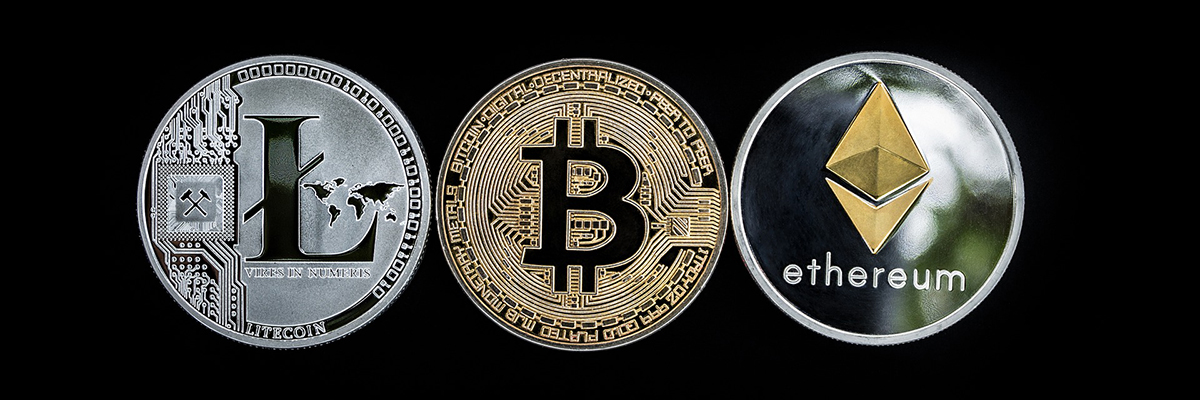
Despite the buzz about Akon and Akoin, however, Bitcoin is the most discussed crypto currency in Africa, accounting for 63% of conversations about digital currencies, followed by Ethereum (10%) and Doge (7.5%). More importantly, overall consumer sentiment about digital currencies is neutral to positive. While growing and lucrative—even sanctioned by governments—the crypto landscape is fertile for scams, with many attaching themselves to aspects of pop culture, including the recent Squid Game cryptocurrency.
As technology advances infrastructures and sustainable development, fintech will grow to play a particularly important role for emerging economies. Strategy&, PwC’s consulting business, expects cashless transaction volume in Africa to increase 78% through 2025 and then 64% between 2025 and 2030.
앞으로 많은 기회가 주어지는 만큼, 기업은 소비자에게 제공되는 선택의 폭이 넓고 다양해짐에 따라 소비자와 의미 있는 관계를 발전시키고 유지해야 합니다. 다른 모든 마케팅 활동과 마찬가지로 브랜드는 소비자에게 자신의 가치를 증명하고 충성도를 유지하기 위해 노력하며 소비자를 모든 활동의 중심에 두어야 합니다.