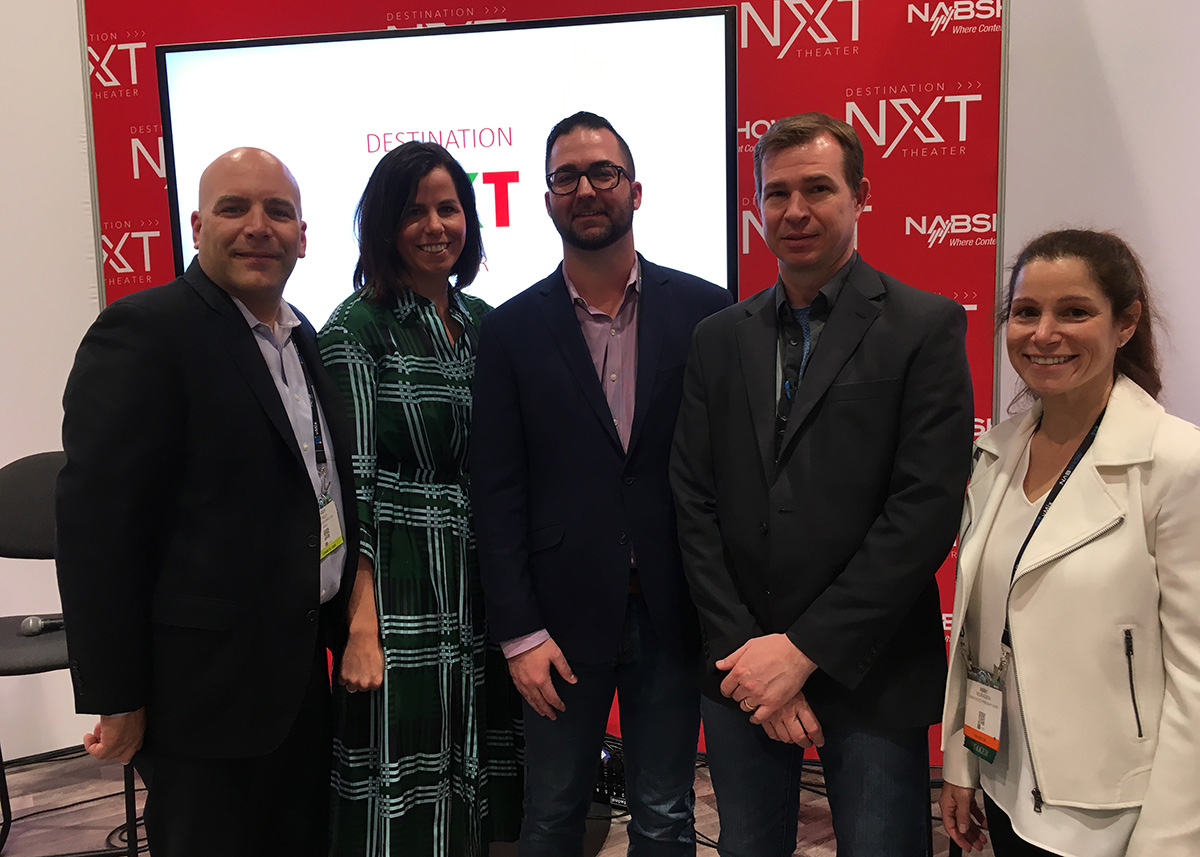
The annual National Association of Broadcasters (NAB) Show celebrates the convergence of media, entertainment and technology. While the media landscape has changed dramatically throughout the years, the show’s attendees remain leaders of creation and consumption. For a week in Vegas, key stakeholders across the media industry recently came together for the NAB Show to explore the latest technology and evolution of their business. With the data to fuel this conversation, we took center stage to discuss the past, present and future of media.
Big Data & Big Brother: News, Privacy and Piracy
We now have access to huge amounts of data, with the potential to understand behavior and control outcomes. However, in practice, it’s not that simple. Kelly Abcarian, SVP, Product Leadership, Nielsen, and other industry leaders discussed some of the challenges that big data presents, as well as its importance.
“Big data is great, but it’s not intelligent,” Kelly noted. Kelly and the rest of the panel (pictured above) agreed that using big data today takes time and concern for consumer privacy. From data visualization to workflow integration, a lot of work goes into taking data from raw numbers to useful information. But once it’s there, protecting consumers and maintaining their trust can make or break brands today.
ラジオにとってのビッグデータとは?

Continuing with the theme of big data, Nielsen executives Rob Kass, VP, Product Leadership, and Gerardo Guzman, SVP, Product Leadership, discussed the role of big data in the audio space. The shift from analog to digital represents a different set of challenges for radio compared to TV.
In our efforts to understand the total audience, we’re focused on modernizing measurement to keep up with innovations in new car infotainment systems, smart speakers, digital and on-demand audio and more. And with breadth of data sources, having a representative panel for data calibration is especially important. As the industry searches for ways to measure all types of audio, we’re evolving to match the pace of change.
What’s Next for the Sports Fan Experience: Content, Distribution, Sponsors and Viewers
Nicole Pike, Managing Director, Nielsen Esports, stepped in to explain the esports connection to the larger sports industry for attendees. In a one-on-one interview, she shared how Nielsen’s entrance into this arena originated from a need for unbiased, third-party measurement of the space. Once in the game, our role has been that of a “myth buster.” For example, while the audience does skew toward young men, a substantial 28%-35% are women. Also, as the industry and its fans get older, it’s gaining a larger presence across the entire home.

esportsの成長は、ビジネスのあり方にも変化をもたらしている。ゲームパブリッシャーは、自社タイトルのために別のイベントプロデューサーやトーナメントコーディネーターと協力することに前向きだったが、コンテンツの権利についてはより保護的になり始めている。しかし、ニコル氏は、今後の方向性を正確に予測するのはまだ時期尚早だと指摘する。
ライブ・スポーツ・ストリーミングのビジネス
While on-demand viewing continues to rise, live sports games still command huge audiences. Now, cord-cutters and sports fans on-the-go don’t have to miss out. Kelly took the stage once again, this time to share data behind live sports.
With the increase of streaming services and social media platforms now vying for sports rights, we saw 10% of people 18-34 viewing sports content through an internet-connected device in fourth-quarter 2017. But the vast majority of sports viewing is still happening through linear TV. Contributing to this fact is the large amount of out-of-home (OOH) viewing in places like restaurants and bars. For sports, OOH consistently drives double-digit rating lifts. But as everything else in the TV landscape, viewing habits are steadily changing, Kelly cautioned.
マルチスクリーンの世界におけるターゲティングとキャンペーン成功の測定
Rounding out our presentation sessions, Gerardo again stepped into the spotlight to talk about the opportunities and challenges of cross-screen advertising. The ability for advertisers to send personalized messages through TV could change much of what we think about TV commercials today. But for this to work, he cautioned that greater collaboration is needed across the disjointed digital and TV landscape. And a huge part of this is having a gold standard for measurement. As we’re working to provide this through our Total Audience solutions, input from the industry is necessary.
AIがメディア・エンターテインメント業界の未来をどう動かすか

グレースノート also contributed to the conversation at the NAB Show. Kay Johannson, Gracenote’s Chief Technology Officer, participated on a panel focused on how artificial intelligence (AI) can serve as a competitive differentiator and help companies enhance content value in order to maximize monetization. Kay shed light on Gracenote’s use of AI to help scale its descriptive metadata around TV shows, movies and music, and spoke to the inherent objectivity of the technology.
ステージの外では、NABのPILOTグループに参加し、テレビ放送の新しい規格であるATSC 3.0をどのように測定するかをデモしました。NABショーでは、メディア、エンターテインメント、テクノロジー業界の進歩に関わることができました。