ユーロヴィジョン・ソング・コンテストの第66回シーズンが到来し、例年通りであれば、2022年も視聴率の高い大会となるだろう。しかし同時に、この国際的な音楽コンテストは、観客の感情をインサイト 。
In addition to boasting seasons that have attracted more than 180 million viewers each year for the last seven years1, Eurovision’s international audience of music enthusiasts eagerly look forward to rooting for their favorite artists—and discovering new music.
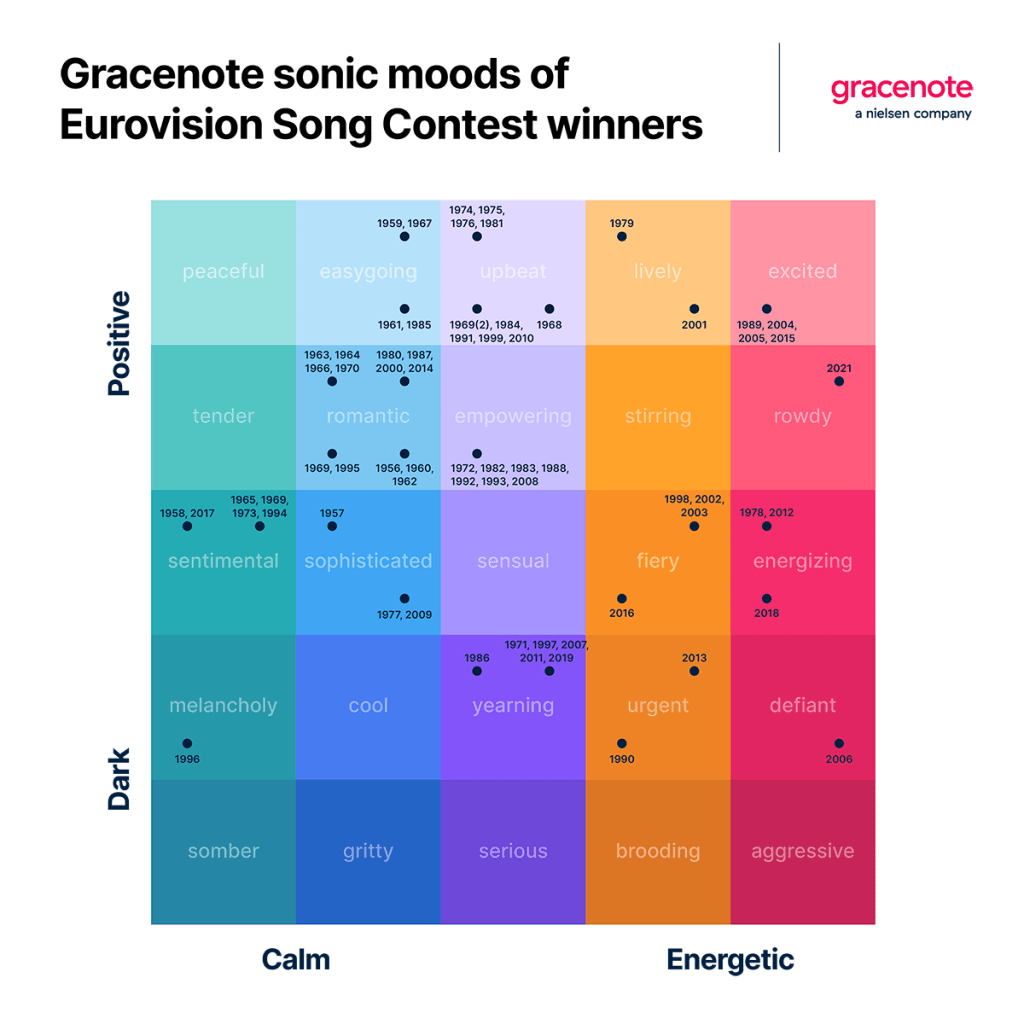
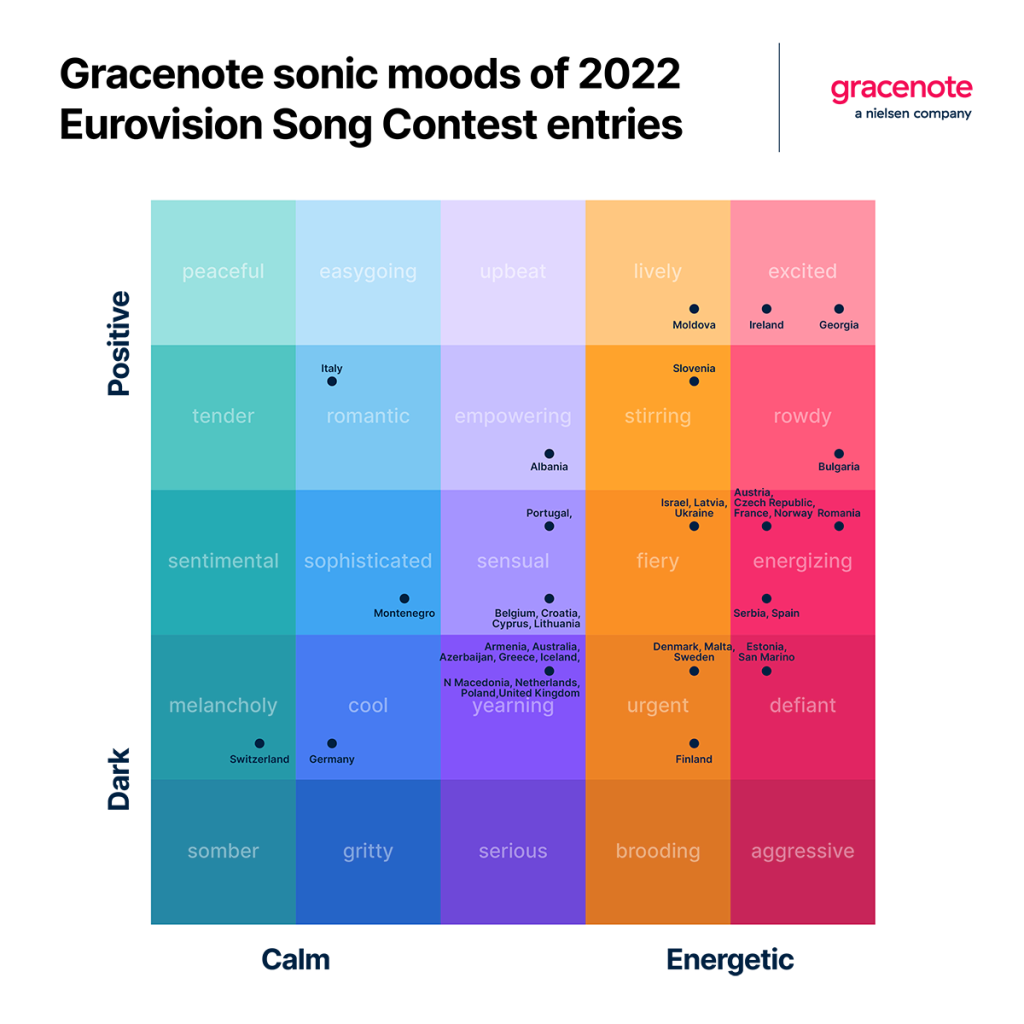
And with the variety of music being presented at this year’s contest, audiences will be able to find a song to suit virtually every mood—because the performers showcase more moods with each new year of competition. According to Gracenote Global Music Data Sonic Descriptors sonic mood analysis of previous Eurovision contests, recent Eurovision winners have displayed far more emotional range than their predecessors. The 40 songs presented at this year’s contest represent 15 different primary moods. And the last 15 winners have represented 12 primary moods, while only 11 moods were represented among the winners of the entire first 40 years of the competition.
The recent uptick in emotional diversity isn’t surprising—consumers are increasingly looking for experiences that engage with them as individuals, and creators are rushing to fill the gap. American television, for instance, now features 817,000 unique program titles across traditional TV and streaming services, compared with just over 646,000 titles in 20192. For musicians and streaming services looking to reach and engage new audiences, Eurovision trends can be a finger on the pulse of global audiences and their moods.
そして、今年の選曲によれば、聴衆は元気づけ、癒してくれるパフォーマーを求めている。最終選考に残った20曲(全体の半分)は、エネルギッシュなムードを特徴としている。さらに7曲は落ち着いたムードで、イタリアとオランダからの応募があった。これは、これまでのコンテストの傾向に逆行するものだが、最近の消費者心理の変化を反映している。
Faced with mounting supply chain woes, increasing inflation and the war in Ukraine, consumer confidence is at its lowest since the pandemic3. It’s no wonder audiences are looking for music that uplifts and reassures them. And Eurovision artists are meeting the moment.
Contrast this year’s trends with last year’s winner: “Zitti e Buoni,” a song classified as rowdy—the first time such a mood has won the competition. At the time of last year’s contest, many countries were lifting their COVID-related restrictions, and consumer confidence in Europe was its highest since October 20183. Americans echoed this sentiment, as a Nielsen custom consumer sentiment study found that in June of 2021, 90% of consumers said they were “ready to go” and get back to normal. Before the omicron spike later in the year, audiences were enthusiastic about emerging from over a year behind doors—and the choice of winner reflects their eagerness.
The benefits of striking the right chord with audiences don’t stop when the contest ends. And much like we see in other high-stakes competitions, Eurovision artists often see success far outside the competition. Out of 68 winning Eurovision songs, 46 have ascended to Billboard’s Top 100 U.K. Singles Chart4. And the 1976 winner, Brotherhood of Man’s “Save Your Kisses For Me,” spent 16 weeks on the chart, six of which were in the No. 1 spot.
オーディエンスのムードを理解し、予測することで恩恵を受けることができるのは、アーティストだけではない。ストリーミング・ミュージック・サービスは、サウンド・ムードのデータを利用して、より幅広いアーティストをフィーチャーしたリッチなプレイリストやステーションを作成することができる。
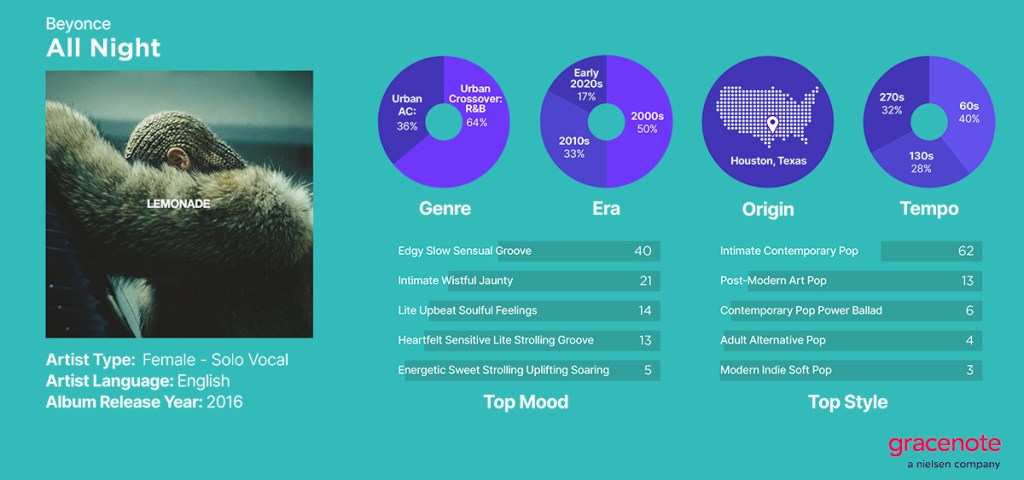
オーディエンスが新しい曲や好きなバンドを見つけやすくすることが重要だ。ムードなどの超詳細なメタディスクリプションをオーディオコンテンツに適用することで、ジャンル、ムード、時代、テンポの間の関連性を導き出し、より完全なリスナープロフィールを作成することができます。このデータは、ニュアンスのある発見経路を可能にし、リスナーの現在の好みに沿ったオーディオ推薦を提供すると同時に、慎重にキュレートされた新しい選択肢を提供する。
備考
- 欧州放送連合
- Gracenoteグローバルビデオデータ、2022年2月
- 経済協力開発機構(OECD)
- ビルボード