旧正月といえば、大家族が集まり、親戚を訪ね、赤いお金を包み、伝統的な料理を食べる。長寿を願う麺類、富を願う餃子(中国の金のインゴットのような形)、繁栄を願う魚、家族の団結を願う甘いおにぎりなどなど。しかし、COVID-19によって、私たちの家族訪問や集まりはすべてストップしてしまった。今、私はホームシックを和らげるためにテレビを見たり、関連するコンテンツを通じて自分の文化とつながったりしている。
Searching the internet for Asian family programs, I found my choices were somewhat limited, which was surprising given that Asian Americans are the fastest-growing population in America. According to Gracenote インクルージョン・アナリティクス data, East Asians like me have a low share of screen, meaning that our visibility across all television programming is only about 2%. When we look deeper, we see that East Asian visibility is a little better on subscription video on demand (SVOD) platforms like Netflix, Amazon Prime and Disney+, but it still barely surpasses 3%.
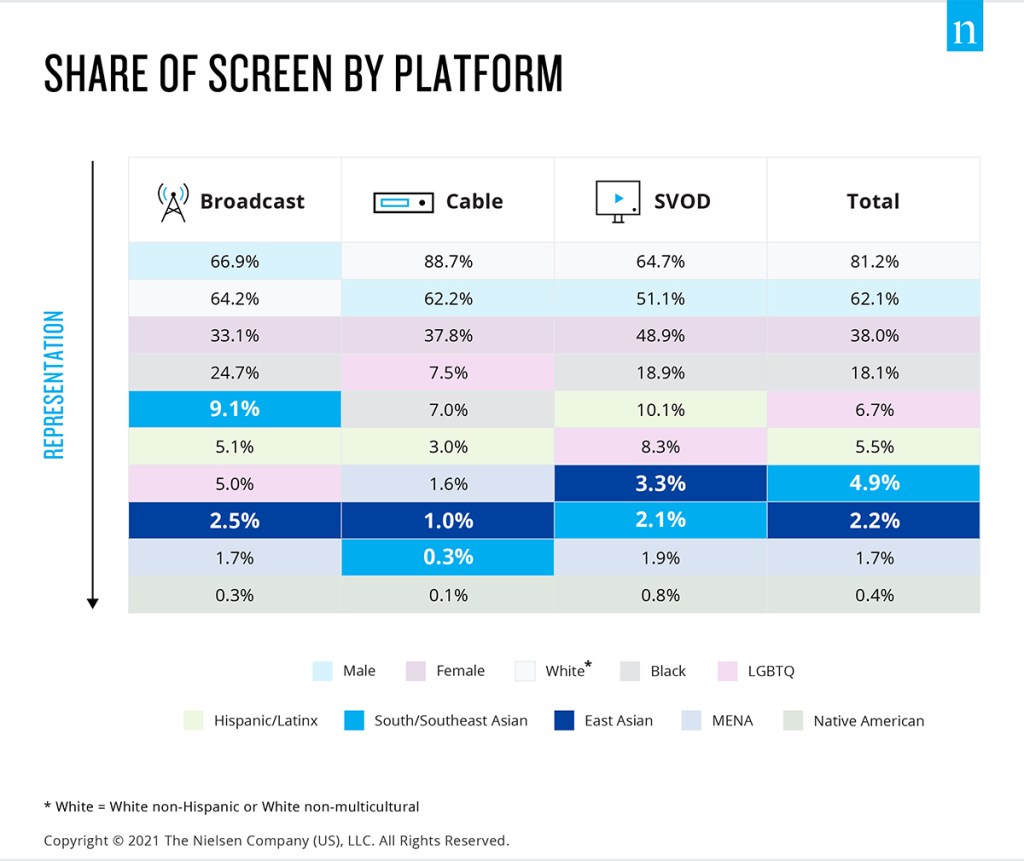
アジア系アメリカ人の82%がストリーミングサービスに購読申し込み おり(米国全人口の72%)、インターネットに接続されたデバイスで代替コンテンツ*(アジア言語の番組など、他のメディア出版社のもの)を視聴する割合が28%高いことも、知名度の高さを考えれば不思議ではない。利用可能な選択肢の中で、SVODプラットフォームがアジア人とアジア人の物語を最もよく表現しているのは3%だが、業界は本物の物語と描写をリビングルームに届けるためにもっとできることがある。
As I was looking for content to watch, Fresh Off the Boat, which ran from 2015 to 2020, floated to the top of my internet search. When it premiered, it was the first U.S. television sitcom starring an Asian American family to air on network primetime since Margaret Cho’s All-American Girl, which aired for one season in 1994. Fresh Off the Boat served some authentic laugh-out-loud moments that were true to life, such as when Eddie tells his mom that he wants “white people lunch” and ends up throwing away his own Chinese lunch—reminding me of the time when I packed my daughter’s lunch of fried rice, and she brought it home untouched. My search also returned Minari, a 2020 movie about a Korean family seeking to build a new life as farmers in Arkansas. There are poignant moments, such as when Monica’s mother arrives from Korea, bringing a suitcase full of food like chili powder and dried anchovies, making her daughter cry. This is what we do, carry suitcases full of our food back after a visit to our home countries, giving them to our families to show our love.
Having grown up in Singapore, I love Crazy Rich Asians; not only because it was filmed there, but also because of the beautiful visuals, including hawker food and the familiar streets of Singapore, bringing me just a little closer to home. The movie’s popularity seemed to inspire a new genre of Asian shows—reality TV depicting fabulously wealthy Asians like we see in Bling Empire そして House of Ho. While “rags to riches” themes appeal to many audiences, most of us view these stories as being far from reality. Indeed, there’s a striking gap in the stories being told about Asians. Nielsen’s inclusion analytics report studied themes in programming when an identity group in the audience sees themselves well represented on screen. The themes most present in programming for East Asians are courage, bravery, challenge, justice, sons—all reminiscent of the immigrant narrative, kung fu films and patriarchy. These themes just seem to feed the Asian stereotype.

That said, I was still able to find a handful of Asian movies that celebrate family and food. In most Chinese households, food is the language of love. We aren’t the most demonstrative culture, so cooking and serving people food is how we show our love and respect. I stumbled across content that fed my soul. In Ramen Teh, a Japanese man visits Singapore after his parents pass to learn the secret recipe of the pork rib soup made by his Singaporean mother’s family. Joy Luck Club gave me hope that I will soon reconnect with my family over our favorite foods. Over the Moon was the most touching of all, as it features a scene where the family gathers to celebrate the Mid-Autumn Festival, the second-most important Chinese holiday. The family bantering as they cook and eat, the young girl making sure that her grandpa got the best crab, and the familiar auspicious foods made me cry.
ホリデーに故郷のような場所はないが、直接その場所に行けないときは、ニールセンについて 、画面上で私のような食べ物や家族の番組を見ると、そこに連れて行ってくれる。
*その他すべての視聴(AOT):ニールセンが未測定のテレビコンテンツに対する視聴を分類したもの。