There’s never a good time to reduce ad spend, but the challenges and uncertainties brought on by the COVID-19 pandemic were too great for most brands to ignore, driving widespread advertising cutbacks across channels and markets. The pause in spend likely had an adverse effect on brand awareness for many companies, which means that now is the time to get back in the game—but with a strategic, well-balanced approach.
ブランドの認知度がゼロになることは、たとえブランドが長期にわたって低迷していたとしても珍しいことではないが、ブランドの認知度は低下するものである。彼らの唯一の目的は、衰退と戦うことなのだ。そのため、8月に発生した米国広告の上昇の多くは、活性化よりも認知に焦点を当てたものであった可能性が高い。
And that’s something that should continue as the ad market continues to come back online. On average, it takes three to five years to recover equity lost because of halted advertising, and long-term revenue can take a 2% hit for every quarter a brand stops advertising. Brand building and awareness campaigns are critical in long-term success, and companies that were able to frugally maintain their marketing efforts through the past three historic ad shocks were able to protect up to 9% of total sales annually. Said plainly, playing the long game is critical. In fact, the long-term impact of marketing is 88% higher than the short-term impact.
Sometimes it takes a bit of experimentation to get the balance right. For example, global sports brand Adidas reported last October that it needed to pivot after over-extending itself across digital channels and performance marketing in an effort to super-charge ROI. Ultimately, it found that the focus on cutting back had a negative effect on brand awareness.
意識から関心への移行
関心度は、トップファネルのもう一つの重要な検討事項であり、認知度と密接に関連しています。ニールセンの売上予測データによると、関心と売上の間にはほぼ直線的な関係がある(例えば、関心が10%高まると売上は10%増加する)。2020年の世界が激変することを考えれば、ブランドが手を引き、支出をヘッジし、デジタル配信による割引や既存顧客へのダイレクトメールによるプロモーションなど、確実性の高い施策に注力するのは驚くことではない。こうしたアクティベーション重視の戦術は重要だが、単独では機能しない。また、市場が不透明な中、企業がブランド認知の努力を一時停止するような状況でも機能しないかもしれない。
Understanding consumers’ reality is also critical. Given the depressed economy and resultant job losses, pitching financially constrained consumers with activation-geared marketing efforts after a period of silence might not generate the desired response. It could even turn consumers off for good. For example, in our “Adapting to a New Normal” webinar earlier this year, we noted that 41% of consumers are more likely to buy from a brand that uses its advertising to explain what it’s doing to help its employees and customers.
メディアや広告の状況を考えると、ブランドはブランド構築と販売促進施策のバランスを重視する必要がありそうだが、マーケターは適切な指標なしにチャネルや配分を決定すべきではない。マーケティング担当者は、ブランド構築と活性化のバランスを取る必要がある。両者は交換可能なものではなく、適切な測定基準を持たずにどちらかに重点を置くことは、非効率な支出につながりかねない。
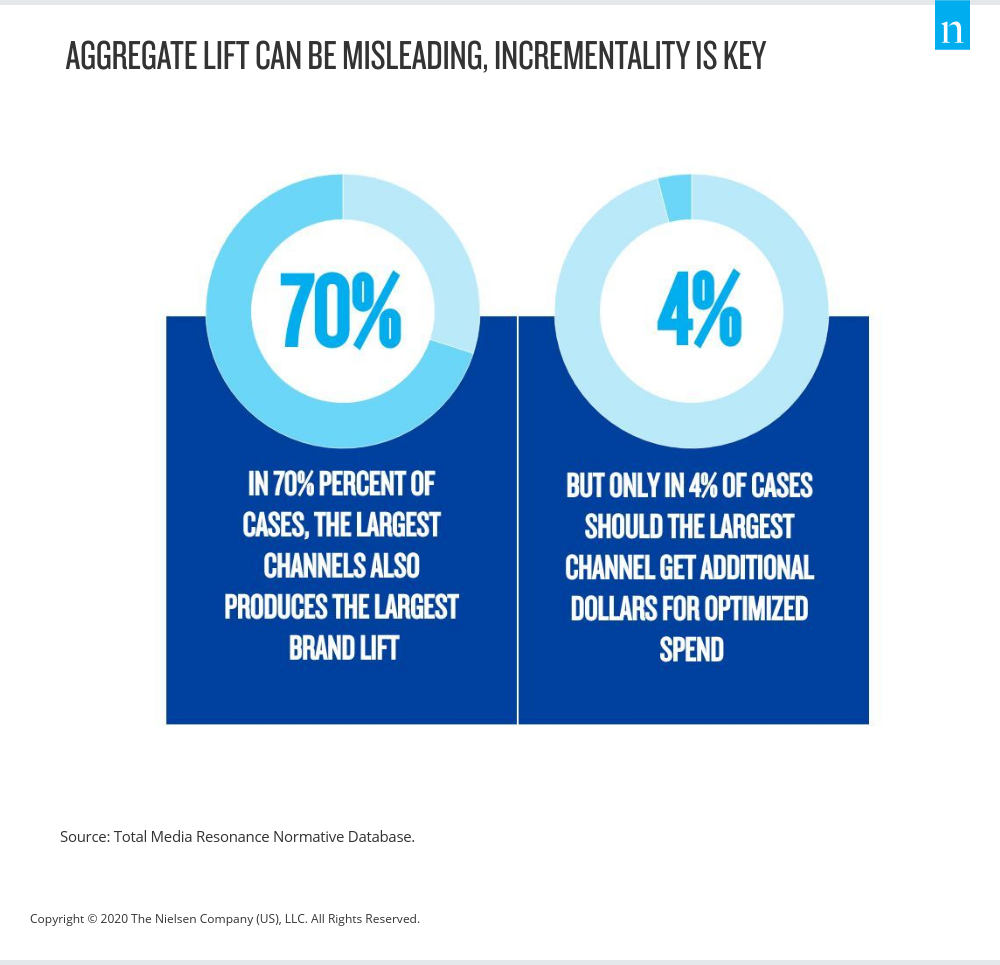
It’s also not wise to simply add additional spending to the areas that drive the greatest brand lift. Data from Nielsen Total Media Resonance shows that the channel with the greatest spend drives the greatest lift 70% of the time. So a brand should expect its biggest channel to drive the greatest brand lift, but that doesn’t mean additional spend there will automatically drive incremental lift. It likely won’t. In fact, the channel with the greatest lift only has the greatest marginal efficiency 24% of the time. And according to Total Media Resonance analyses, increasing investment in your largest channel is actually an ineffective choice for growing brand health in 96% of cases.
マーケティングは、ブランド構築と販売活性化の間のギブ・アンド・テイクである。しかし、消費者の日常生活のあらゆる側面を反転させる世界的な大流行の中、そして当分の間はそうであろう。マーケティング担当者は、急速に進化する環境の中で自社のイニシアチブを調整する方法を知るために、最適化に重点を置いた正確な測定を必要としている。販売活性化戦略は短期的な利益をもたらすかもしれないが、ニールセンのマーケティング・ミックス・モデリング分析によると、マーケティングによる売上インパクトの半分(ニールセンについて )は、最初のキャンペーンを開始してから長い時間が経過した後にもたらされ、ブランド構築が最終的な売上にもたらす強力な力を浮き彫りにしている。