Trusted, quality data is at the center of all we do at Nielsen. This has been true over the course of our almost 100-year history, and it’s a foundational element of our company that we recently reaffirmed through our latest non-financial materiality assessment.
With data at the center, alongside trust, transparency, and diversity and inclusion as other bedrock areas of importance for Nielsen, this latest update underscores the inherently interconnected nature of the environmental, social and governance (ESG) areas that matter most to our business and our stakeholders over the long term; our new visual representation highlights how these strategic areas naturally overlap. This assessment is the third installment of our ongoing commitment to regular engagement with our stakeholders through the non-financial materiality process, following our previous assessments in 2016-2017 e 2014-2015.
These opportunities to proactively listen to our stakeholders are key to our strategic and evolving understanding of Nielsen’s ability to directly and indirectly create value through our business and in our communities, both today and into the future; we’re committed to incorporating their feedback into our overall processes, business strategy, and global responsibility and sustainability programs. Beyond seeking to better understand how stakeholders view Nielsen today, we also use this feedback to identify future potential risks and opportunities, including any emerging issues that could affect Nielsen’s business success and stakeholder relationships. In order to conduct this assessment, we engaged stakeholders directly or through proxies across all aspects of our value chain, including but not limited to our employees, clients, industry trade groups and influencers, regulators and policymakers, community organizations and nonprofits, investors, suppliers and strategic business partners.
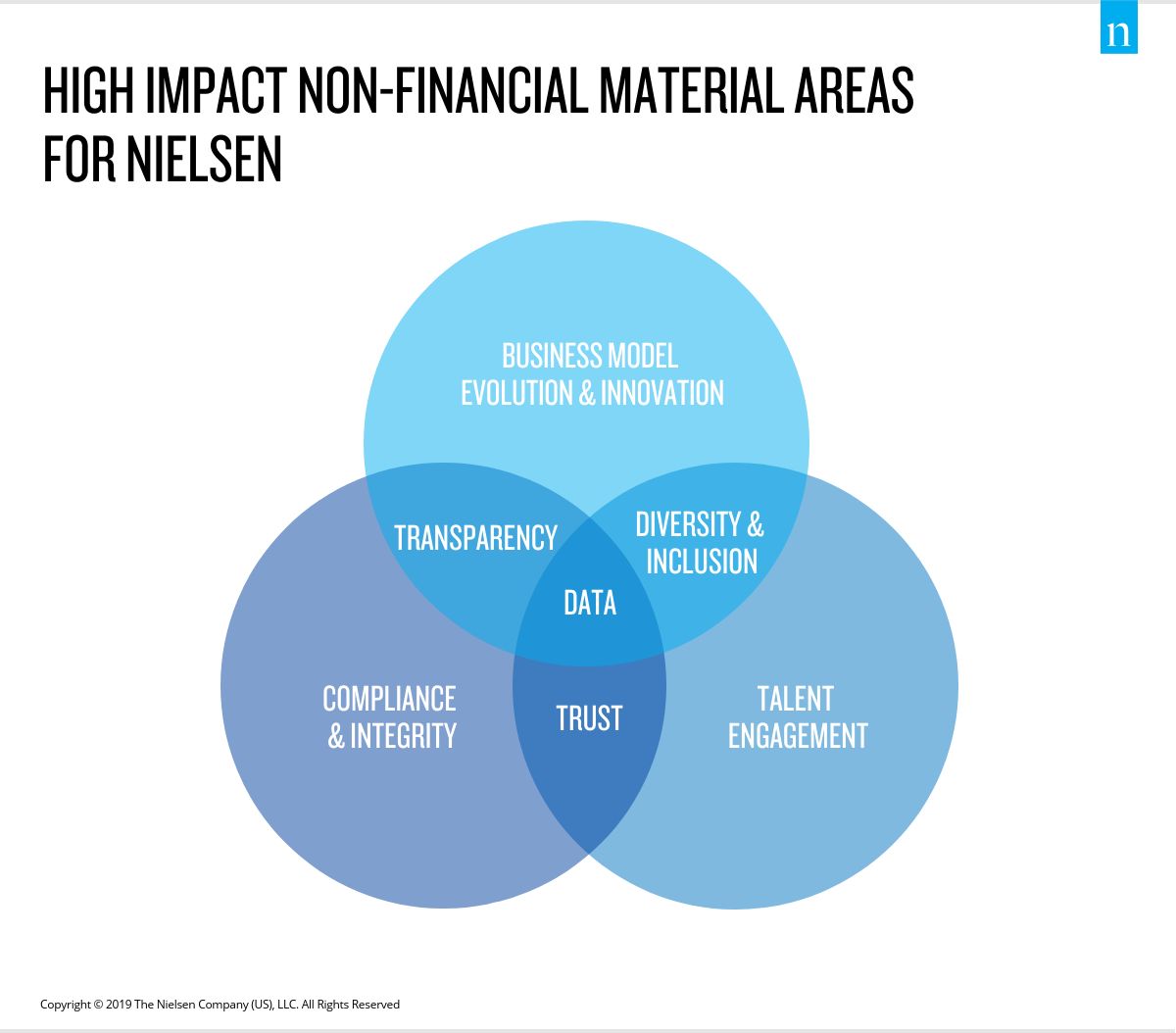
The areas of importance identified through our assessment cut across all aspects of our business, operations and value creation through our client and industry relationships, our employee base, and our communities. They are also naturally interconnected with the ESG issues that matter most to our business, such as our commitment to employee engagement and development; diversity across our workforce and approach to measurement; Nielsen Cares projects that leverage our data and associates’ talents to make a social impact; our work to ensure our suppliers operate sustainably; and our commitment to helping our clients embed sustainability into their product and consumer engagement strategies.
"Attraverso pratiche aziendali responsabili e sostenibili e un'attenzione al miglioramento continuo, continuiamo a impegnarci a collegare le migliori pratiche ESG con il nostro scopo principale di azienda", ha dichiarato Julia Wilson, Vicepresidente di Nielsen per la Responsabilità globale e la Sostenibilità. "Si tratta di un viaggio senza un'unica meta, ma in cui vediamo continue opportunità di fornire valore a tutti i nostri stakeholder nel corso del tempo in modi nuovi ed esistenti."
The results of this assessment inform our strategic approach in a variety of ways, including our ongoing communications about Nielsen’s overall commitments; how we proactively respond to ESG-related inquiries from investors, clients and other stakeholders; and how we allocate resources to areas of greatest impact and importance to Nielsen. We’ve linked our ESG strategy and external reporting efforts as part of a cohesive cycle focused on continuous improvement, enabling us to transparently share our ongoing journey through our Nielsen Global Responsibility Report e regular updates.