On Feb. 28, 1983, an estimated 106 million people in the U.S. watched the finale of one of the most beloved shows in television history, M.A.S.H. This made it the most-watched single television broadcast in American history at the time. The iconic military-themed show follows the staff of a Mobile Army Surgical Hospital during the Korean War, using humor to cope with the stresses of combat.
The show also exemplified America’s interest and fascination with the brave men and women who serve our country. From Band of Brothers to The Pacific. From Seal Team to The Unit to J.A.G to the whimsical Hogan’s Heroes, military-themed television shows have been a staple for as long as the medium existed.
The storylines in military-themed shows have run the gamut from shining a light on incredible acts of bravery to humanizing moments of tragic loss. Today, content that centers military service ranges from creators across social media to best-selling video games. They have provided laughter and tears—and brought us closer to the people behind the uniform. Television has had the unique ability to bring the military into our living room, outside of the news, in a way that can change one’s perception of who they are and what they do. And most certainly, they have given us new appreciation of veterans.
There are approximately 16 million veterans in the U.S. They are our neighbors, our friends and our co-workers. But the unique cultures and connection points of veterans and military families are often overlooked when it comes to advertisers. This despite the fact that veterans possess tremendous buying power and are vociferous consumers of televised entertainment.
For example, according to Nielsen Scarborough, veterans are 19% more likely than the national average to subscribe to a live TV streaming service. The data also shows that 65% have viewed broadcast TV in the past week while 66% have viewed cable TV in the past week.
Non sorprende che i veterani siano anche grandi consumatori di elettronica per consentire il consumo di contenuti. I dati Nielsen mostrano che negli ultimi 12 mesi i veterani hanno speso 1,7 miliardi di dollari in televisori e più di 2 miliardi di dollari in altri prodotti elettronici di consumo. Ma non finisce qui.
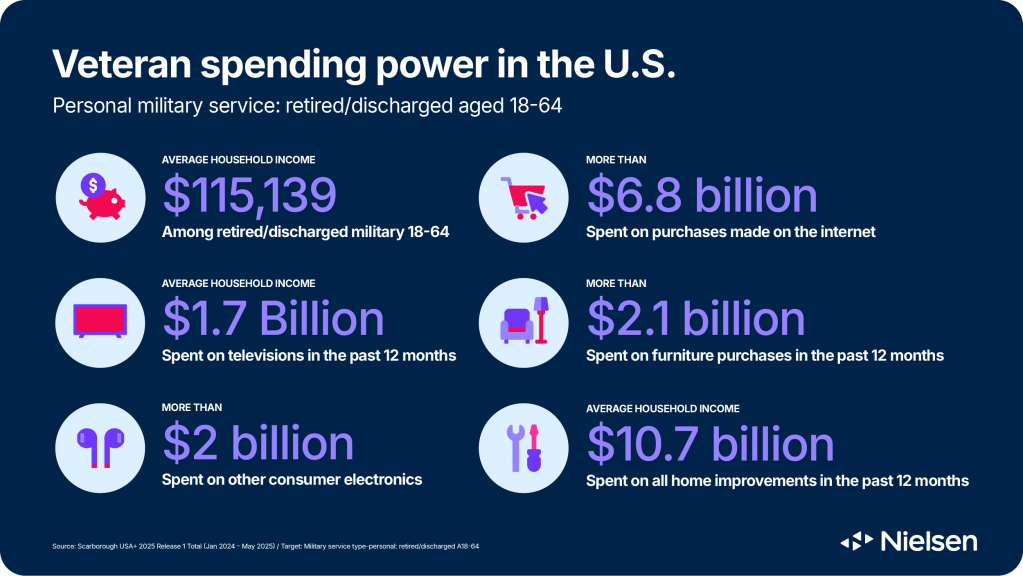
La spesa principale dei veterani si concentra in settori legati alla stabilità a lungo termine - abitazione, arredamento e tecnologia - a dimostrazione del loro investimento nella vita civile.
Gli inserzionisti dovrebbero assolutamente prendere nota. Dopo tutto, l'Ufficio del censimento degli Stati Uniti ha riferito che il reddito familiare mediano nel 2024 era di 83.730 dollari, mentre il reddito familiare medio dei veterani è notevolmente superiore, pari a 115.139 dollari.
Nielsen data further reveals that veterans spent $6.8 billion on purchases made on the internet in the last 12 months. Displaying their handiness around the house, veterans shelled out more than $10.7 billion on all home improvements in the past 12 months, and more than $2.1 billion was spent on furniture purchases.
Inoltre, i veterani hanno il 22% in più di probabilità di lavorare a casa e il 19% in più di essere proprietari di una piccola impresa. La loro forte vita familiare è evidente, dato che hanno il 23% di probabilità in più di possedere un cane. Ciò significa che i marketer hanno un'opportunità d'oro per rivolgersi a questo gruppo con prodotti per il piccolo ufficio/casa, software aziendali e, naturalmente, cibo e servizi per animali domestici.
As television ratings can attest, we have collectively been fascinated with the military for generations. But when it comes to veterans, we often overlook marketing to them, despite their tremendous buying power and consumption of content. After all veterans have given, they are a population certainly worth serving.
Per saperne di più Nielsen Scarborough, and explore our Rapporti sul pubblico eterogeneo available for purchase now.