As marketers, we are all too familiar with the challenge of communicating in an over-saturated marketplace. It’s like trying to have a conversation in a crowded room—you need to know exactly who you are talking to and how to get their attention. To cut through the noise, marketers need to embrace hyper-local strategies, recognizing that audience preferences and behaviors can vary dramatically not just between major markets, but even within individual neighborhoods of the same city. Understanding these nuanced local differences is key to crafting messages that truly resonate. But how do you achieve that deep understanding?
Un approccio particolarmente efficace è l'uso di dati segmentati geograficamente che vanno oltre una visione nazionale, approfondendo le specificità di come, quando e dove i diversi segmenti di pubblico consumano i contenuti televisivi locali nei vari mercati. Negli Stati Uniti, l'industria dei media fa spesso riferimento alle Designated Market Areas (DMA®), regioni geografiche proprietarie definite esclusivamente da Nielsen per rappresentare specifiche aree di visione televisiva.
The need for DMAs® emerged in the 1950s when television began to dominate the media landscape.1 As TV stations proliferated across the country, marketers and advertisers faced a growing need to understand and define television markets for more targeted advertising purposes. Over time, this system has become a widely used resource for marketers and advertisers seeking to better understand regional audience patterns.
Cosa sono esattamente i DMA®?
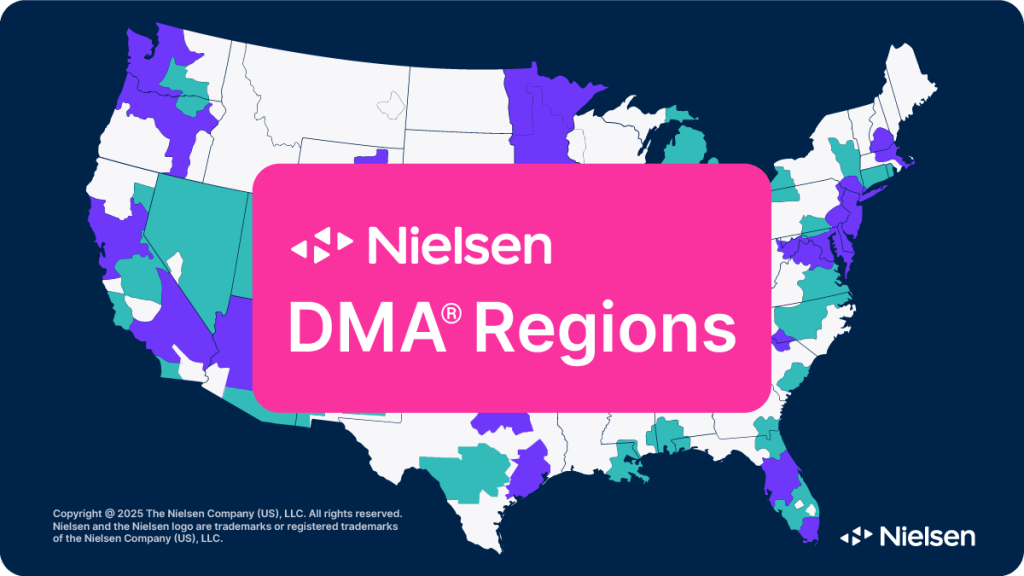
Designated Market Areas (DMAs®) are a proprietary geography defined by Nielsen. They are non-overlapping geographic regions that group counties based on television viewing areas. Each DMA® represents an area in which local television stations capture a dominant share of viewing. There are currently 210 DMA® regions in total, covering the entire continental U.S., Hawaii, and parts of Alaska. Each year, we review all DMA® regions to determine if we should add or remove any counties from a DMA® region. These defined areas are used extensively in the television industry for audience measurement, advertising planning and media buying.
In che modo le DMA® aiutano gli inserzionisti?
For advertisers, certain regional metrics—such as market size, ratings, viewership patterns and consumption habits—have become instrumental in media planning and buying. Here’s how DMAs® contribute to more strategic and efficient advertising:
- Pubblicità mirata: I DMA® consentono agli inserzionisti di concentrare le campagne su aree geografiche specifiche. All'interno di questi mercati definiti, la messaggistica tende ad allinearsi maggiormente alle preferenze e alle esigenze del pubblico di quelle regioni. Questo targeting preciso aiuta a creare pubblicità più pertinenti e coinvolgenti, portando potenzialmente a tassi di risposta più elevati e a un migliore ROI.
- Optimized media buying: Understanding each DMA®’s unique characteristics, including viewership patterns and media consumption habits, helps advertisers make more informed decisions about ad placement timing and location. Leveraging this knowledge, they can maximize their reach while minimizing wasted impressions.
- Budget allocation: A clear understanding of the size and consumer profile of each market enables more efficient use of marketing budgets. Such insight facilitates strategic resource allocation, balancing high-impact campaigns in larger, costlier markets with targeted efforts in smaller, less saturated regions to reach specific consumer groups cost-effectively.
- Misurazione delle prestazioni: Le DMA® offrono un quadro geografico standardizzato per confrontare le prestazioni delle campagne pubblicitarie in diverse regioni. L'utilizzo dei dati a livello di DMA® permette di capire quali sono le aree in cui una campagna sta ottenendo buoni risultati o non li sta ottenendo, offrendo un quadro chiaro della sua efficacia.
Cosa rende i DMA® essenziali per le reti?
Per le emittenti e i network, i DMA® sono regioni geografiche chiave definite per l'analisi dell'audience televisiva. Contribuiscono a determinare:
- Misurazione dell'audience locale: I DMA® sono le unità fondamentali per la misurazione dell'audience televisiva locale e sono quindi indispensabili per i network e le emittenti. Offrono dati granulari e specifici per il mercato sulle abitudini e le preferenze degli spettatori, consentendo agli inserzionisti di ottenere metriche di audience precise e localizzate.
- Decisioni di programmazione: Definendo i mercati, i DMA® possono aiutare a prendere decisioni sulla programmazione locale. Le emittenti e i network possono capire meglio quale programmazione soddisfare le preferenze e le richieste del pubblico locale, assicurandosi di fornire contenuti pertinenti per massimizzare gli ascolti.
- Dimensione e portata del mercato: Ogni DMA® è classificato in base al numero di famiglie televisive presenti in ciascun mercato. Comprendendo le dimensioni di ciascun mercato, le reti e le emittenti locali possono prendere decisioni più intelligenti sul prezzo dell'inventario pubblicitario e capire il contesto della loro portata rispetto ai concorrenti.
La rilevanza delle DMA® nell'era digitale
Le DMA® sono ancora molto importanti nell'era digitale e, per molti versi, la loro importanza è cresciuta. La segmentazione geografica fondamentale fornita dalle DMA® rimane essenziale per comprendere i modelli di visione regionali e il comportamento del pubblico. Anche con l'avvento delle piattaforme digitali, i consumatori delle diverse regioni hanno preferenze e abitudini di consumo televisivo distinte che influenzano il modo in cui si confrontano con i contenuti e la pubblicità. Lungi dall'essere obsoleti, i DMA® sono una componente fondamentale di un ecosistema pubblicitario basato sui dati.
In che modo Nielsen può aiutare?
Nielsen’s DMA® insights are a game-changer for media buyers and sellers. By providing granular data on what people are actually watching across local markets, Nielsen helps media buyers gain confidence that their ads will reach the right audience, maximizing their impact. Media sellers can leverage this data to accurately value their inventory, demonstrating the true reach and engagement of their content.
Our unique combination of big data and person-level panel measurement captures the viewing habits of every individual, regardless of when they consume content, from primetime favorites to daytime viewing. The result? A nuanced picture of the local TV.
Curious how these insights could help maximize your local TV impact? Learn more about your DMA® reporting or get in touch with a Nielsen representative to get an accurate picture of your local audience.
Note
1 Ponce de Leon, C. (2015). That’s the Way It Is: A History of Television News in America. The University of Chicago Press.
Nielsen’s Need to Know reviews the fundamentals of audience measurement and demystifies the media industry’s hottest topics. Read every article here.