L'abbondanza di sentimenti negativi da parte dei consumatori nei confronti di alcune recenti iniziative di brand per coinvolgere la comunità LGBTQ+ evidenzia l'immensa importanza dei dati sull'audience nel marketing. La personalizzazione è la chiave per creare connessioni significative, ma il successo nell'attuale panorama mediatico digitale richiede anche autenticità e integrità del marchio.
A parte i titoli, le persone, compresa la comunità LGBTQ+, sono sempre più alla ricerca di contenuti e marchi con cui entrare in contatto. È qui che la comprensione precisa di chi un marchio vuole coinvolgere può fare la differenza.
In generale, il nostro più recente studio internazionale sulla percezione dei media inclusivi LGBTQ+ ha rilevato che tutti i pubblici sono ricettivi al targeting dei marchi in base all'orientamento sessuale e/o all'identità di genere. I bisessuali sono i più ricettivi, in quanto il 19,7% dichiara di sentirsi a proprio agio con questa pratica, seguiti da vicino dagli eterosessuali con il 19,4%. Le persone che si identificano come gay sono meno ricettive: solo il 13,9% dichiara di sentirsi a proprio agio con questo tipo di targeting.
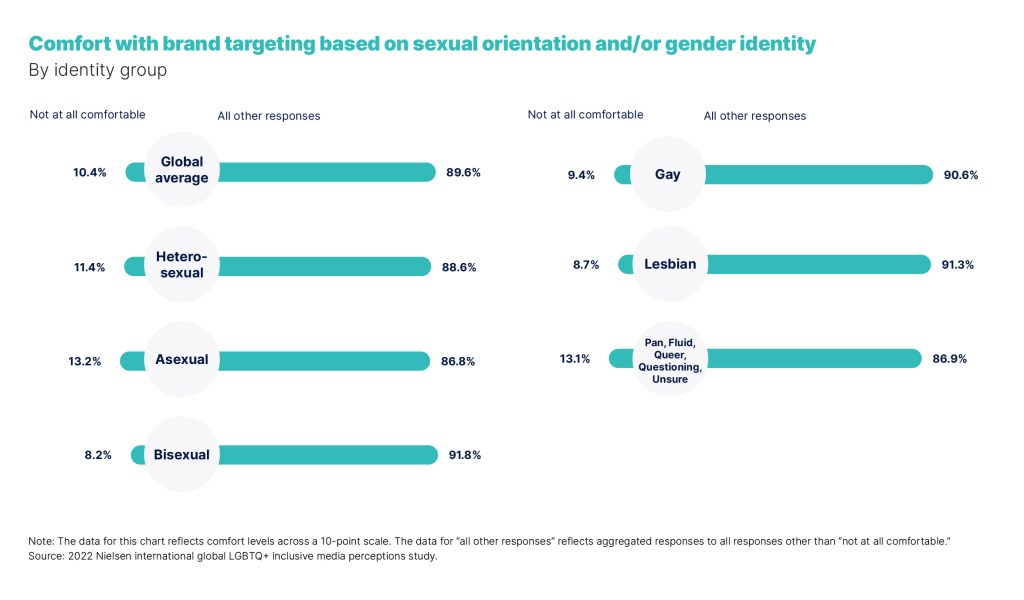
The findings from our study also highlight that non-cisgender identifying1 audiences are more comfortable with brand targeting than cisgender2 audiences. Receptiveness among this audience is highest in Spain, and lowest in the U.K.

A favore dei brand, quasi il 64% del pubblico non-cisgender afferma che sia i prodotti che i messaggi degli annunci mirati ricevuti sono rilevanti per loro. D'altro canto, però, solo il 26,4% del pubblico non-cisgender afferma di aver ricevuto annunci mirati. Tra la più ampia comunità LGBTQ+, la percentuale scende ad appena il 19%.
Sebbene negli ultimi mesi il rumore di alcune recenti iniziative dei brand si sia fatto sentire, i dati del nostro studio evidenziano che i brand hanno più opportunità di coinvolgimento di quante ne sfruttino. È qui che entra in gioco una comprensione critica dei consumatori, clienti e potenziali, unita alla consapevolezza che il panorama mediatico senza confini rende impossibile limitare chi vede e chi non vede qualcosa.
Data and technology can help marketers identify audiences and engage with them, but brands can’t control how people share their messages. Said differently, ad delivery is much different from ad exposure. Brand integrity is critical on this front. Compared with the brands that have faced consumer backlash this year, a number of other well-known brands have been praised for upholding their positions on transgender inclusivity, including Victoria’s Secret this past March. And what’s more, a December 2022 GLAAD-Edelman report found that Americans are two times more likely to use a brand that demonstrates a commitment to expanding and protecting LGBTQ rights.
A parte le migliori intenzioni - e la storia recente lo dimostra - non tutti sono ricettivi all'inclusività. Lo scopo del marchio avrà sempre bisogno di un sostegno costante per ottenere guadagni a lungo termine, soprattutto in presenza di resistenze, come l'opposizione è una considerazione reale per i marchi di oggi. A livello globale, solo il 25,6% delle persone cisgender afferma che vorrebbe che la programmazione e la pubblicità facessero di più per celebrare l'inclusività e le storie positive sulle persone LGBTQ+. La ricettività è massima in Brasile (33,6%) e minima in Francia (13,8%).

On the subject of LGBTQ+ inclusion, Sarah Kate Ellis, president of GLAAD, says that brands know that it’s good for business. Within the context of recent news, she was quoted in a TIME article, saying that “Companies will not end the standard business practice of including diverse people in ads and marketing because a small number of loud, fringe of anti-LGBTQ activists make noise on social media.”
Despite any short-term effects associated with divided audiences, experts agree that the vast majority of boycotts fail in the long term. Maurice Schweitzer, a professor at University of Pennsylvania’s Wharton School of Business, tells ABC News that boycotts need to be sustained and coordinated—which is rare. Nike stock, for example, is up 48.8% from when the brand faced backlash for partnering with Colin Kaepernick back in 2018.
For additional information, download our latest LGBTQ+ report.
Fonti
1Non-cisgender identifying refers to people who do not follow other people’s ideas about how they should look or act based on the female or male sex they were assigned at birth.
2Cisgender refers to people whose gender identity corresponds with the sex they were assigned at birth.