After the triumph of Everything Everywhere All At Once at the Oscars this year, many people from the Asian American Native Hawaiian and Pacific Islander (AANHPI) community were left feeling incredibly proud of that historic night. For one night, the community saw a moment of triumph, for a story and characters that reflected so much of their real-life experiences.
The AANHPI audience has made it clear – through their voices and dollar spend – that they desire for their stories to be seen and heard. In the 2022 Social Tracking of Asian Americans in the U.S. (STAATUS) study — an assessment of attitudes and stereotypes toward Asian Americans — 88% of Asian Americans say they want to see more Asian American characters on TV and in movies, compared with 77% of the total population. Brands and media need to do more to engage the Asian population, and content with Asian representation is winning: Squid Game topped the streaming chart in 2021, Everything Everywhere All At Once dominated the Oscars this year, and in advertising, P&G’s campaign “The Name” and Honda’s “Through the Window” campaign for its CR-V focuses on the Asian American consumer and their unique experiences. Yet, the question lingers: Will the media and marketing industry embrace more AANHPI representation?
With anti-Asian hate crimes on the rise in the U.S.,1 advertisers and media companies have a unique opportunity to change hearts and minds. Representation is not only the right thing to do; it makes tremendous business sense.
Connettersi con la popolazione americana in più rapida crescita e il suo potere d'acquisto
Tra i gruppi razziali ed etnici degli Stati Uniti, gli asiatici americani sono quelli che crescono più rapidamente, secondo l'Ufficio del censimento degli Stati Uniti.
Con la crescita della popolazione AANHPI, cresce anche il suo potere d'acquisto e la richiesta di rappresentazione sia nei contenuti che nella pubblicità. Quando gli annunci di un'azienda vengono visti in una programmazione inclusiva per gli asiatici, si dimostra che il marchio vede il consumatore asiatico e che lo apprezza. La ricerca "Attitudes Toward Representation" di Nielsen ha rilevato che gli asiatici sono il gruppo identitario più propenso a dichiarare di essere più propensi ad acquistare da marchi che pubblicizzano contenuti che li rappresentano.
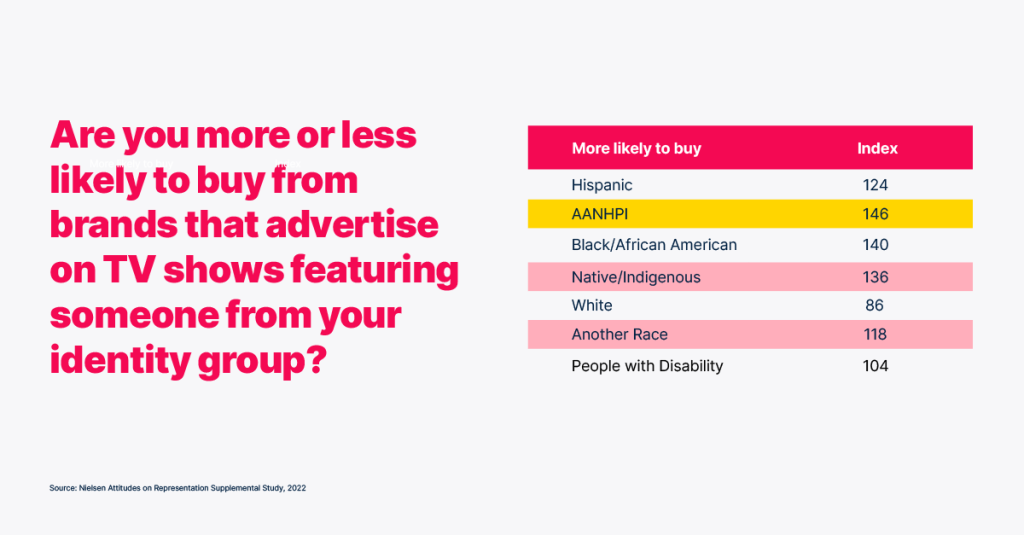
Gli introiti pubblicitari dei marchi contribuiscono a finanziare i contenuti che vengono creati. Dare priorità alla spesa per contenuti inclusivi per gli asiatici è un'opportunità per influenzare l'industria dei media e del marketing; può anche influenzare il modo in cui il pubblico si vede ritratto.
Il nostro studio ha rilevato che un quarto dei marchi investe solo il 6% o meno in programmi con una quota di schermo asiatica pari o superiore alla rappresentanza degli asiatici nella popolazione statunitense. I marchi con la spesa pubblicitaria più inclusiva per gli asiatici investono quasi quattro volte tanto.
Affinità con la comunità AANHPI
Poiché il pubblico AANHPI è attratto da contenuti che rappresentano la loro comunità in modo appropriato, accurato e rispettoso, i marchi che aumentano i loro investimenti pubblicitari in tali contenuti hanno maggiori possibilità di aumentare la loro consapevolezza all'interno della comunità. L'aumento degli investimenti in pubblicità sta creando affinità con le categorie della comunità AANHPI.
Ad esempio, gli asiatici americani spendono di più rispetto alla popolazione generale nei settori della moda, dell'elettronica e dei viaggi, tre delle categorie principali in cui i marchi investono più della media in contenuti inclusivi per gli asiatici. I marchi di queste categorie possono differenziarsi attraverso la pubblicità, raggiungendo i consumatori che già spendono di più, ma che potrebbero non avere un'affinità con un particolare marchio.
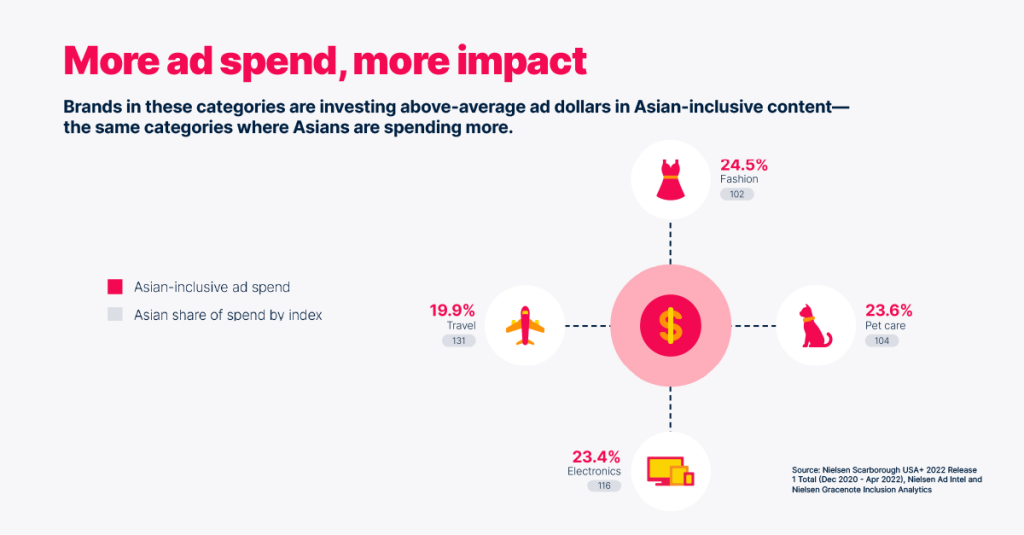
La rappresentanza dell'AANHPI stimola il coinvolgimento del pubblico
Winning eyeballs is still a key metric when media publishers are deciding what content to greenlight. When it comes to attracting the Asian American audience, viewers are looking to TV to be entertained and informed just as much as they’re tuning in to feel seen, connected and inspired. About 30% of AANHPI audiences felt more engaged when a show features a cast member who looks like them, Nielsen’s Attitudes Toward Representation 2022 study found. Evaluating Asian representation overall in the top 1,000 TV programs in 2022, we see that streaming video on demand (SVOD) is leading the way, with more than three times the representation of Asians compared with broadcast and cable. No wonder that in January 2023, Asians in the U.S. streamed more content than any other group – 43% compared with 32.8% for the total U.S. population. With people in the U.S. watching more than 19 million years’ worth of streaming video content in 2022 alone, this also opens new opportunities for all audiences to engage with TV programs that include Asians.
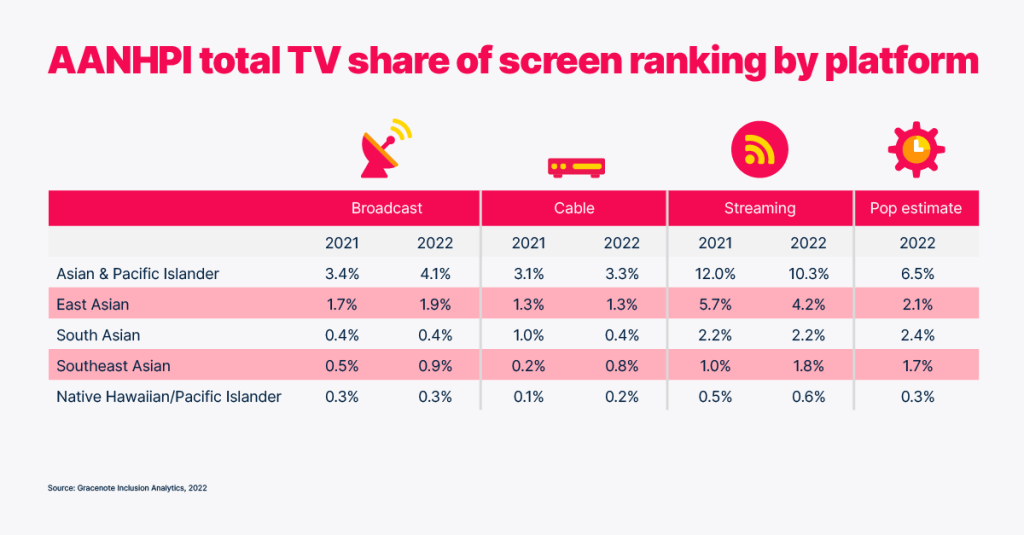
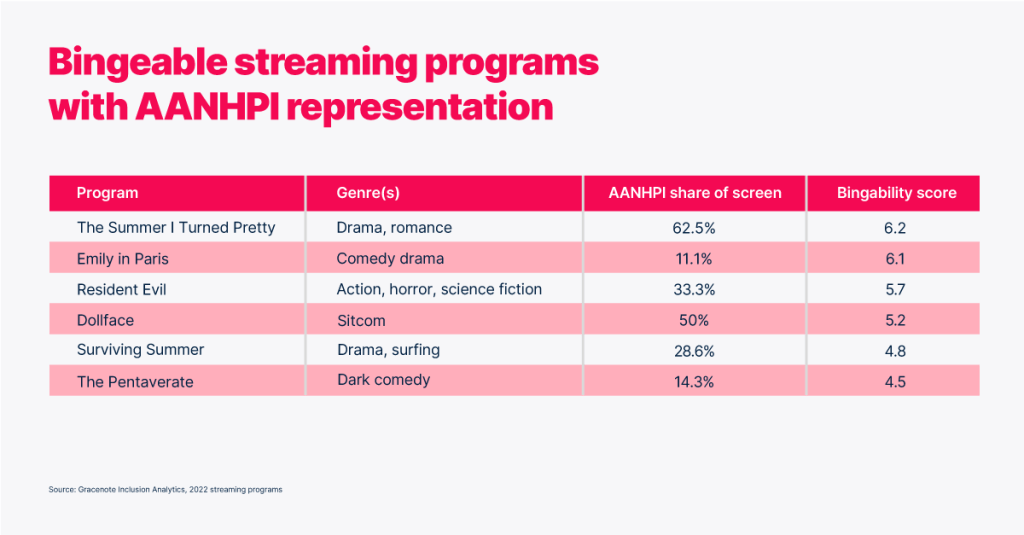
In addition, streaming shows with AANHPI representation are engaging all audiences. In 2022, the top streaming programs with high bingeability score that the total U.S. audiences can’t stop watching, also have high Asian share of screen.
Riflettore
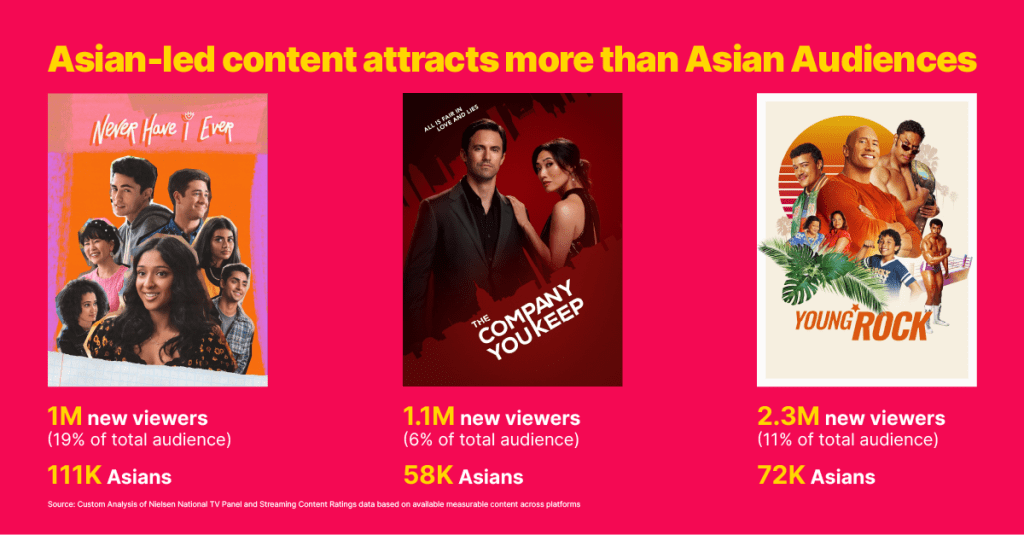
Con l'attuale resa dei conti razziale negli Stati Uniti, dove e come i marchi appaiono nei contenuti è ancora più importante per le comunità che storicamente sono state escluse dai media americani. Il pubblico asiatico, ancora provato dagli effetti dell'odio anti-asiatico, continua a cercare contenuti che si colleghino alla sua esperienza, mostrando "persone come me", ed è più propenso ad acquistare dai marchi che incontra. Gli investimenti dell'industria in contenuti inclusivi aprono le porte a un pubblico più coinvolto, pronto a guardare contenuti e ad acquistare prodotti e servizi.
For additional insights, download our 2023 Asian American Engagement Report
Nota
1 In March 2023, the FBI reported that anti-Asian hate crimes in the U.S. were up dramatically from the year earlier (746 incidents in 2021 – the most recent data available – compared with 249 in 2020.