La 66a stagione dell'Eurovision Song Contest è arrivata e, se gli anni precedenti sono indicativi, il 2022 sarà un altro grande successo in termini di audience. Ma allo stesso tempo, il concorso musicale internazionale fornisce anche una visione delle emozioni del pubblico, attraverso l'umore delle canzoni che votano per la vittoria.
In addition to boasting seasons that have attracted more than 180 million viewers each year for the last seven years1, Eurovision’s international audience of music enthusiasts eagerly look forward to rooting for their favorite artists—and discovering new music.
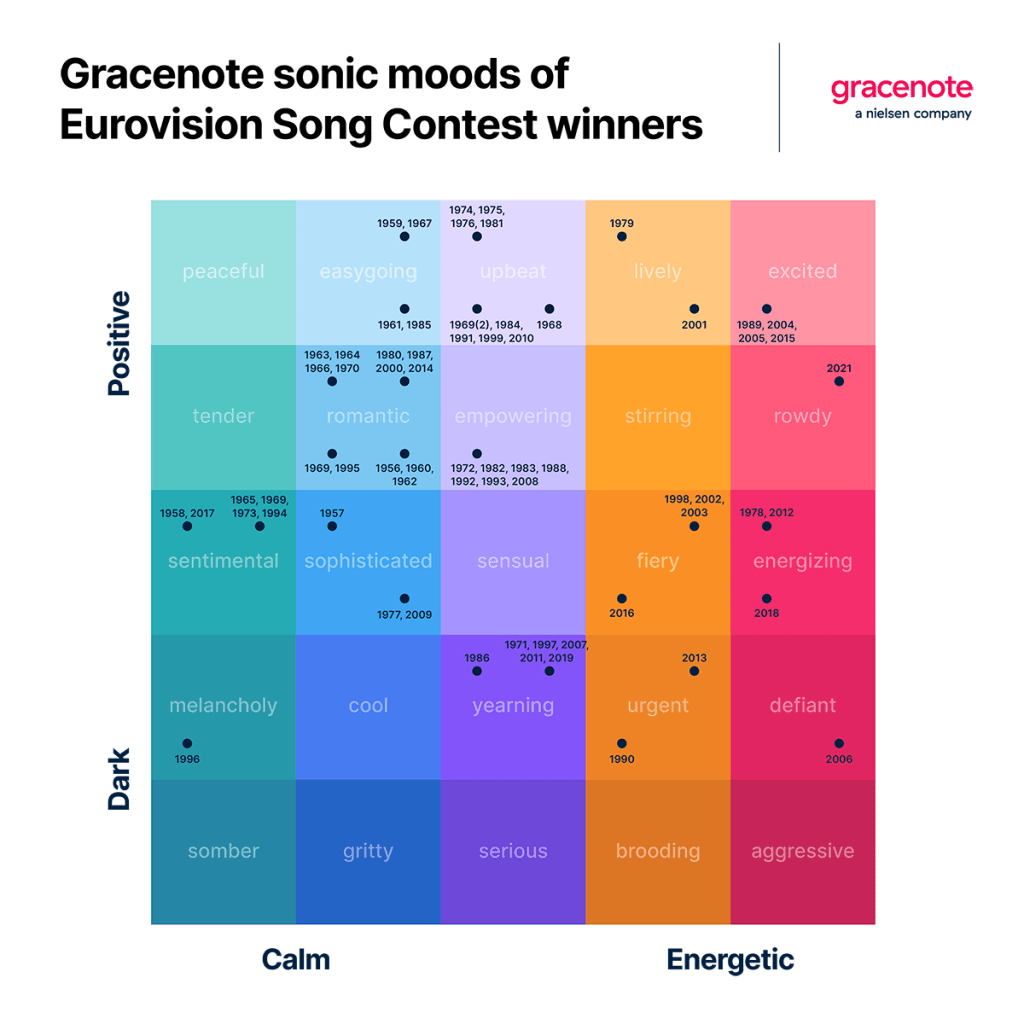
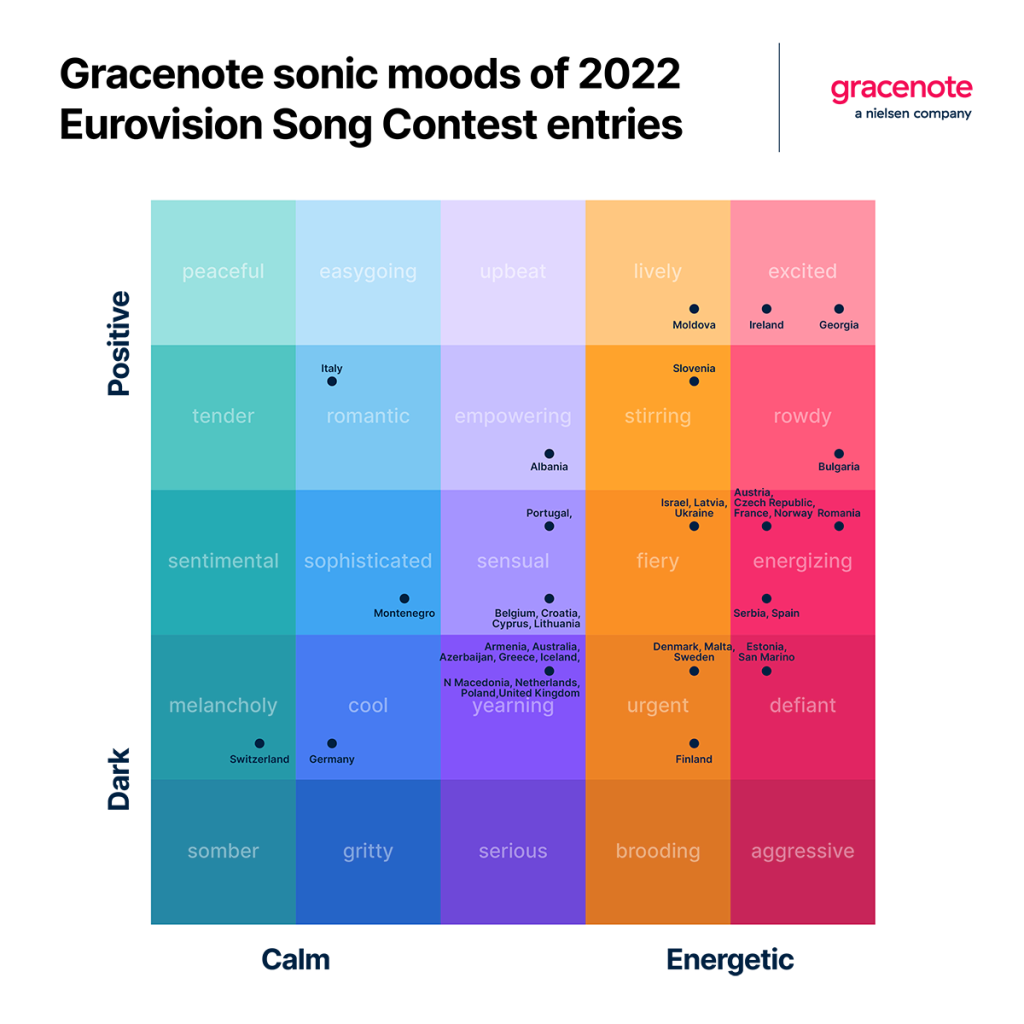
And with the variety of music being presented at this year’s contest, audiences will be able to find a song to suit virtually every mood—because the performers showcase more moods with each new year of competition. According to Gracenote Global Music Data Sonic Descriptors sonic mood analysis of previous Eurovision contests, recent Eurovision winners have displayed far more emotional range than their predecessors. The 40 songs presented at this year’s contest represent 15 different primary moods. And the last 15 winners have represented 12 primary moods, while only 11 moods were represented among the winners of the entire first 40 years of the competition.
The recent uptick in emotional diversity isn’t surprising—consumers are increasingly looking for experiences that engage with them as individuals, and creators are rushing to fill the gap. American television, for instance, now features 817,000 unique program titles across traditional TV and streaming services, compared with just over 646,000 titles in 20192. For musicians and streaming services looking to reach and engage new audiences, Eurovision trends can be a finger on the pulse of global audiences and their moods.
Secondo le scelte di quest'anno, il pubblico è alla ricerca di interpreti che lo stimolino e lo rasserenino. Venti canzoni finaliste - la metà del concorso - sono caratterizzate da uno stato d'animo più energico, nonostante questa categoria sia una vincitrice meno frequente. Altri sette brani sono caratterizzati da atmosfere più calme, tra cui quelli presentati dall'Italia e dai Paesi Bassi, due dei favoriti per la vittoria di quest'anno. Questo dato è in controtendenza rispetto ai concorsi precedenti, ma riflette un recente cambiamento nel sentimento dei consumatori.
Faced with mounting supply chain woes, increasing inflation and the war in Ukraine, consumer confidence is at its lowest since the pandemic3. It’s no wonder audiences are looking for music that uplifts and reassures them. And Eurovision artists are meeting the moment.
Contrast this year’s trends with last year’s winner: “Zitti e Buoni,” a song classified as rowdy—the first time such a mood has won the competition. At the time of last year’s contest, many countries were lifting their COVID-related restrictions, and consumer confidence in Europe was its highest since October 20183. Americans echoed this sentiment, as a Nielsen custom consumer sentiment study found that in June of 2021, 90% of consumers said they were “ready to go” and get back to normal. Before the omicron spike later in the year, audiences were enthusiastic about emerging from over a year behind doors—and the choice of winner reflects their eagerness.
The benefits of striking the right chord with audiences don’t stop when the contest ends. And much like we see in other high-stakes competitions, Eurovision artists often see success far outside the competition. Out of 68 winning Eurovision songs, 46 have ascended to Billboard’s Top 100 U.K. Singles Chart4. And the 1976 winner, Brotherhood of Man’s “Save Your Kisses For Me,” spent 16 weeks on the chart, six of which were in the No. 1 spot.
Gli artisti non sono gli unici che possono trarre vantaggio dalla comprensione e dall'anticipazione degli stati d'animo del pubblico. I servizi di musica in streaming possono utilizzare i dati sull'umore sonoro per creare playlist e stazioni più ricche, con una gamma più ampia di artisti che espongono gli ascoltatori a stili musicali diversi e ad artisti che potrebbero non aver scoperto da soli.
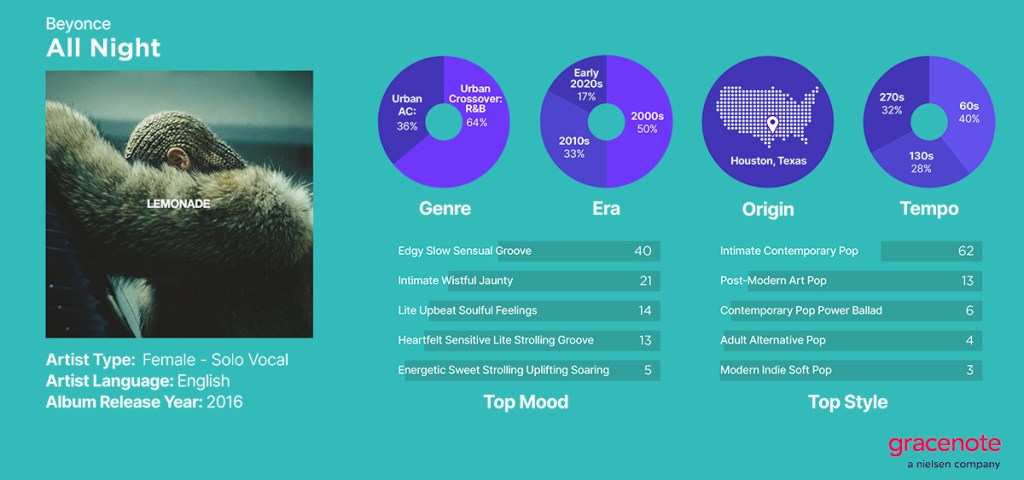
È fondamentale che il pubblico sia in grado di trovare facilmente nuove canzoni e band che gli piacciano. L'applicazione di meta-descrizioni iper-dettagliate, come l'umore, ai contenuti audio aiuta a creare connessioni tra genere, umore, epoca e tempo per creare un profilo più completo dell'ascoltatore. Questi dati consentono percorsi di scoperta sfumati e offrono raccomandazioni audio che si allineano ai gusti attuali degli ascoltatori, fornendo loro nuove opzioni accuratamente curate.
Note
- Unione europea di radiodiffusione
- Dati video globali di Gracenote, febbraio 2022
- Organizzazione per la cooperazione e lo sviluppo economico (OCSE)
- Billboard