TV programming has a long history of inspiring audiences to get more involved in their passions and pick up new hobbies. In some cases, TV shows have given a lucky few the opportunity to live out their dream jobs, such as Last Comic Standing winner Iliza Shlesinger and Top Chef winner Stephanie Izard.
Ma la programmazione televisiva può fare di più che alimentare le passioni interne: Nel caso delle docuserie, che stanno diventando sempre più popolari sulle piattaforme di streaming, la ricerca Nielsen ha rilevato che possono trasformare il pubblico in fan dello sport.
There’s no short-changing the power of sports and its influence on live TV viewing. Last year, sports accounted for 98% of the top 50 most-viewed programs through September on traditional U.S. TV. And as content creators expand the TV landscape to grow—and attract—new audiences, the world of sports is growing outside of live competition.
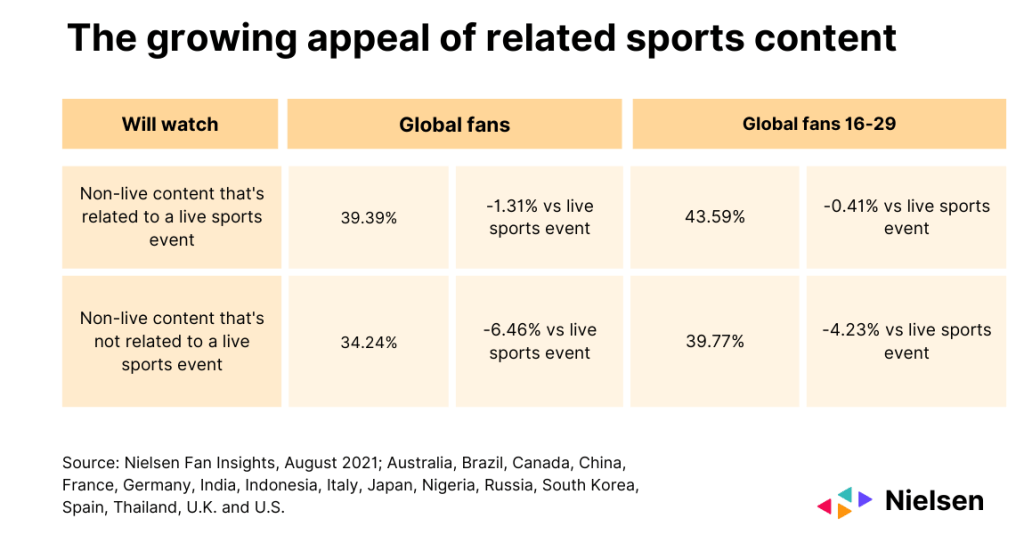
Mentre gli highlights delle partite e i video riassuntivi hanno sempre fornito al pubblico un modo per seguire le gare in diretta e ottenere informazioni sull'azione sul campo, anche i contenuti non correlati, come le docuserie, stanno guadagnando terreno tra gli spettatori e li stimolano a impegnarsi nello sport in prima persona. In effetti, tra il pubblico globale, l'attrattiva dei contenuti non correlati a un evento dal vivo è di poco inferiore a quella dei contenuti direttamente collegati a un incontro o a una partita.
To learn more about the connection between the viewership of docuseries and sports fandom, Nielsen recently analyzed viewership of Netflix’s Formula 1: Drive to Survive to see if it inspired U.S. audiences to start watching Formula 1 races. The analysis, which looked at F1 viewership during three specific periods, found that more than 360,000 viewers who didn’t view F1 in the latter part of the 2021 season, watched F1 racing in 2022 after first watching Drive to Survive.
Driven to watch: Drive to Survive inspires 2.3% more viewers to watch F1 content in 2022
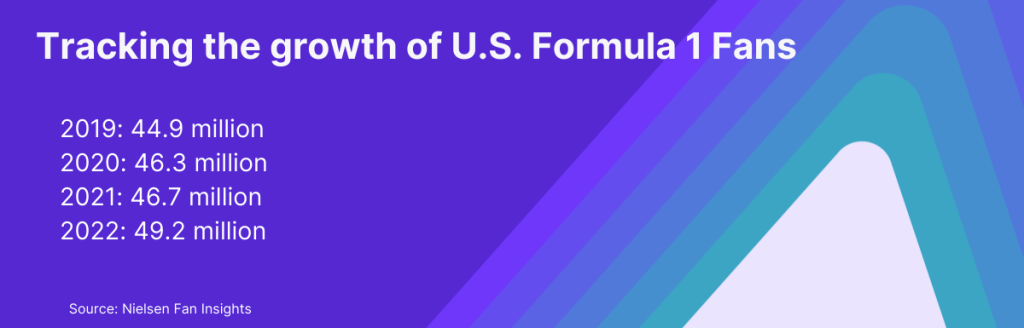
Nielsen isn’t the first to highlight the impact of Drive to Survive on F1 fandom, and Approfondimenti sui fan Nielsen has tracked F1 fan growth of about 10% in the U.S. over the past three years. But this is the first time audiences have been analyzed to track the halo effect from the show to live action—something earlier coverage stated couldn’t be done.
Per giungere ai risultati, Nielsen ha calcolato il numero di spettatori televisivi di:
- Contenuti F1 tra il 19 novembre 2021 e il 12 dicembre 2021
- All seasons of Drive to Survive between Dec. 13, 2021, and March 17, 2022
- Eventi di F1 tra il 18 marzo 2022 e il 10 aprile 2022
According to Nielsen data*, nearly 16 million people watched at least part of any of the programming listed above. Of the 16 million, 2.3% did not watch any of the last three race weekends of 2021 F1 programming, highlighting that Drive to Survive generated more than 360,000 new fans of F1 ahead of the highly anticipated Formula 1 Crypto.com Miami Grand Prix, which begins this Friday.
When we look at viewership of just the docuseries and the new F1 season, which kicked off in mid March, we see that 41% of Drive to Survive viewers also tuned in to the first three weeks of the new F1 season.
I nuovi fan portano anche un profilo diverso allo sport. Sono:
- Più ispanici (23% rispetto al 12% che ha guardato i contenuti della F1 e non la docuserie)
- Più giovani (il 46% ha 34 anni o meno, contro il 16% che ha guardato i contenuti della F1 e non la docuserie)
- Affluenti (il 69% guadagna oltre 100 mila dollari contro il 49% che ha guardato i contenuti della F1 e non la docuserie)
- Colletti bianchi (70% contro il 42% che ha guardato i contenuti della F1 e non la docuserie)
- Hanno case con bambini (49% rispetto al 21% che ha guardato i contenuti della F1 e non la docuserie)
In addition to inspiring docuseries viewers to become F1 fans, Drive to Survive has played a significant educational role as the general population grows its interest in the sport. In fact, among the general population, Nielsen Fan Insights found that:
- Il 34% è diventato un fan dopo aver visto
- Il 30% dice di aver capito meglio lo sport
- Il 29% si è sentito più coinvolto nello sport
Given the buzz to date, it should come as no surprise that the fourth season of Drive to Survive has garnered even bigger audiences. Premiere week for season 4, which dropped March 11, just ahead of F1 Round 1 in Bahrain, attracted 60% more audience than the premiere for season 3, which arrived right before last year’s F1 season.
Le storie avvincenti sono ovunque e lo sport guadagna sempre più tempo sullo schermo televisivo al di fuori delle competizioni dal vivo. Sebbene non si possa negare l'attrattiva dello sport dal vivo, è ormai chiaro che una delle chiavi per attirare nuovi fan potrebbe essere la forza di una narrazione avvincente e documentaristica.
Nota
*Nielsen national TV data and Valutazioni dei contenuti in streaming