This year marks the 51st anniversary of the celebration of PRIDE month in the U.S. There’s a lot for the LGBTQ community to celebrate in 2021, just one year after PRIDE parades and celebrations were cancelled in 2020 as a result of the pandemic. The strength and size of the community is more visible than ever. For the first time in 2019, the U.S. Census Bureau’s America’s Families and Living Arrangements included estimates of same-sex households, showing 543,000 same-sex married households, and a Gallup study recently noted that LGBT identification has risen to 5.6%.
Con la crescita della comunità LGBTQ, non c'è dubbio che la connettività digitale sia forse il fattore più influente nel progresso della comunità LGBTQ. Ha ridotto l'isolamento, ha creato spazi sicuri per l'espressione di sé, ha offerto opportunità di connessione a una comunità eterogenea e ha fornito un facile accesso a risorse educative e contenuti curati. La tecnologia ha anche dato alla comunità un luogo in cui farsi vedere in modo autentico. Dai servizi televisivi e di streaming ai podcast e ai servizi musicali, lo sviluppo e l'accesso ai contenuti e ai talenti LGBTQ sono aumentati in modo esponenziale.
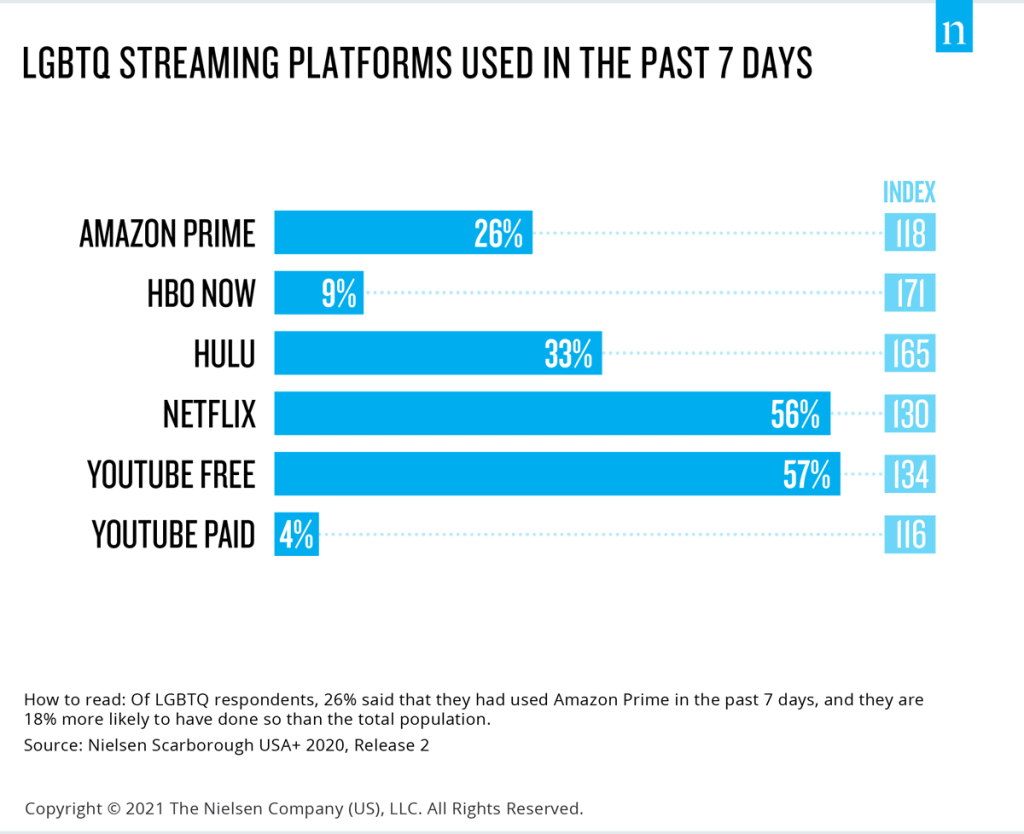
La connettività digitale ha alimentato una comunità esperta di tecnologia e propensa all'impegno digitale. Di conseguenza, lo streaming video è emerso come un importante veicolo di consumo di contenuti su misura. Sebbene lo streaming faccia parte della vita quotidiana di tutti gli americani, l'85% delle persone LBGTQ dichiara di aver utilizzato un servizio di streaming video negli ultimi 30 giorni, rispetto al 74% della popolazione generale. Tra questi servizi, YouTube è un punto fermo dello streaming tra il pubblico LGBTQ, il cui utilizzo di questa piattaforma supera quello del pubblico generale del 34%.
For LGBTQ people, sexual orientation discrimination and religious persecution is still a concern in many parts of the world. Social media channels have empowered the community to organize and connect online, leading to heavy social media use when compared to the total population. Flexing their social muscle within online communities, more than 40% spend 3 or more hours per day on social media and are 44% more likely to have spent 5+ hours a day on social media. The Queer community is further driving culture as content creators. This community is 30% more likely to have used Snapchat, Instagram and Twitter in the last month than the general population. Given the reach and power of these platforms, the industry as well as advocacy organizations have acted to ensure that social media platforms are safe spaces for inclusive content and dialogue. Earlier this year, GLAAD launched the Social Media Safety Index, encouraging the industry to fight the anti-LGBTQ hate speech and misinformation so prevalent in the social media landscape.
As the community expands its footprint in social content development, curated theatrical and episodic content is the next frontier in the march for equality. Representation in movies, television shows, and ads can help fight bias where too often stories are centered around violence toward the LGBTQ community or a stereotypical portrayal. The fact is, LGBTQ storylines and characters have grown in on-screen presence over the years, but only recently have we seen an increase in representation of this identity group at the talent level. Analitica dell'inclusione di Gracenote data showed that 26% of the top 300 programs in 2019 had representation of individual cast members who self-identify as LGBTQ. That number has increased to 29% in 2020—a small shift in the right direction. Equally important are the platforms where visibility occurs. LGBTQ stories and talent are becoming more easy to find across the television landscape.
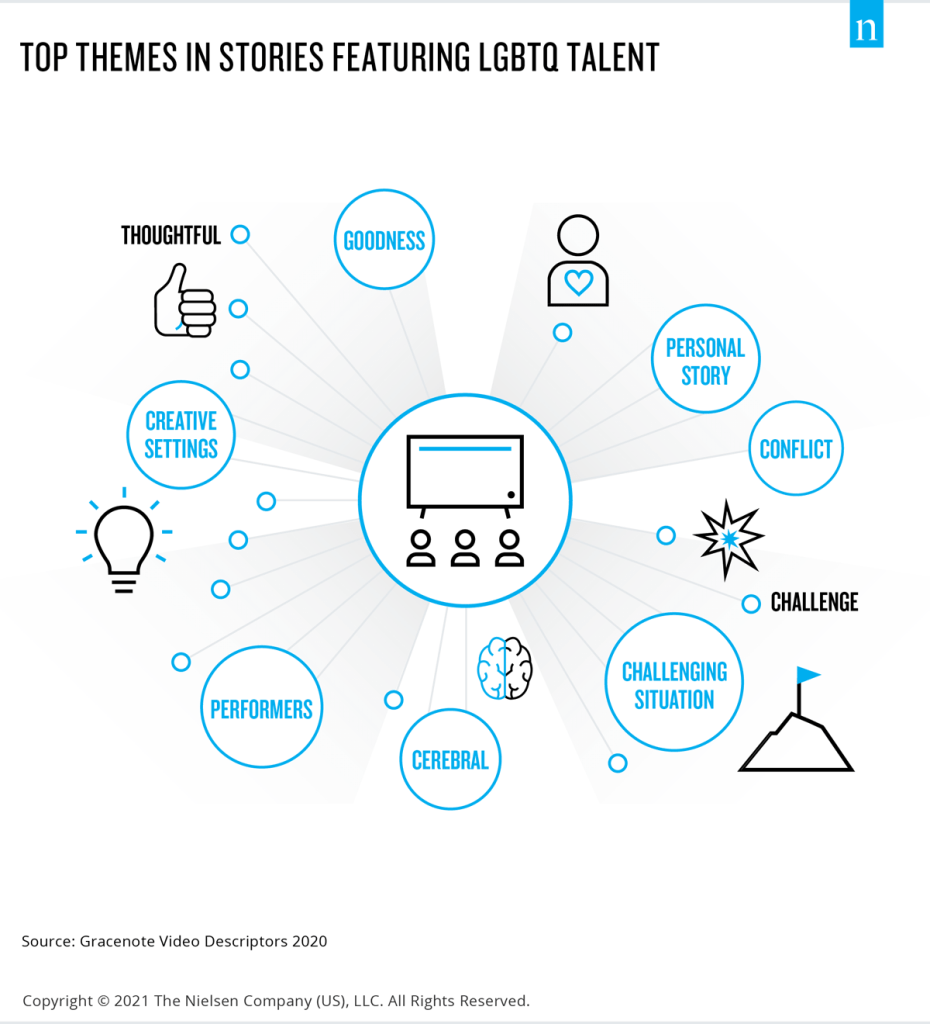
Per piattaforma, nel 2020, i dati di Gracenote Inclusion Analytics rivelano che la televisione broadcast e il video-on-demand in abbonamento (SVOD) hanno la maggiore rappresentazione di talenti queer (7%), seguiti dal cavo (6%). Con la più alta rappresentazione di talenti queer, lo SVOD offre al pubblico contenuti significativi che risuonano, rendendo più facile per il pubblico queer trovare una programmazione rilevante. Questo aumento della rappresentanza indica maggiori opportunità per i talenti LGBTQ e una maggiore apertura dell'industria e del pubblico nei confronti di una narrazione diversificata.
Early this year, when the House of Representatives passed the amendment to the Equality Act, it would not only expand discrimination protections, but also support public dialogue about LGBTQ people’s lived experiences and how they are reflected and included in content. From the inclusion of authentic storylines in mainstream romance genres, to increasing transgender and nonbinary visibility, civil rights dialogue has opened the door for narratives—shaping not only what stories are told but how they end, and whether or not that includes marriage or family.
Defining gender and sexual identities and fighting the erasure of those identities, LGBTQ people and allies have worked to accelerate acceptance. This PRIDE month is a reminder to support and celebrate a community who is proud e present.
Additional Resources
Learn more about LGBTQ audiences and families, as well as their viewing behaviors.