Pride month is over—now what? The month that celebrates the LGBTQ+ community took a while to take root, but June has become the main time when marketers pull out their rainbow branding and feature LGBTQ+ people in their ads—all in an effort to connect with these consumers. With spending power that investment research firm LGBT Capital estimates at $3.7 trillion globally, LGBTQ+ consumers know their worth and expect representation in content and advertisements throughout the year that reflect it. Attempts to cash in on Pride aren’t only easy to spot, they’re especially jarring for LGBTQ+ people, who still experience discrimination and run the risk of losing their human rights as a result of proposed legislations. Showing solidarity and support in June is great, but there’s still a lot to be done year-round to advance equality for LGBTQ+ people.
I marchi che si impegnano nel "capitalismo arcobaleno" senza dimostrare costantemente un valore o un sostegno tangibile alla comunità LGBTQ+ sono sotto osservazione da parte dei consumatori LGBTQ+ e dei loro alleati. Sostenere una comunità significa molto di più che fare dichiarazioni o sfilate. Più del 50% dei consumatori si aspetta che le aziende da cui acquista sostengano le cause che gli stanno a cuore, e cerca azioni, patrocini e inclusioni più costanti. Senza questo sostegno autentico, costruire la consapevolezza del marchio e conquistare i consumatori LGBTQ+ e gli alleati sarà difficile in questo mercato in evoluzione.
I marchi che si impegnano nel "capitalismo arcobaleno" senza dimostrare costantemente valore o sostegno tangibile alla comunità LGBTQ+ sono sotto esame. Oltre il 50% dei consumatori si aspetta che le aziende da cui acquista sostengano le cause che gli stanno a cuore, e cerca un'azione, una difesa e un'inclusione più costanti.
LGBTQ+ consumers are looking to brands to expand their inclusive messaging throughout the year, and these efforts are a key way that advertisers can build ongoing connections with this community. Outside of Pride Month, Nielsen Ad Intel data shows that ads with representation of LGBTQ+ people are hard to find on TV. In fact, just one week of primetime advertisements in June 2021 aired a more diverse selection of ad categories featuring or targeting LGBTQ+ consumers than the entire month of February. Naturally, brands are rushing to celebrate during the month of June, but if that is the only time they’re engaging or representing LGBTQ+ people, they may be missing the mark. The lack of LGBTQ+ inclusive ads at other times throughout the year shows there’s room for improvement.
Data la mancanza di annunci inclusivi LGBTQ+ al di fuori del mese di giugno, i brand hanno la possibilità di aumentare la rappresentazione delle persone LGBTQ+ nei loro annunci senza dover competere con tutte le altre campagne incentrate sul Pride. In base ai dati di Nielsen Ad Intel relativi al febbraio 2021, ad esempio, solo l'1% dei circa 10.000 annunci pubblicitari unici inseriti nella televisione lineare di prima serata presentava una rappresentazione LGBTQ+ (persone, argomenti, temi, ecc.) nella propria creatività. Sebbene la percentuale sia bassa di per sé, diventa ancora più sorprendente se si considera che molti dei marchi che sono stati sponsor aziendali dei festeggiamenti del Pride Month non avevano alcuna rappresentazione LGBTQ+ nella loro pubblicità televisiva di febbraio in prima serata. Infatti, solo due dei 48 marchi che hanno trasmesso almeno 1.000 spot a febbraio hanno incluso una rappresentazione LGBTQ+. Quando i temi LGBTQ erano presenti nelle pubblicità, i marchi rappresentati erano per la maggior parte nella categoria farmaceutica, rappresentando il 16% del volume totale di annunci inclusivi.
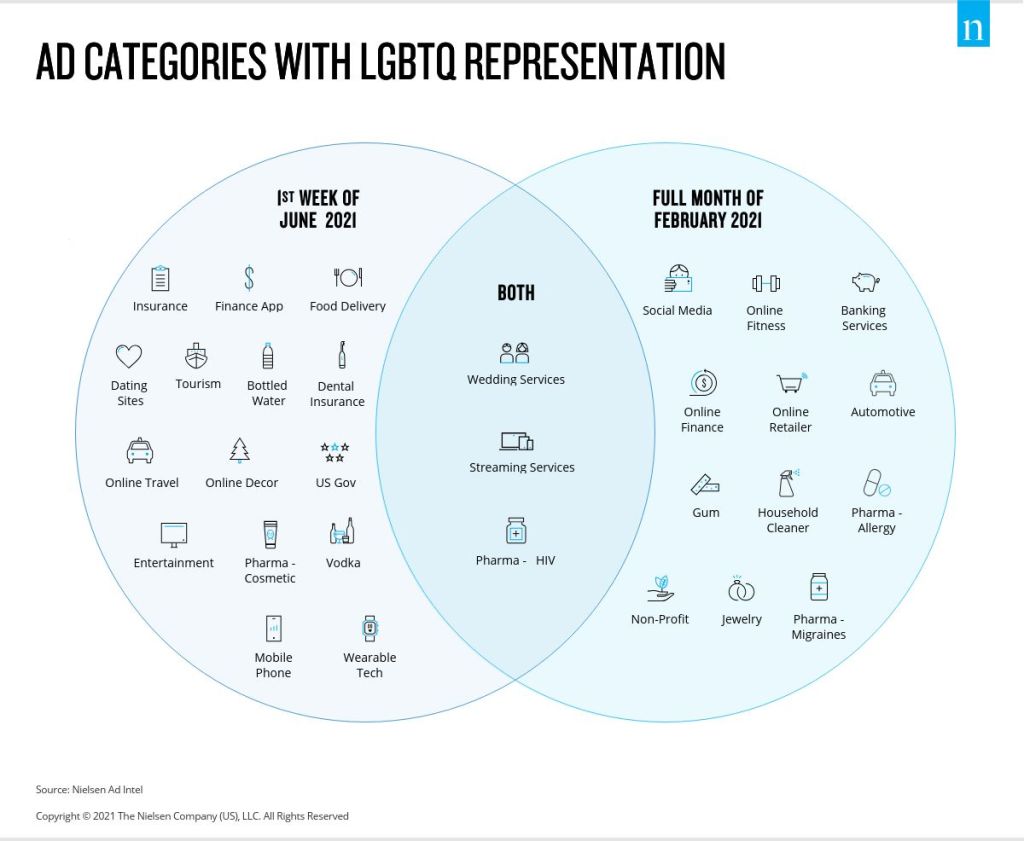
The progress made since the historic Stonewall Riots that inspired Pride to the mainstream parades and marches of today are changes worthy of celebration. But the fight continues, and media has a critical role to play—from more nuanced targeting to increasingly diverse storytelling on TV. As many content creators across television embrace this opportunity for representation, it’s no surprise that two of the top advertisers (based on number of unique ads) featuring LGBTQ+ representation in February were streaming services.
In che modo i pubblicitari possono evitare l'approccio del sapore del mese per coinvolgere i consumatori e gli alleati LGBTQ+?
Start with a commitment to ongoing and long-term interactions with the LGBTQ+ community—not just promotions during June. Today’s savvy consumers are even more wary of superficial brand behavior after a year that upended the status quo. Brand messaging once a year won’t be enough if you really want your brand to break through. Working with media that’s focused on the community, like Revry, is one way to maintain engagement year round.
"Noi di Revry non solo vediamo il valore della comunità LGBTQ+ tutto l'anno, ma lo viviamo. Conosciamo l'impatto sul pubblico queer e sui consumatori che cercano una rappresentazione accurata e ricca di sfumature nei contenuti. E conosciamo il valore che il nostro pubblico rappresenta per i marchi che investono nel rivolgersi alla nostra comunità con rispetto e umanità".
Damian Pelliccione, cofondatore e CEO di Revry
Ensure that your brand messaging is authentic to what matters to LGBTQ+ people—like equality, community wellbeing, culture and policy. In a recent GLAAD study, senior management at ad agencies supported featuring LGBTQ+ people in campaigns, but felt that their teams lacked the expertise and knowledge to get the representation “right,” a disconnect that may be driving reluctance to expand LGBTQ+ inclusive brand messaging. Agencies and advertisers can work to close this gap by engaging with organizations like GLAAD and empowering LGBTQ+ business resource groups in their companies to educate their colleagues.
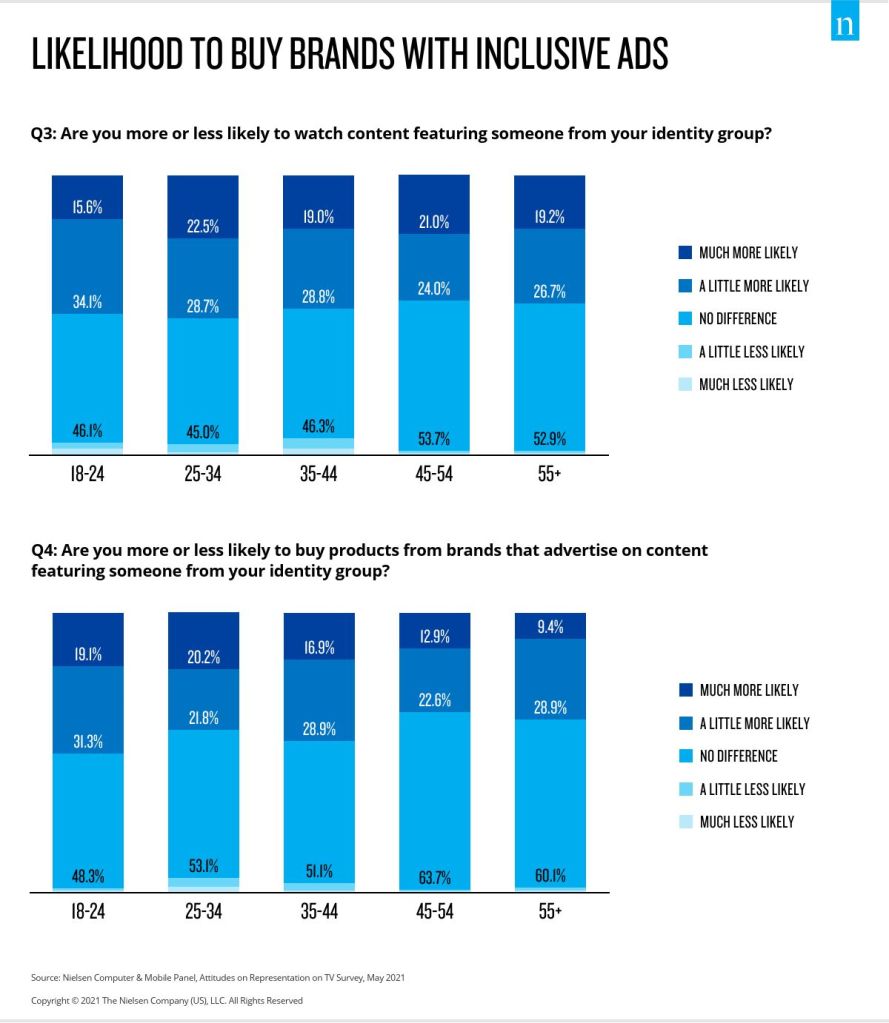
Next, build diversity into your business strategy. Brands must understand that intersectional diversity isn’t a special summer event, it’s our new normal. Not only is Generation Z the most racially and ethnically diverse generation in the U.S., one in six adults in the Gen Z age group identify as a lesbian, gay, bisexual or transgender. Nielsen data shows young people expect the media and brands they engage with to embrace a standard of representation and inclusion true to their lived experience. In Nielsen’s recent Attitudes on Representation on TV survey, half of the respondents aged 18-24 said they were more likely to watch content featuring someone from their identity group and more likely to purchase from brands that advertise in that inclusive content.
Traditional television content and ads aren’t the only place LGBTQ+ audiences are looking for authentic representation. Brands should also work to deepen digital connections—it’s where LGBTQ+ people have created lasting allies and a borderless sense of community. Streaming and sharing video content makes digital engagement a must for connecting your brand to LGBTQ+ consumers. LGBTQ+ usage of YouTube alone outpaces the general population by more than a third and these consumers are more likely to be heavy social media users—particularly for visually driven ad-supported platforms like Instagram. There are LGBTQ+ people in every community every day of the year, and your ad strategy should reflect that.