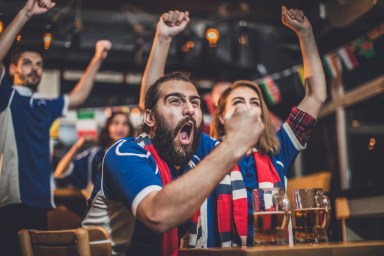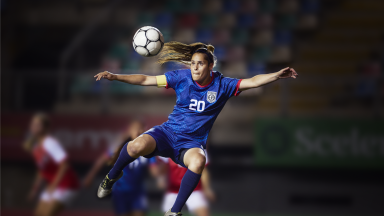
Le donne rappresentano più della metà della popolazione statunitense, ma stanno ancora lottando per l'uguaglianza nel mondo dello sport, dove la discriminazione di genere è fin troppo comune. Di recente, abbiamo assistito a un esempio molto pubblico e doloroso, durante il Mese della Storia delle Donne, della netta disparità di trattamento tra le atlete e gli atleti nel torneo di pallacanestro NCAA. È difficile capire come si possa ancora oggi trascurare di fornire alle studentesse-atlete le attrezzature e le strutture adeguate, soprattutto durante il più importante torneo del loro sport. Purtroppo, sembra che il sessismo nello sport sia radicato fin da quando i nostri figli praticano sport giovanili. Questa iniquità è anche istituzionalizzata: dal modo in cui definiamo ciò che si qualifica come sport alle immagini utilizzate per rappresentare le atlete, alle disparità nelle strutture e nel sostegno alle atlete.
As superstar athlete and World Cup champion Megan Rapinoe testified to Congress, “One cannot simply outperform inequality or be excellent enough to escape discrimination of any kind.” As a mother of a son and a daughter, this inequality hit very close to home just last week. Up until two weeks ago, in my state of California, all youth sports, which were prohibited for nearly a year, were permitted to return. All sports, that is, except for one female-dominated sport: cheer. While my son was able to get back on the field and enjoy his sport, I, alongside many other concerned parents, had to continue to advocate at the state level for equity for cheer athletes. We were successful, but why did we even have to fight for recognition and equal treatment for these athletes? Women and girls in sports should not be an afterthought.
It is disheartening to see that the fight for equality for women’s sports continues beyond grade school, as collegiate athletes in the NCAA Women’s Basketball Tournament recently experienced firsthand. Like many of you, I recently saw the viral video from University of Oregon sophomore forward Sedona Prince showing the weight room facilities provided for the female players at the basketball tournament compared with the facilities provided for the men. The women’s weight room consisted of a single set of dumbbells and some yoga mats, while the men’s weight room was stocked with state-of-the-art training equipment, rows of weights, and workout machines. Her TikTok video was further socialized on Instagram and Twitter and now has more than 20 million views.
L'indignazione è stata rapida, in quanto molte persone si sono affrettate a criticare la palese iniquità di queste atlete, ma i marchi sono intervenuti ancora più rapidamente. Non solo le celebrità, i giornalisti sportivi e i fan hanno chiesto di correggere la situazione, ma anche le aziende sono intervenute. Marchi del fitness e della vendita al dettaglio come Orange Theory, Dick's Sporting Goods e Tonal hanno risposto per sostenere queste atlete (che hanno una forte influenza sui social media) con attrezzature il giorno successivo e si sono offerti di mettere a disposizione strutture di allenamento adeguate. Poco dopo, la NCAA ha riconosciuto questo terribile errore di valutazione e ha installato una sala pesi femminile completamente funzionale, accompagnata da scuse.
These brands understand the power of the moment and of female athletes. Research from Nielsen Sports illustrates the power female athletes hold as social media endorsers. Fans like to buy products and services that their favorite athletes endorse on social media. When brands partner with athletes to embrace their power and advocate for equity, they can enact change as well as accountability in sports institutions. That’s a winning play for brands—fully embracing the power of female athletes, while proactively building equity in women’s sports and not just in response to a crisis.
There are several fundamental truths here that brands need to embrace: social media is powerful; female athletes are powerful influencers; and consumers are asking more from brands when it comes to social responsibility. For example, a global Nielsen Fan Insights study reveals that 47.5% of respondents have a greater interest in brands that have been socially responsible and “do good.” The good news is that some brands are taking notice and recalibrating business and marketing models to meet consumers’ changing needs in a new era of sports sponsorship. The brands stepping in to act on the values they espouse as an organization are a perfect example. Brands, including leagues, teams, owners, and even school districts, must address changing consumer and social demands and their female athletes’ needs by operating with equity in women’s sports.
Maggiori opportunità portano a un maggior numero di spettatori
The weight room in San Antonio isn’t the only place where we need to see change. While we’re seeing progress in how women are represented on television in scripted content, we have not seen the same visibility in women’s sports. This isn’t for lack of women’s sporting events or even viewer interest, but rather the relative lack of access to women’s team sporting events being broadcast and promoted on TV compared with men’s events. We know this needs to change, but it is a catch 22. Far fewer women’s sports are being broadcast, and when they are, games are often carried on difficult to find, smaller outlets, and are under-promoted, naturally resulting in smaller audiences. This overall lack of investment and promotion on television negatively affects audience draw, and therefore ROI for advertisers and sponsors. This lower brand investment is being used to justify disparities in resources for women’s sports. And the cycle continues.
La buona notizia è che sembra esserci un cambiamento di tendenza. La copertura del torneo di pallacanestro femminile NCAA di quest'anno è una delle più ampie della sua storia grazie all'espansione della copertura di ESPN, che finora ha raddoppiato la portata del pubblico del primo turno del torneo femminile rispetto a quello del 2019.
Along with the gripping game play, the increase in reach is most likely attributed to the number of games actually being aired. Round 1 of the tournament in 2019 was exclusively broadcast on ESPN2, which aired just nine game windows. This year’s NCAA women’s games have been on ABC, ESPN, ESPN2 and ESPNU, and every single one of the 32 games has been aired in round 1. When audiences have access to women’s sports, they tune in. Female athletes deserve the facilities, equipment and support they need to thrive. While the men’s tournament has seen multi-network coverage since 2011, the women’s tournament is finally seeing increased coverage, with 2021 marking the first time the women’s tournament has been on network TV—and not just on cable—in decades. Because that viewing opportunity exists, more people are watching. It is time women’s sports get the investment, coverage and support they deserve. Advertisers should take note: A growing fan base means a bigger audience.
Sono passati quasi 50 anni da quando la legislazione sul Titolo IX ha concesso alle donne pari opportunità di praticare sport. Ma la legislazione impone anche la parità di trattamento tra studenti-atleti maschi e femmine, dalle attrezzature alle strutture per le competizioni, dalla pubblicità alle promozioni e altro ancora. Man mano che un numero sempre maggiore di marchi si fa paladino dell'equità per gli sport femminili e che le atlete diventano più influenti come testimonial dei marchi, la mia speranza è di vedere meno disparità nel tempo di gioco, nelle strutture, nelle partnership con i marchi e nella copertura degli sport femminili sullo schermo. E che per le future atlete, l'equità per gli sport femminili sarà un gioco da ragazzi.