Indipendentemente dallo sport, l'amore dei tifosi per il gioco e per la loro squadra preferita è profondo. Questo amore alimenta le tradizioni familiari, le rivalità comunitarie e le ore di sintonizzazione. È anche un amore che è centrale nella cultura americana. Ma cosa succede quando questo senso di connessione va a scapito di una cultura o di un patrimonio che ha sopportato secoli di danni in nome dell'America? Per molti nativi americani, l'appropriazione di simboli sacri e la propagazione di stereotipi sono stati un fatto normale negli sport americani a livello professionale, collegiale e scolastico. Ma molti tifosi di oggi sostengono che le cose non devono rimanere così.
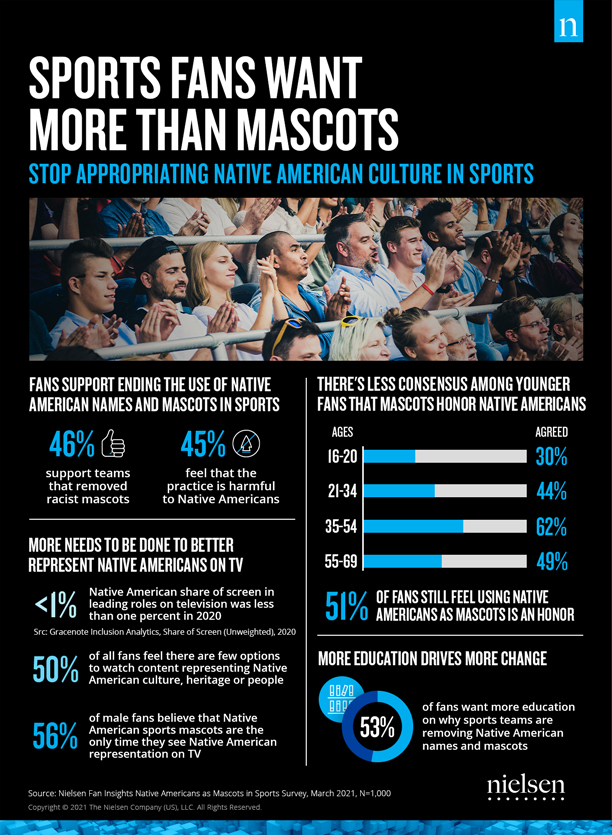
Fans applaud the shift away from the appropriation of Native American culture as mascots. In fact, a recent Approfondimenti sui fan Nielsen survey in collaboration with IllumiNative found that 46% of respondents believe teams are doing the right thing by changing their names and stopping the use of culturally insensitive mascots. For example, after years of pressure, the Washington Football Team finally retired the use of its former name and logo in 2020. The Cleveland Indians made a similar move at the start of the 2019 baseball season when it stopped using its former mascot, Chief Wahoo.
But 45% of fans want sports teams to do more than just stop using culturally insensitive mascots and names. They want them to end the appropriation of Native American culture as well, citing the harm it does to the community and the damaging emotional effects on Native Americans. And much of the appropriation starts in school sports, which the American Psychological Association says establishes an unwelcome and oftentimes hostile learning environment for American Indian students that affirms negative images/stereotypes that are then promoted in mainstream society.
Anche la risposta all'evoluzione del sentimento dei consumatori si sta evolvendo: i Cleveland Indians hanno fatto un passo avanti rispetto al ritiro della vecchia mascotte, annunciando nel dicembre dello scorso anno che cambieranno il loro nome, percepito come più neutrale rispetto alla precedente mascotte. L'evoluzione graduale del personaggio della squadra riflette come i consumatori siano passati dall'intolleranza per le mascotte offensive all'intolleranza per qualsiasi appropriazione culturale.
In some instances, sports organizations and teams had good intentions, using Native American culture and mascots to honor the community. Crystal Echo Hawk (Pawnee), founder and CEO of IllumiNative, explains that what is intended as an honor can often have a demoralizing effect. “Native Americans are the only group being used as sports mascots, depicting our Native American communities not as people, but as ‘other’. It’s dehumanizing and objectifying.”
Not only do fans recognize that sports mascots are the primary means by which Native American cultures are represented on television, 50% of respondents in our recent survey acknowledged that options to see Native American culture or people are represented on TV were limited—especially in contemporary roles and not just historical context. Outside of team names and logos, Native peoples’ share of screen stands at just 0.27%—a figure about one-sixth the presence of Native Americans in the U.S. population today. Increased news coverage has broadened awareness of ongoing policy issues such as voting access and land rights, but when audiences seek out scripted content on TV that includes Native Americans, representation of Native American talent in lead roles is less than 1% in multiple TV genres:
More needs to be done to expand representation of Native Americans on their terms. And when it comes to championing social issues, sports are leading the way. Nielsen Sports Managing Director Jon Stainer says the changing tide is another opportunity for pro sports teams: “Sports fans want more from the teams they love—beyond watching their favorite teams play their best, fans want their teams to represent their values. The racial reckoning in the U.S. has created a greater awareness, and sports fans expect their favorite teams to stand up for underrepresented communities and take a stand against cultural appropriation of Native Americans.”
Trading cultural appropriation in sports for the visibility that Native Americans deserve—representation that is defined by and not dictated to Native peoples—is a long overdue way to truly honor this underrepresented population.