The word podcast was added to the Oxford English Dictionary back in 2005, but the term had yet to gain much traction in the media industry—as well as with the average consumer. Fast forward 16 years, and podcasting has blossomed into a burgeoning industry that provides brands with an opportunity to engage with a growing base of consumers that are very receptive to the engagement.
The transformation certainly didn’t happen overnight, but the rise in popularity of podcasts over the past six-plus years has effectively changed the landscape of the entire market. In addition to attracting rampant celebrity involvement and fueling original TV content, podcasts are attracting big ad dollars, with the Interactive Advertising Bureau (IAB) predicting that ad revenue will hit $2 billion by 2023, well above the $842 million generated last year.
L'aumento degli introiti pubblicitari è dovuto anche all'ampiezza del pubblico che oggi ascolta i podcast. Si tratta di un cambiamento fondamentale, soprattutto perché gli inserzionisti guardano al podcasting in cerca di nuove opportunità. Oggi, quasi la metà (49%) degli ascoltatori di podcast negli Stati Uniti è costituita da utenti poco esperti, presumibilmente nuovi al mezzo: persone che ascoltano da una a tre volte al mese. Si tratta di un notevole contrasto rispetto al tipico ascoltatore di podcast di cinque o dieci anni fa, quando la maggior parte degli ascolti proveniva da persone che erano più propense ad ascoltare ogni singolo episodio delle loro testate preferite, episodi che spesso vengono pubblicati una volta alla settimana.

L'evoluzione del coinvolgimento nei podcast negli ultimi anni mette in evidenza due importanti linee guida:
- L'interesse dei consumatori per contenuti nuovi e coinvolgenti provenienti da tutto il panorama mediatico continua a crescere e i contenuti dei podcast si sono dimostrati un'opzione interessante tra le diete mediatiche di milioni di americani, soprattutto durante la pandemia globale COVID-19.
- The pandemic paused the growth of heavy podcast listeners. With revised lifestyles and schedules over the past year, this isn’t surprising. Yet while the percentage of heavy listeners declined slightly last year, we’re now seeing it increase, rising from 25% earlier this year to just under 30% as of May. So we know there is a segment of the population that was very engaged with podcast content before the pandemic arrived, and we expect that audience to increase its engagement when the conditions (or content) are right.
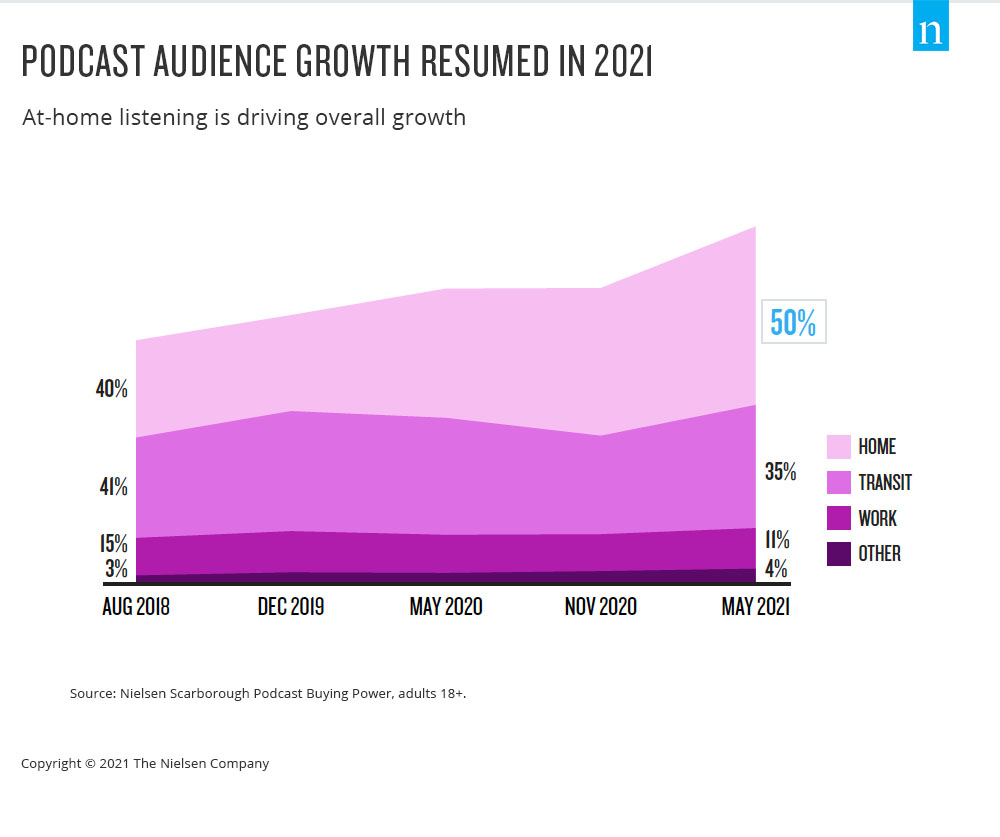
Importantly, the pandemic has not had a negative impact on overall podcast engagement. While listener growth flattened somewhat during the second half of last year, it has ramped up notably in 2021, largely due to an increase in at-home listening, which is attributable to light listeners checking out the medium. The rise in at-home listening is also somewhat counter to historical podcast engagement, and again, speaks to the transformation of industry to a broader audience. According to Nielsen Potere d'acquisto dei podcast data, the percent of the adult U.S. population listening to podcasts has grown more than 40% in the past three years.
The increasing appeal of podcasts to general audiences is exactly why brands and agencies need to be tracking engagement with them and leveraging the opportunities in their marketing strategies and campaigns. And given the wealth of data about podcast listeners, brands have the ability to engage with listeners who are the most receptive to learning about their products and services.
For additional insights, download our latest Podcasting Today report.