TV audiences continue to cut cords and embrace streaming. As of May 2023, the percentage of U.S. TV homes with cable had fallen to 46.4%1, down 12% in a single year. With significantly more choice available on streaming platforms, the appeal is clear, but the wide dispersal of content has made it cumbersome for audiences to find something to watch.
Menurut Survei Konsumen Konten Streaming Nielsen pada Juni 2023, penonton sekarang menghabiskan rata-rata 10 setengah menit untuk mencari sesuatu untuk ditonton, meningkat dari hampir tujuh setengah menit pada awal 2019. Lebih buruk lagi: 20% penonton mengatakan bahwa mereka tidak tahu apa yang harus ditonton sebelum mulai mencari, tidak dapat menemukan sesuatu untuk ditonton, dan kemudian memutuskan untuk melakukan hal lain.
Ada dua faktor utama yang menghambat penemuan konten di dunia TV yang mengutamakan streaming saat ini:
- Beragam konten dan sumber konten yang luar biasa
- Metadata media yang terbatas
Let’s dive into each of these.
Lanskap konten video saat ini sangat luas
In just a few short years, choice and engagement with it have exploded. When Nielsen launched The Gauge in May 2021, streaming accounted for 26% of total TV usage, and only five streaming services were independently reported within it. In July 2023, streaming had grown to account for 38.7% of total TV use and 11 individual services were independently reported2. But that’s just the tip of the iceberg.
Globally, TV audiences now have more than 2.7 million individual video titles3 to choose from, and 86.7% of them are available on streaming services. There was a time when audiences had just a small handful of streaming services to choose from, but now Gracenote Global Video Data has a record of nearly 40,000 distinct channels and streaming video sources4 for audiences to choose from.
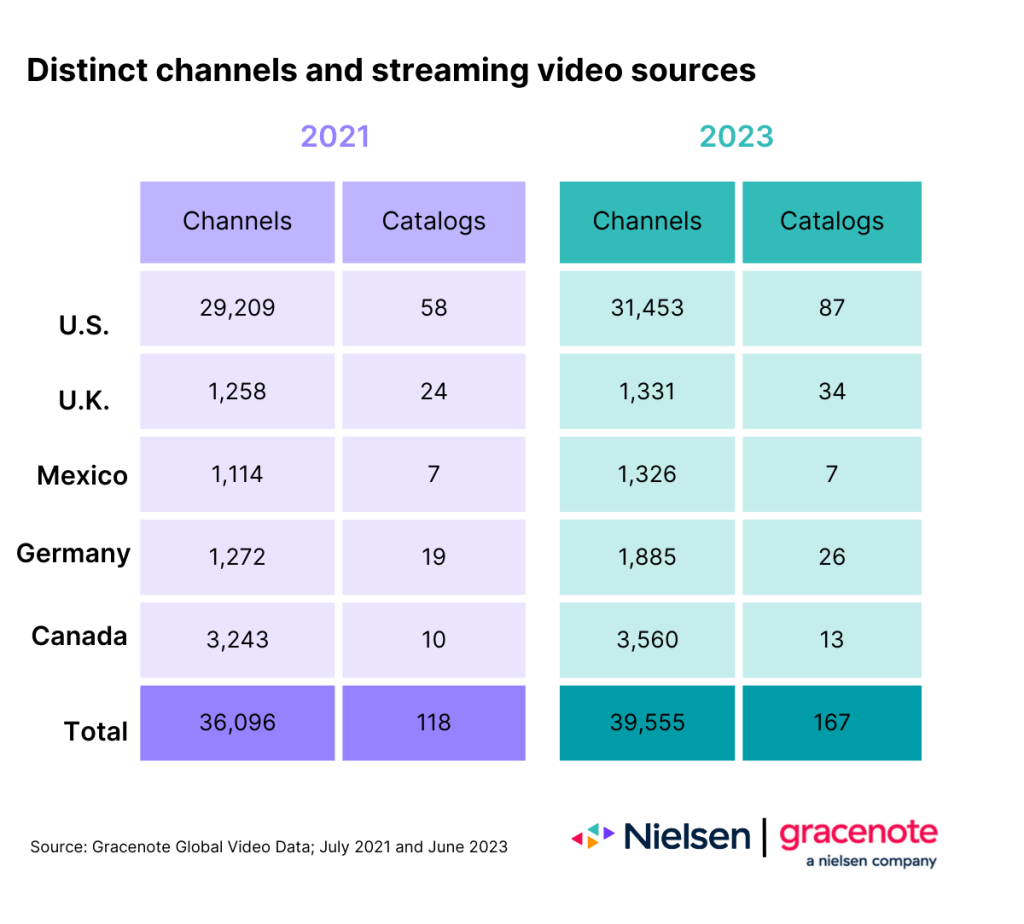
Jika digabungkan, beragam judul video dan layanan streaming yang menawarkannya telah menjadi terlalu banyak bagi banyak orang untuk menavigasinya. Penonton memiliki semua kendali, tetapi jika mereka tidak melihat sesuatu yang mereka sukai, pilihan lain hanya dengan sekali klik.
Metadata yang diperkaya membantu penemuan konten modern
Ketika sebuah acara TV atau film tersedia di siaran tertentu atau saluran kabel dan dijadwalkan pada waktu tertentu, metadata yang terkait dengannya tidak perlu menyertakan lebih dari sekadar informasi program yang paling dasar: judul, pemeran utama, genre, peringkat, waktu tayang, dll. Di tengah pilihan yang tersedia saat ini, metadata tingkat dasar ini tidak mampu membantu penonton menemukan sesuatu yang mereka minati secara pribadi. Bayangkan saja, misalnya, berapa banyak program yang termasuk dalam genre drama.
Untuk memberikan kemampuan kepada penonton agar dapat melakukan perjalanan penemuan konten yang sukses, banyak kreator, distributor, dan platform memanfaatkan Gracenote Video Descriptors-metadata granular yang memberikan tampilan yang jauh lebih lengkap untuk sebuah acara TV atau film.
To illustrate, consider the Showtime drama series The L Word. During its original run from 2004-2009, audiences simply had to check a schedule and tune to the network to watch the program. Today, it’s one of the more than 2.3 million titles available to global streaming audiences. This reality highlights the importance of personalization and the user experience within individual services.
Available on many services globally, the 73 episodes in The L Word might not be featured in a service’s recommendation carousel or called out among the many other programs it offers. To help connect this program with viewers that might be interested in watching it, there are 31 individual descriptors that provide more nuanced, in-depth information that is supplementary to the core, foundational program information.
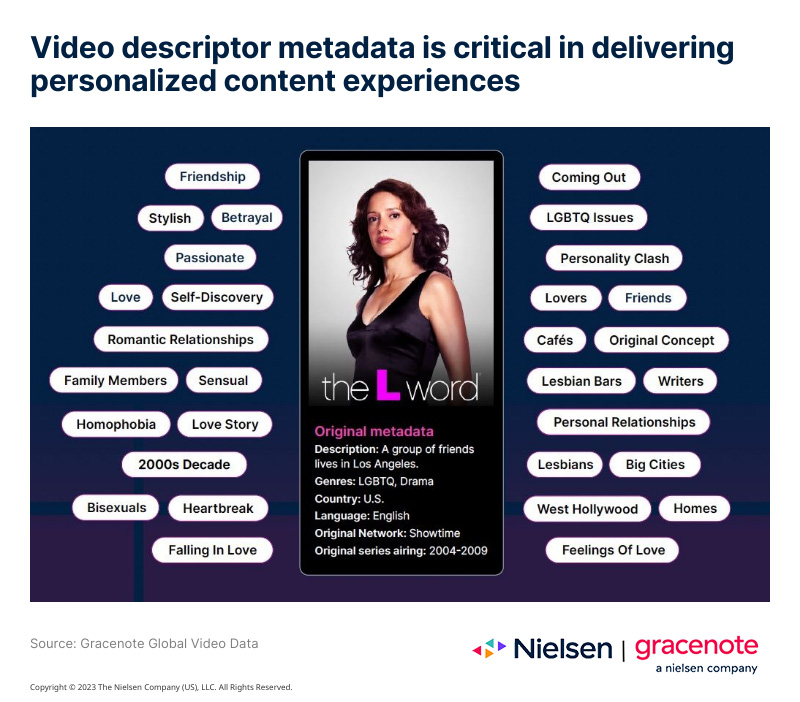
Selain mendukung penemuan konten, metadata granular akan menjadi sangat penting karena distribusi konten akan beralih dari pengaturan lisensi eksklusif. Layanan apa pun yang menawarkan konten yang sama dengan layanan pesaing perlu bersandar pada sesuatu selain konten untuk menarik dan membuat audiens tetap terlibat.
While the growing range of free ad-supported television (FAST) channels largely contain content that can be found elsewhere, the trend is filtering into traditional streaming services as well. HBO, via Warner Bros. Discovery (WBD), for example, recently broke character by licensing the distribution rights to several of its high-profile original titles to Netflix—a move that followed WBD’s announced FAST partnership with Roku and Tubi involving a handful of titles that were previously exclusive to HBO.
"Saat ini, ada banyak sekali pengalaman tetapi sangat sedikit personalisasi," kata Filiz Bahmanpour, Wakil Presiden Produk di Gracenote, sebuah perusahaan Nielsen. "Banyak yang mengatakan bahwa layanan FAST akan membutuhkan konten eksklusif, pemrograman orisinal, dan pemasaran untuk bisa sukses, tetapi menurut saya pengalaman pengguna dan personalisasi akan menjadi pembeda yang nyata. Semua layanan streaming, termasuk FAST, perlu mendapatkan konten dan iklan yang tepat untuk pengguna yang tepat melalui merchandising, kurasi, dan ilmu data."
A clear shift is underway within the streaming industry. Subscriber acquisition is no longer the key to long-term growth, especially as media research house Digital TV Research recently forecasted that global FAST dan ad-supported video on-demand ad revenue will hit $109 billion by 2028. With the content landscape widening, complemented by a shift away from content exclusivity, the burden of audience engagement will continue to shift to individual platforms and services.
For additional insight, download our latest State of Play report, which focuses on the importance of data-driven personalization and streaming content discovery.
Catatan
1 Nielsen National TV Panel, May 15, 2023
2 Services are independently reported once they account for at least 1% of total TV usage
3 Data Video Global Gracenote
4 As of June 2023. Each channel represents a unique source of linear programming, such as ABC and Flicks of Fury, an original channel on Pluto TV. Each streaming video source represents an individual provider, such as Netflix and Disney+.