A lasting effect of digitization and the pandemic has been the proliferation of consumer choice. From being able to purchase cars and furniture online, to the pandemic’s effect of pushing more shopping into infinite virtual shelves, consumers are facing more options. That vast choice and supply chain strain have affected brand loyalty to some degree, but not to the degree that you might think. And for marketers seeking to grow their brand through new customer acquisition, all that choice means a lot more competition for new buyers.
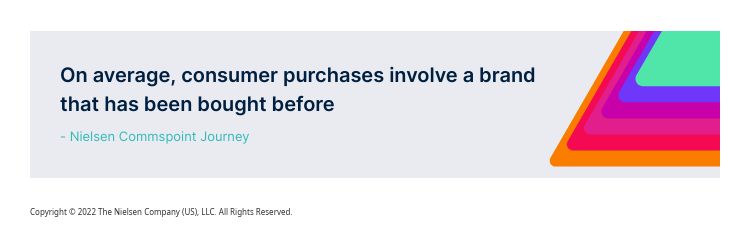
Though wooing new customers is a major focus for marketers, consumers are not inclined to start a relationship with a new brand. Research from Nielsen Commspoint Journey, which helps clients understand the attitudes, motivations and behaviors that lead to purchases, shows that 85% of consumer purchases in over 80 categories involved a brand the consumer had tried in the past. High levels of repeat purchasing might be expected in categories where buying behavior is highly routinized, and consumers are shopping on auto-pilot. But even in high-consideration categories, defined by purchase journeys that are typically longer than a week, hesitation with trying a new brand is still high. Nielsen data shows that in these high-consideration categories, 75% of consumers still buy from a brand they’ve bought in the past.
Salah satu penjelasan yang mungkin untuk pembelian berulang yang tinggi adalah bahwa bagi konsumen, mencoba merek baru adalah proposisi yang berisiko, dan konsumen berusaha untuk menghindari risiko tersebut. Data Commspoint Journey menunjukkan bahwa hampir seperempat (22%) konsumen AS melaporkan bahwa mereka merasa khawatir atau gugup saat melakukan perjalanan pembelian untuk membeli merek baru. Angka tersebut dua kali lipat lebih tinggi dari tingkat kecemasan yang dirasakan konsumen (11%) saat mereka membeli kembali merek yang pernah mereka beli sebelumnya. Dan tidak mengherankan, konsumen lebih cemas dalam kategori di mana biaya menjadi faktor utama, seperti di bidang teknologi, otomotif, dan layanan keuangan.
Merek dapat mengurangi keraguan konsumen dengan membangun kepercayaan konsumen. Kepercayaan merupakan inti dari setiap hubungan merek-konsumen, dan bahkan lebih penting lagi untuk hubungan baru. Menurut data Nielsen Commspoint Journey, orang yang sedang mempertimbangkan merek baru memiliki kemungkinan 25% lebih besar dibandingkan konsumen pada umumnya untuk mendeskripsikan hubungan merek yang ideal sebagai hubungan yang mencakup kepercayaan.
Consumers evaluate multiple sources of information along their purchase journeys to assess a brand’s trustworthiness. A brand’s reputation, reflected in reviews and word of mouth, certainly carries significant weight. Nielsen’s U.S. Trust in Advertising survey found these sources to be among the most trustworthy among more than 20 sources considered. But it might surprise marketers to know that ads are cited more often than reviews or recommendations as useful or influential resources along the journey. According to Commspoint Journey, just 18% of new brand triers recall using reviews in their journey. By comparison, 30% used recommendations and 45% say they found advertising useful or influential.
Given the critical role of advertising, marketers should give careful thought to where they place their ads. When building trust is at stake, our U.S. Trust in Advertising survey found that marketing investments like sponsorships, newspaper ads and ads before movies were the among most trustworthy. In contrast, ads that appeared in mobile text, online banners or social media were viewed as less trustworthy. And Influencers, which blend elements of sponsorship and social, were seen as about average relative to other marketing investments.
Merek yang memiliki audiens spesifik yang ingin mereka libatkan akan menemukan nilai media dalam memahami saluran mana yang paling dipercaya oleh audiens tersebut. Konsumen Gen X, misalnya, adalah yang paling mempercayai iklan di radio, sementara para manula jauh lebih mempercayai iklan dari email yang mereka langgani.
Memilih saluran yang meningkatkan kemungkinan membangun kepercayaan dengan konsumen memiliki bobot yang lebih besar untuk kategori dan industri tertentu. Konsumen paling tidak mempercayai iklan politik, farmasi, dan layanan keuangan, yang berarti pengiklan di bidang-bidang ini harus memilih saluran pemasaran yang paling mungkin menimbulkan kepercayaan konsumen.