Mengadopsi pola pikir yang selalu siap untuk perencanaan media adalah kunci untuk menavigasi perubahan
Bahkan sebelum pandemi berdampak pada perencanaan media, perencanaan media sudah perlu diulang. Untuk merek yang terpaksa mengurangi anggaran selama 18 bulan terakhir, menavigasi perencanaan media akan melibatkan tingkat ketidakpastian di masa mendatang. Kebutuhan untuk kembali ke jalur yang benar-dan secepat mungkin-akan menjadi prioritas menjelang tahun 2022. Penting bagi para pemasar untuk menyadari bahwa pendekatan yang biasa digunakan dalam perencanaan media akan menjadi kurang relevan dan efektif selama pandemi yang sedang berlangsung dan di dunia pasca pandemi. Di sinilah letak tantangannya; hentikan kebiasaan untuk hanya melakukan perencanaan sekali atau dua kali dalam setahun, dan segera adopsi pendekatan baru yang selalu aktif.
Nielsen recently identified three pillars of effective media planning that marketers should focus on in order to thrive in an uncertain future—focusing on the people they’re trying to reach, connected planning and continuous planning. While each of the three pillars work deliberately together, enabling continuous planning into a brand’s strategy may give it the quickest bang for its buck—and help brands get back on track after months of ongoing disruption.
Kurangnya kepastian berarti perencanaan sepanjang tahun diperlukan
Dengan mempertimbangkan volatilitas pasar saat ini dan masa depan, sekaranglah waktunya untuk mengadopsi proses perencanaan berkelanjutan. Langkah-langkah untuk perencanaan berkelanjutan yang efektif meliputi:
Ketika disrupsi terjadi di awal pandemi, merek yang gesit lebih siap untuk melakukan pivot guna memenuhi kebutuhan dan minat konsumen yang terus berubah. Ke depannya, masa-masa "atur dan lupakan" telah berlalu, dan perencanaan dalam siklus 12-18 bulan kemungkinan besar tidak akan efektif di masa mendatang. Sebaliknya, pemasar harus terus membuat perencanaan sepanjang tahun untuk mencerminkan kebutuhan konsumen yang terus berkembang-yang memungkinkan proses berjalan lebih efisien dan sumber daya dialokasikan secara efektif. Perencanaan berulang-perencanaan yang melibatkan proses adaptasi saat proyek berjalan dan mengubah rencana jika diperlukan-dapat membantu merek memantau, melacak, dan menganalisis kinerja kampanye untuk mengidentifikasi peluang pengoptimalan, serta apa yang berhasil dan tidak berhasil. Hal ini memungkinkan pemasar untuk mengubah strategi mereka dengan cepat, berdasarkan umpan balik dari proses pemantauan dan perubahan ruang lingkup, anggaran, atau jadwal.
- Mengidentifikasi target audiens merek dan penggunaan media mereka: Dengan mengidentifikasi audiens, pengukuran atribusi dapat membantu pemasar memahami saluran mana yang digunakan konsumen dan iklan mana yang menciptakan keterlibatan.
- Tinjau pengeluaran kompetitif: Dengan pemahaman dasar tentang audiens target, pemahaman menyeluruh tentang bagaimana kompetitor membelanjakan uang iklan mereka adalah kuncinya.
- Optimize, plan for and project reach & frequency: Whether using a continuity approach, flighting or pulsing—a combination of both, when frequency increases at times when the additional messaging can have a solid impact—marketers can be more effective.
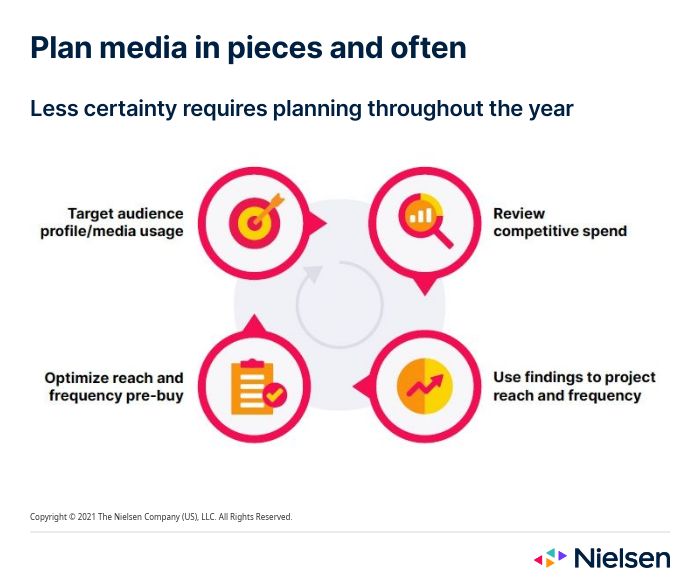
Dalam langkah-langkah ini, mendefinisikan target audiens merek dan memahami apa yang mereka lakukan-dan tidak membuat keputusan hanya berdasarkan apa yang disukai atau apa yang dilakukan pesaing-adalah kuncinya. Pemasar juga harus menjangkau target mereka untuk memahami perilaku baru. Dengan wawasan tentang audiens dan pengeluaran kompetitif, pemasar kemudian dapat memproyeksikan jangkauan dan frekuensi secara akurat.
Selain langkah-langkah tersebut, proses yang mapan juga harus memastikan bahwa sebuah merek mengoptimalkan sumber dayanya dengan lincah di pasar setiap saat. Namun, Survei Pemasaran Tahunan Nielsen menemukan bahwa 48% responden merasa sedikit atau sama sekali tidak percaya diri dengan kemampuan mereka untuk mengukur ROI. Dalam dunia media yang tidak menentu ini, para pemasar tidak dapat merefleksikan bagaimana kinerja anggaran mereka setelah sebuah taktik digunakan. Sebaliknya, untuk membuktikan efektivitas dan mengalokasikan sumber daya dengan cerdas, pemasar harus mengoptimalkan kampanye dengan menggunakan data hasil dalam penerbangan-yang juga akan memaksimalkan ROI.
Baik dilakukan secara manual atau melalui alat pembelajaran mesin, pemasar harus menjalankan skenario pengoptimalan dan menemukan efisiensi untuk menyiapkan merek untuk pra-pembelian, kemudian menerapkan apa yang telah dipelajari ke dalam aktivasi.
Lingkungan media berubah dan berkembang, dan merek harus terus beradaptasi agar dapat berkembang. Dalam beberapa bulan dan tahun ke depan, kemampuan beradaptasi akan tetap menjadi hal yang penting bagi merek di semua industri. Perencanaan media harus gesit dan lancar, sekaligus memungkinkan pemasar untuk melihat kembali ide-ide dari kuartal sebelumnya untuk membantu membuat keputusan ke depan. Dengan pola pikir perencanaan yang berkelanjutan, pengiklan dapat mempersiapkan diri untuk masa depan sebaik mungkin di masa-masa yang tidak menentu.
For additional insights, download our Rangkullah perubahan dalam perencanaan media Anda: 3 pilar efektivitas guide.