Dengan semakin banyaknya wilayah AS yang memenuhi syarat untuk mendapatkan vaksinasi, konsumen dan perusahaan mulai melihat adanya titik terang. "Basa-basi vaksin" mulai merasuki konferensi video, dan perusahaan serta konsumen mulai berbicara dan merencanakan masa depan pasca pandemi. Dan ketika kita melihat siapa yang paling bersemangat untuk maju, kelompok minoritas memimpin.
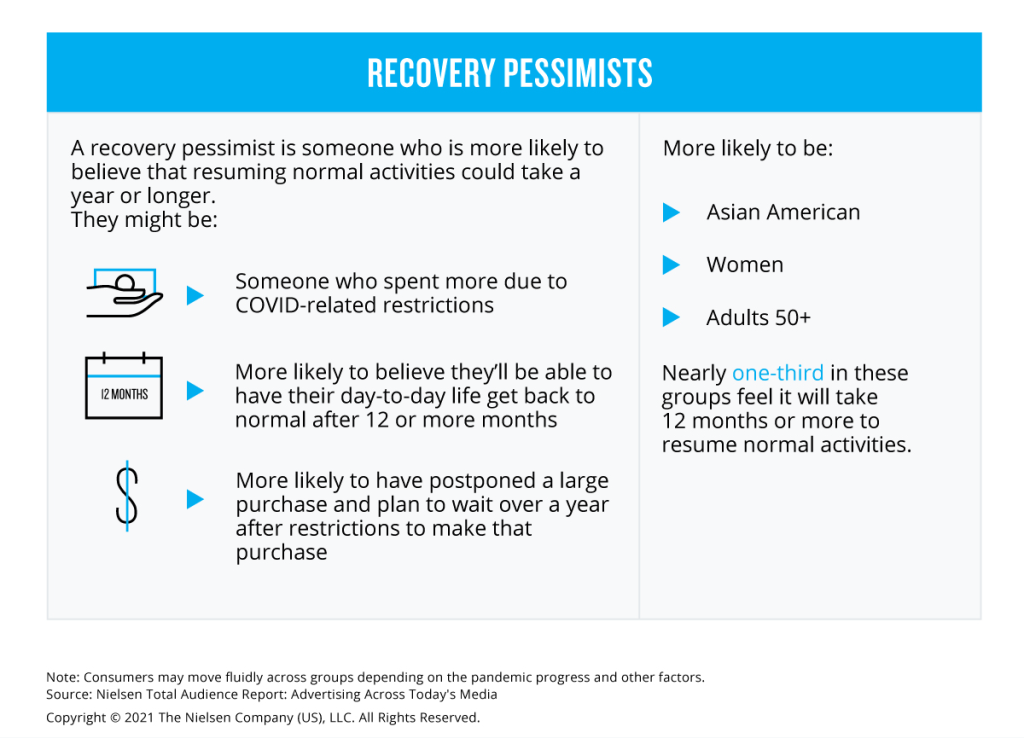
Early on in the pandemic, we saw how COVID-19 impacted different communities and industries unequally. As more states reopen and people resume “normal” activities, it’s clear that these communities and industries will bounce back at different tempos. Using data from the latest Nielsen Total Audience Report: Advertising Across Today’s Media, we’ve identified three primary consumer recovery groups: Recovery Optimists, Cautious Optimists dan Recovery Pessimists. While consumers who identify with these categories may change as the vaccine rollout progresses, age, gender and ethnicity are a few of the factors advertisers can consider when looking at who’s most optimistic and eager to spend.
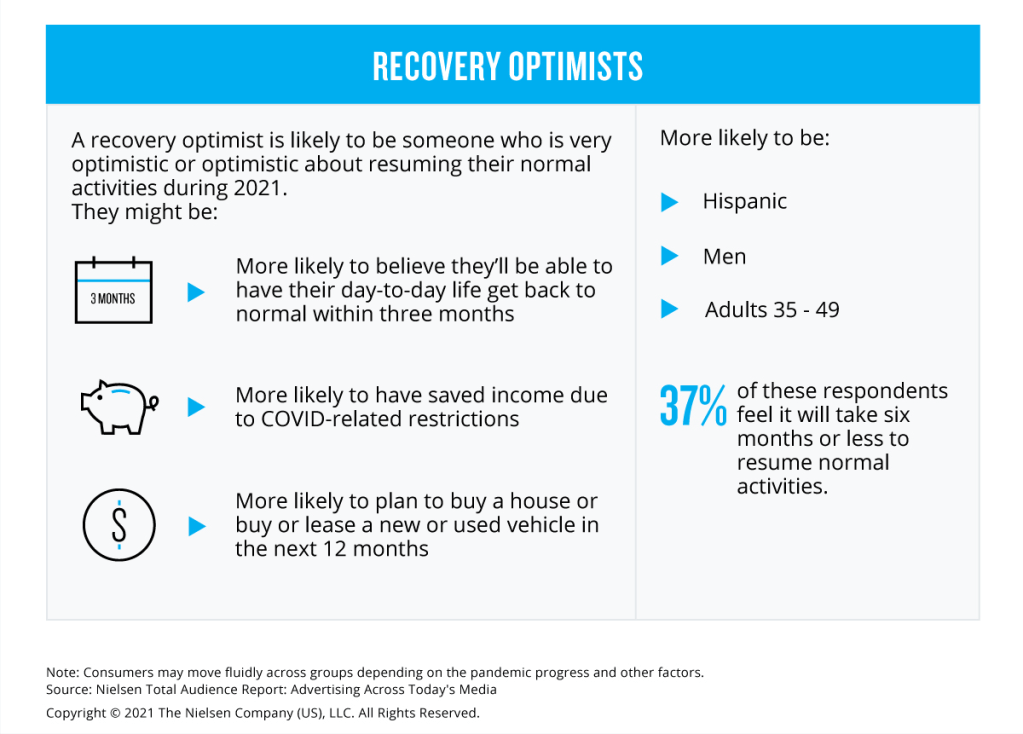
Despite research from the CDC showing that Black, African Americans and Hispanic or Latino persons are two to three times more at risk of COVID-related hospitalizations and death than their White, non-Hispanic counterparts, these consumers are among the most optimistic and eager to spend.
Based on the results from a recent Nielsen survey, Hispanic consumers are more likely to be Pemulihan Optimis. During COVID-19, these respondents reported that they were moderately impacted by COVID-related restrictions, with 44% saying they were able to save more compared with 39% of all adults 18+. Over half (53%) said they were able to make “major” purchases ($500+) during the pandemic compared with 43% of adults 18+.
Dalam 12 bulan ke depan, responden Hispanik mengatakan bahwa mereka 2x lebih mungkin untuk membeli rumah baru dibandingkan orang dewasa pada umumnya dan lebih mungkin untuk membeli atau menyewa kendaraan baru atau bekas. Konsumen ini paling ingin merencanakan atau memesan liburan (71%), makan di restoran (70%), dan mengunjungi kedai kopi/kafe (69%). Pengiklan dapat menjangkau kelompok konsumen ini saat menggunakan ponsel pintar mereka, di mana mereka menghabiskan lebih dari 18 jam seminggu untuk menonton video, streaming audio, dan jejaring sosial pada kuartal kedua tahun 2020.
Black consumers are more likely to be Cautious Optimists, because a larger percentage reported believing it’ll take longer to recover and have been more hesitant to make larger purchases during the past year. Black respondents indicated they were moderately impacted by COVID-related restrictions, with 52% saying they were able to save more income. Yet nearly six-in-10 indicated that they did not make a “major” ($500+) purchase in 2020, which is more than any other multicultural consumer group.
Setelah pembatasan dicabut, konsumen Afrika-Amerika mengindikasikan bahwa mereka siap untuk berbelanja. Mereka 1,3x dan 1,7x lebih mungkin untuk mengatakan bahwa mereka berencana untuk membeli atau menyewa mobil atau membeli rumah di tahun depan. Dalam skala pengeluaran yang lebih kecil, konsumen Afrika-Amerika sangat ingin pergi ke salon rambut/pangkas rambut atau kuku (72%), makan di restoran (66%) dan mengunjungi kedai kopi dan kafe (65%). Kabar baik bagi industri perjalanan, dua pertiga (64%) orang Afrika-Amerika tertarik untuk melakukan perjalanan dengan pesawat terbang, membuat mereka menjadi konsumen yang paling bersedia di antara konsumen multikultural lainnya.
Advertisers looking to engage with Black consumers should keep in mind the social activism and diversity pledges made over the last year, as well as how that translates into the omnichannel experience, which is especially relevant to this consumer group that over-indexes on time spent across TV, the computer and smartphones. For Optimis yang Berhati-hati, the messaging can be positive, but should not abandon health-safety considerations.
Many factors play into who falls into the Recovery Pessimists category, including confidence in vaccine information, protocol and ease of access. These individuals are more likely to have been significantly or severely impacted by the pandemic financially and could belong to more at-risk communities, are caretakers, or are managing additional burdens due to the pandemic. This includes women, who are more likely to be caretakers and take on household responsibilities as well as people who are 50+.
Pengiklan tidak boleh mengabaikan kelompok ini. Sebaliknya, mereka harus memahami bahwa konsumen ini mungkin membutuhkan lebih banyak jaminan dan promosi protokol keamanan kesehatan yang berkelanjutan. Kabar baiknya adalah meskipun orang-orang ini mungkin tidak siap untuk segera berbelanja, mereka cenderung menghabiskan lebih banyak waktu untuk melakukan aktivitas yang tidak berhubungan dengan sosial seperti menonton televisi dan streaming.
It’s important to note that these consumer groups are not static. The enhanced rollout of the vaccine program, successful re-opening of schools and sustained falling COVID-19 cases could improve the overall optimism of Recovery Pessimists and allow them to step into the Optimis yang Berhati-hati category. While set-backs and re-closures may downgrade consumer optimism.
For additional insights download the latest Nielsen Total Audience Report: Advertising Across Today’s Media or see past reports and trends on our Nielsen Total Audience Report Hub.