The next wave of technology and computing power is about to immerse retailers, manufacturers and marketers, shifting the way consumers discover, search, engage and buy. In our latest research, we examine the challenges and accelerators affecting how and when consumers around the world will engage with the myriad forms of emerging technologies primed to make their lives easier and more efficient.
Four Areas of Tech-Transformed Consumption
75% of consumers believe technology can provide solutions to help simplify their lives.
Amplified retail
Online grocery shopping penetration could increase by a further 20% (willing to use) to 87% in the next two years.
Augmented Reality
51% of consumers are willing to use artificial/virtual reality (A/VR) technology to assess products.
Virtual Assistants
In 2019, smart speakers grew 82%, to 208 million globally, and 42% of consumers are willing to embrace assistants to auto-order products.
Emerging Technology
Consumers are wary of payment technology and are unwilling to transact via implanted microchip (35%) or digital/cryptocurrencies (37%).
Prepare for the next wave of technology
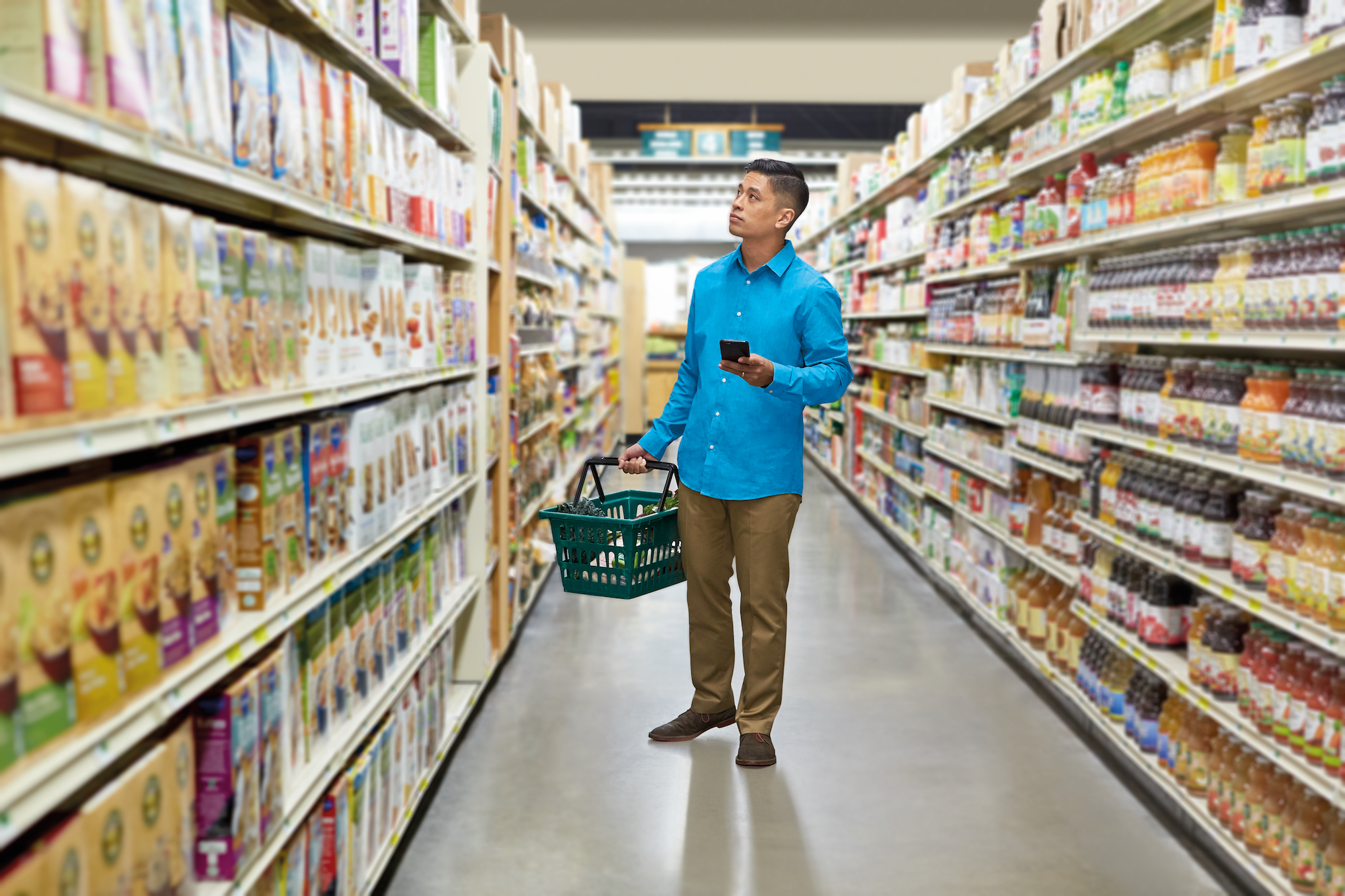
In the near term, consumers will continue to adopt and embrace online grocery shopping and convenience services. Additionally, seamless transacting services via automated payment services and mobile wallets will gain momentum. Most importantly, amplified retail experiences will become more common with the expansion of in-store navigation apps, electronic shelf beacons and automated checkout.
These building block technologies will set the stage for immersive, interactive, blended and augmented retail and brand experiences, powered by artificial intelligence. We predict that A/VR will become the biggest disruptor of the consumer journey. Already, they tip the scale in their ability to entice consumer purchases, and consumers prefer using these applications over visiting physical stores to try out real products. Not only will A/VR continue to provide consumers with risk-free shopping, but it will enable them to receive highly personalized experiences that will completely transform how they can engage with brands.
Enabled by 5G and artificial intelligence, the internet of things (IoT) will step out of infancy as virtual assistants advance from passive to predictive to carry out tasks that are more complicated than the ones they can execute today.
Meanwhile, we see regulatory, logistical and ethical hurdles ahead for some delivery, driving and payment technologies such as drones, autonomous cars, 3D printing, implanted microchips and cryptocurrencies.
Listen to the experts
Understand What Drives technology Adoption
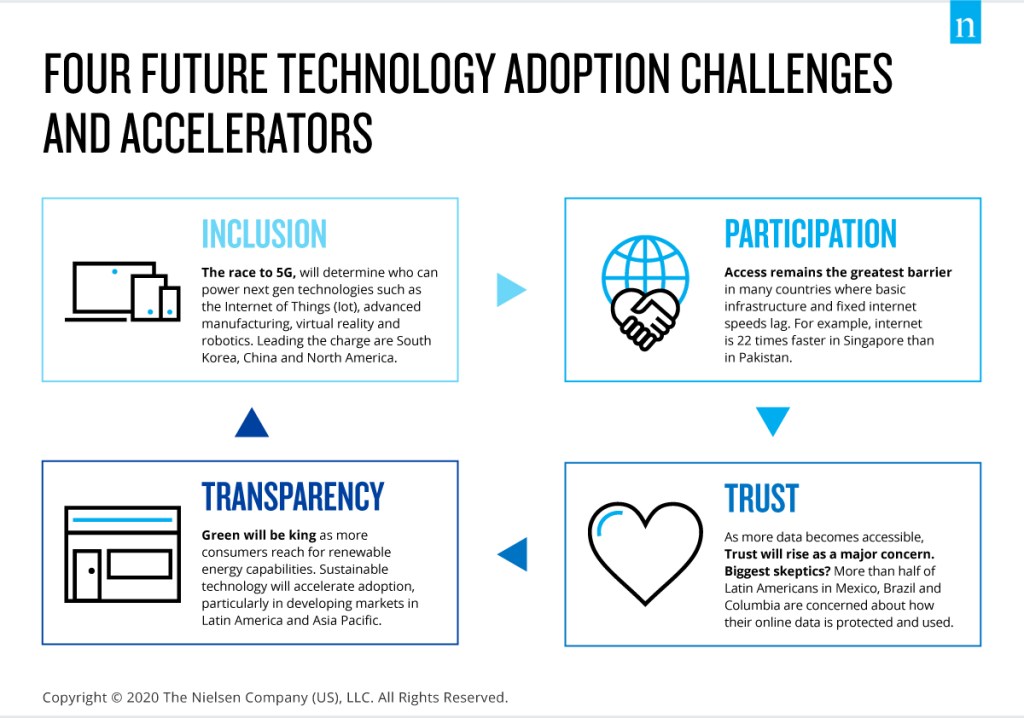
The path of disruption and rate of adoption will vary around the world based on regional- and country-specific infrastructure, technology enablers and experiential drivers. Once momentum picks up, the way we shop will be forever changed.
Featured Insights
AUGMENTED RETAIL: THE NEW CONSUMER REALITY
Consumers today are increasingly craving immersive, real-life experiences. But they want these experiences without foregoing time or effort. The solution? Augmented and virtual reality (A/VR) technology, coming to a “store” near you.
AR AND VR WILL DRIVE OMNICHANNEL 2.0
In the next five years, A/VR technology will augment the shopping journey in increasingly meaningful ways—from the way consumers discover, choose, share, buy and engage with brands.
THE 2020 VISION FOR U.S. RETAIL AND BEYOND
In the future, will your wearable device recommend what to add to your grocery list? We peered into the future for U.S. manufacturers and retailers.


